

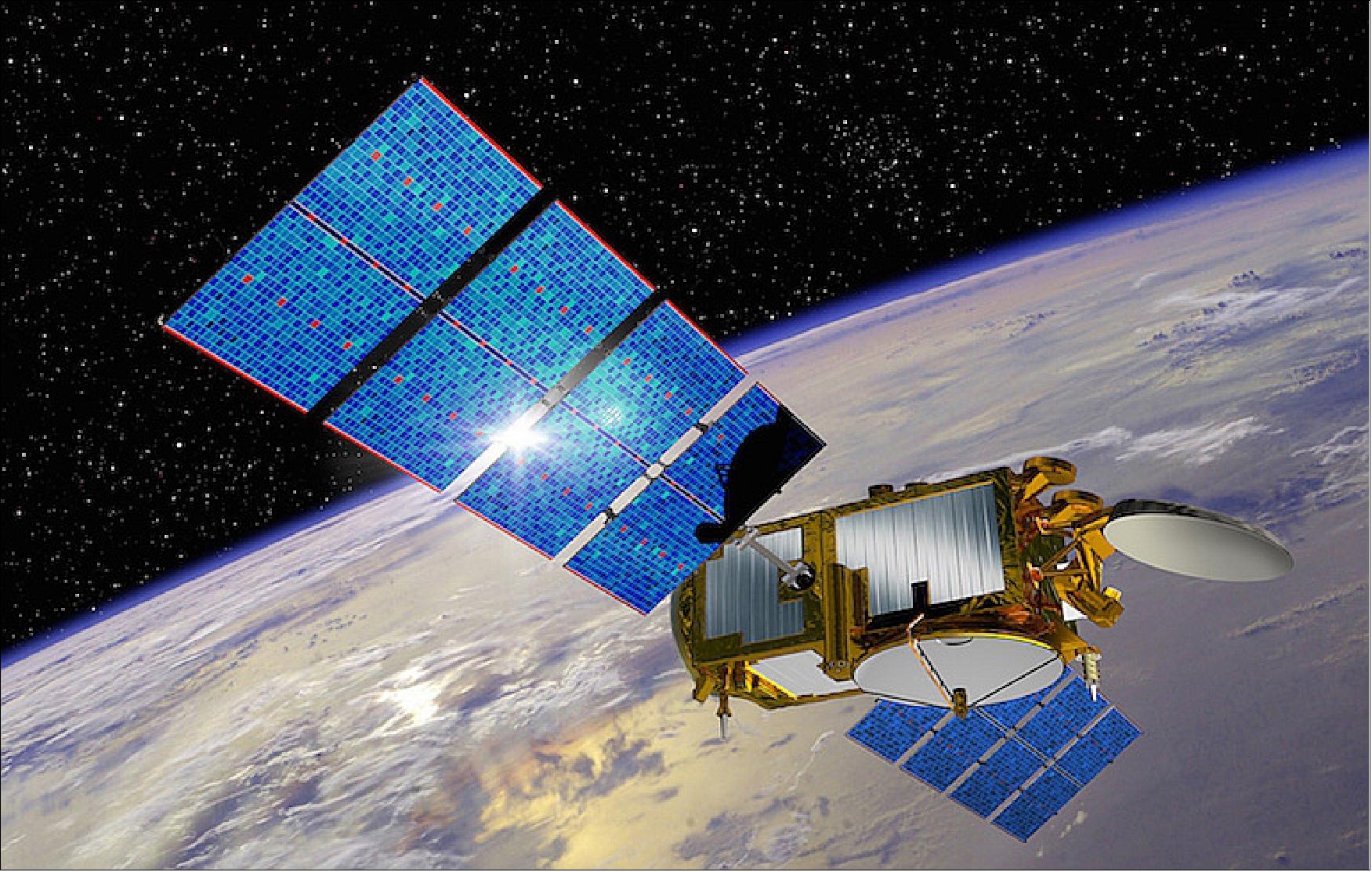
The U.S. Space Force and United Launch Alliance (ULA) successfully launched an experimental satellite today, kicking off a year-long series of demonstrations aimed at advancing GPS technology and the broader Positioning, Navigation, and Timing (PNT) enterprise.
The National Technology Satellite-3 (NTS-3) lifted off from Cape Canaveral Space Force Station, Florida, marking ULA’s first national security flight with its Vulcan rocket. Developed by L3Harris in collaboration with the Air Force Research Laboratory (AFRL) and Space Systems Command (SSC), NTS-3 is designed to test new PNT signals and payloads. These innovations could be integrated into future GPS satellites, enhancing capabilities for spacecraft, ground systems, and user equipment.
Originally scheduled to launch in 2022, delays in Vulcan’s deployment kept NTS-3 grounded for several years. Joanna Hicks, senior aerospace engineer at AFRL, described the launch as “overdue,” noting that it marks AFRL’s first major PNT experiment since 1977, which helped establish technologies foundational to today’s GPS network.
The extra preparation time allowed extended lab testing and the addition of new signals after initial delivery. Once in orbit, NTS-3 will conduct over 100 experiments, ranging from simultaneous GPS signal broadcasting and reception to autonomous satellite operations and anti-spoofing tests. These experiments will be conducted both in lab simulations and in field environments replicating real-world conditions for military users. Onboard clock and timekeeping experiments will also transmit data back for evaluation.
Following successful demonstration of these capabilities, the Space Force will assess how to incorporate them into GPS production lines. Initially, NTS-3-derived innovations were intended for the GPS IIIF satellites, though launch delays reduced flexibility for design changes. Cordell DeLaPena of SSC confirmed that some NTS-3 experiments may still be integrated into the first batch of GPS IIIF satellites, with additional technologies considered for future launches if needed.
Beyond GPS IIIF, the Resilient GPS program seeks to augment the larger satellite constellation with smaller, lightweight, and lower-cost spacecraft. NTS-3 technologies may also support these efforts. AFRL is coordinating with SSC, the Space Development Agency, and the Space Force’s Space Warfighting Analysis Center to explore potential operational applications.
NTS-3 represents a critical step toward evolving GPS capabilities, ensuring that U.S. warfighters maintain access to reliable, advanced navigation and timing technology in increasingly contested and complex operational environments.
