

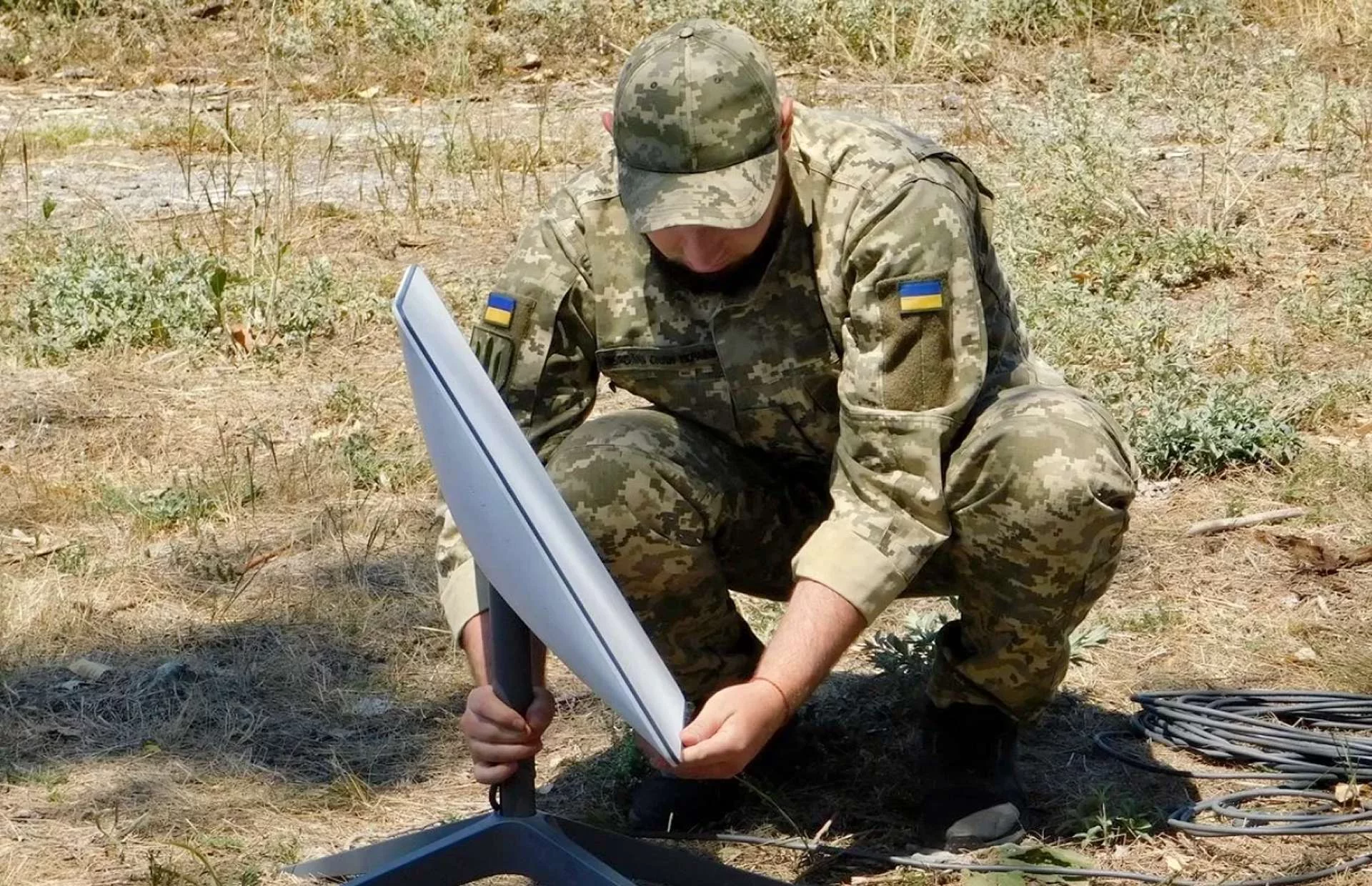
On September 15, 2025, Robert Magyar Brovdi, head of Ukraine’s Unmanned Systems Forces, reported a complete Starlink outage along the front lines, later followed by gradual service restoration. The brief blackout underscored Starlink’s role as a backbone of battlefield connectivity — not a weapon itself, but the link that keeps drones, targeting cells, and small units synchronized when other networks fail.
Ukrainian troops rely on portable phased-array terminals that are quick to set up and easy to conceal. Mounted on rooftops, vehicles, or dug-in positions, they keep communications running even when fiber links are cut and cell towers are jammed. Starlink’s strength lies in its massive LEO constellation with optical inter-satellite links, ensuring low-latency uplinks even when ground stations are far away.
Though the outage was short, some FPV drone teams delayed missions and switched to backup radios, showing how operational tempo slows without Starlink. This reveals a structural dependency on a system owned by a single private company. Past geofencing incidents demonstrated that coverage can be restricted, intentionally or not. The Pentagon and European partners have since secured service contracts, hardened access, and diversified funding to mitigate that risk.
Electronic warfare remains another threat, with Russian forces attempting to jam uplinks. Ukrainian crews have adapted by masking antennas, moving frequently, and relying on software updates that boost resilience — at the cost of power and bandwidth.
The long-term answer is layered redundancy: integrating other commercial satcom providers, maintaining HF and terrestrial networks as fallback, using mesh networking, and preparing low-bandwidth drone control modes. Strategic autonomy will also require Europe and allies to accelerate sovereign satellite constellations, reducing reliance on decisions made in a private boardroom.
