

Loitering munition signals shift in military posture and export ambitions
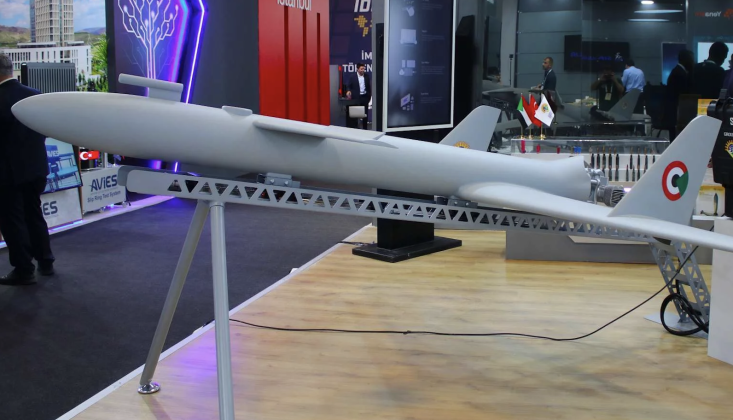
At IDEF 2025 in Istanbul, Sudan’s Military Industry Corporation (MIC) unveiled its first indigenous kamikaze drone, the Safaroog, marking a pivotal step in the country’s entry into modern unmanned strike capabilities. With loitering munitions now shaping conflict outcomes globally, Sudan’s public debut of the Safaroog is not just a technological development—it’s a declaration of strategic intent.
The Safaroog is a gasoline-powered, single-engine one-way attack drone with a 3.38 m wingspan and 2.88 m fuselage. It can carry modular warheads of 20–40 kg, cruises at 160 km/h, and reaches up to 15,000 feet in altitude with a range of 300–600 km and flight endurance exceeding 4 hours. Navigation is guided by SNAP-5 AI autopilot and GNSS/INS systems, with built-in anti-jamming protection and resilience against electronic warfare. It is launched via catapult or pneumatic system and designed to strike from steep, 60+ degree angles—ideal for hitting fortified targets from above.
The system’s performance places it in the same class as the Shahed-136 and Kargu, while boasting superior endurance and payload versatility. The Safaroog’s modularity and AI-assisted navigation give it an advantage in adaptability, especially in denied airspaces. Though there’s no confirmed record of combat use, its specifications suggest capability for both tactical precision strikes and strategic disruption.
Beyond technical metrics, the Safaroog signals a broader shift in Sudan’s defense doctrine. Long focused on conventional arms and ground vehicles, Sudan is now embracing autonomous warfare and exploring UAV exports to Africa and non-aligned states. By choosing IDEF, a major Eurasian defense expo, for the drone’s unveiling, Sudan positions itself as a player in the emerging drone arms market.
As loitering munitions increasingly dominate asymmetric warfare, the Safaroog not only expands Sudan’s arsenal, but may also elevate its standing as a regional drone producer—offering cost-effective strike solutions amid the evolving dynamics of modern conflict.
