

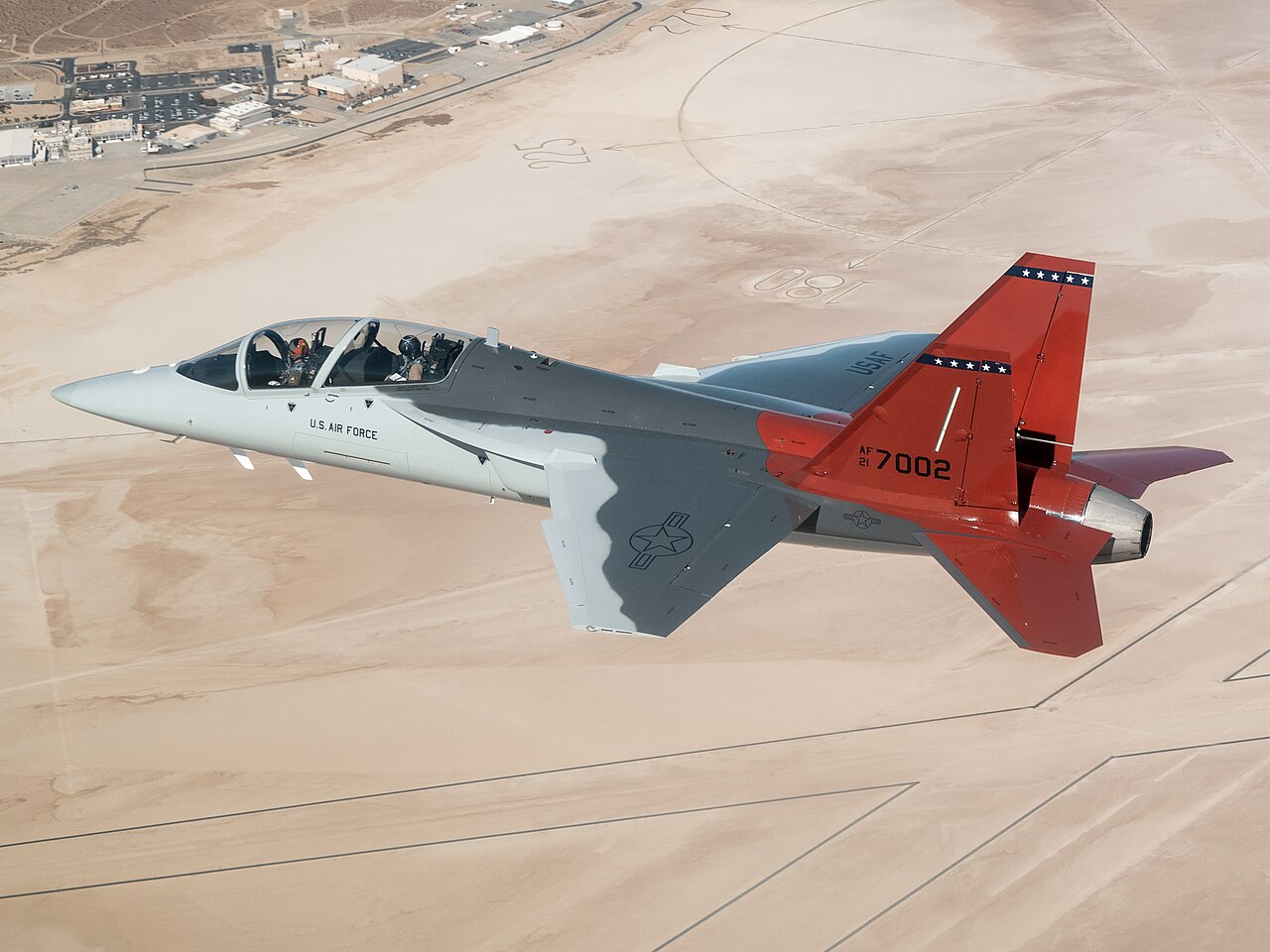
BAE Systems, Boeing, and Saab have signed a letter of intent to propose a T-7A Red Hawk-based advanced jet training system for the Royal Air Force (RAF), replacing the Hawk fleet identified for retirement in the 2025 Strategic Defence Review. The system integrates the U.S. Air Force’s next-generation trainer with UK final assembly, a ground-based synthetic ecosystem, and connections to the Global Combat Air Programme (GCAP) to prepare pilots for fourth, fifth, and future sixth-generation fighters.
The T-7A Red Hawk is a tandem two-seat advanced trainer designed as an integrated system from the outset. Powered by a General Electric F404-GE-103 afterburning turbofan delivering approximately 17,700 pounds of thrust, it offers a higher thrust-to-weight ratio than the T-38 Talon. Measuring 14.3 meters in length with a 9.32-meter wingspan, the aircraft can operate near Mach 0.95, handling 8 g load factors and high angles of attack, closely simulating modern fighter profiles.
At the heart of the training architecture is the Ground-Based Training System (GBTS), incorporating immersive simulators, mission planning tools, and a Live Virtual Constructive (LVC) environment linking aircraft, simulators, and virtual entities. Its open architecture allows integration of new sensors, threat libraries, or fifth-generation fighter behaviors via software updates.
The T-7A enables realistic air combat, high-g interception, and high-angle maneuvers through fly-by-wire controls with built-in protections for pilot safety. Integration of Medium Altitude Long Endurance (MALE) drones facilitates manned-unmanned teaming exercises during training, reducing the operational burden on frontline fleets.
This project positions the UK as a key player in international advanced training, offering a transatlantic American-Swedish platform adapted and assembled in the UK for NATO interoperability. If adopted, it could influence the balance of advanced training ecosystems across Europe, the Middle East, and the Indo-Pacific.
