

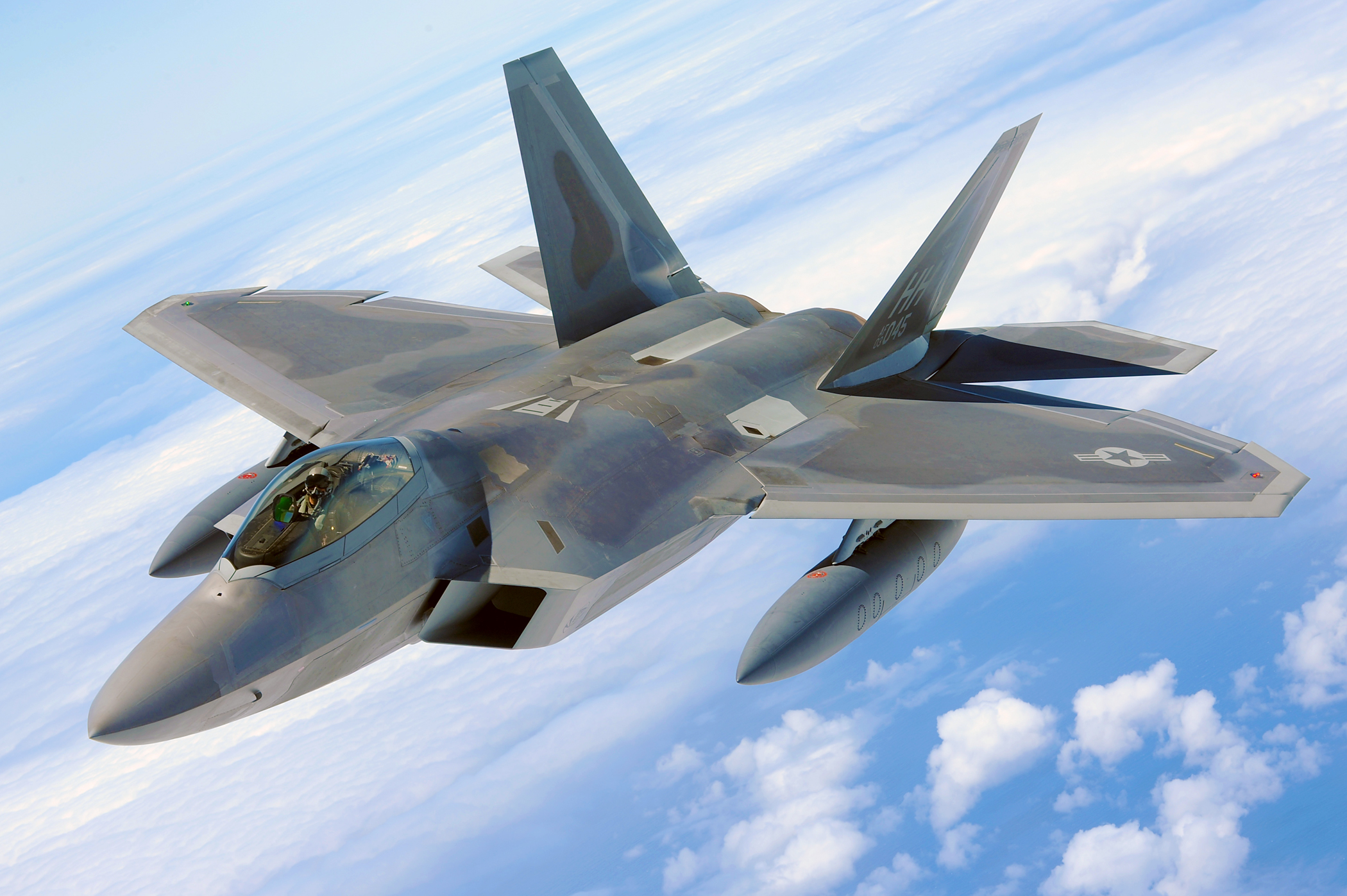
The F-22 Raptor is a fifth-generation fighter aircraft developed by the United States Air Force (USAF) to achieve air superiority and fulfill multirole missions. With its advanced stealth technology, supercruise capability, and multi-target engagement capacity, the Raptor is widely regarded as one of the most sophisticated air combat platforms in existence.
Development Process and Operational History
The foundation of the F-22 was laid under the USAF’s Advanced Tactical Fighter (ATF) program initiated in 1990. The first step of this project was the flight of the YF-22 prototype on September 29, 1990. Extensive testing followed, and the first F-22 aircraft took to the skies in 1997. The aircraft officially entered service in 2005, with its first operational mission conducted in 2006 during Operation Noble Eagle. It saw its first combat use in 2014, striking ISIS targets during Operation Inherent Resolve.
One of its most notable moments occurred on February 3, 2023, when an F-22 shot down a Chinese surveillance balloon off the coast of North Carolina, marking the aircraft’s first air-to-air engagement. This demonstrated the Raptor’s ability to respond swiftly to modern threats.
Superior Capabilities and Advanced Systems
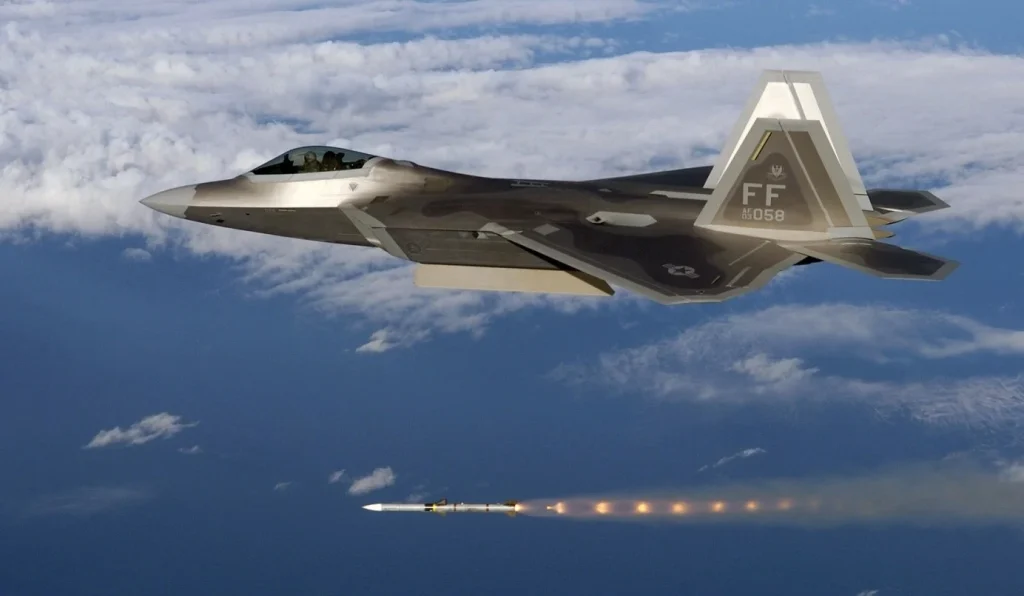
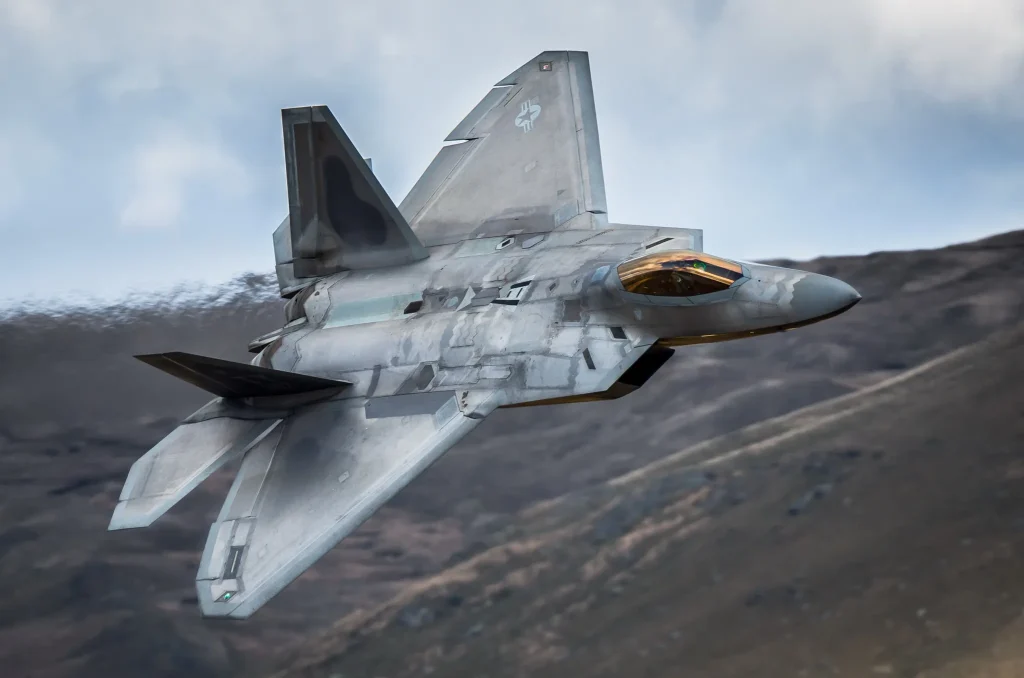
What sets the F-22 apart is its stealth design, supercruise capability (flying at supersonic speeds without afterburners), and exceptional maneuverability. Powered by two Pratt & Whitney F119-PW-100 turbofan engines, each generating 35,000 pounds of thrust, the Raptor can exceed Mach 2 speeds and operate at altitudes above 50,000 feet.
Advanced flight control systems combined with thrust-vectoring technology provide the F-22 with unmatched agility. The APG-77 AESA radar enables multi-target tracking, high-resolution synthetic aperture radar (SAR) mapping, and electronic attack capabilities against enemy radars. The cockpit is equipped with six full-color LCD displays, maximizing pilot situational awareness.
The aircraft is also equipped with advanced electronic warfare systems, missile launch warning sensors, and sophisticated communication and data links, enabling it to operate undetected and dominate the information space in combat environments.
Continuous Modernization: Toward NGAD and Beyond
The F-22 will remain in service until the Next Generation Air Dominance (NGAD) fighter replaces it in the 2030s. To ensure the Raptor maintains superiority, the USAF has implemented continuous upgrades such as the Increment 3.2B software update, which introduced SAR mapping, threat geolocation, electronic attack capabilities, and integration of modern munitions like the AIM-120D and AIM-9X.
Additional ongoing developments include Infrared Search and Track (IRST) sensors for passive target tracking, stealth-compatible external fuel tanks to extend range, and Link-16 data network integration. The Reliability, Availability, and Maintainability Program (RAMP) is also enhancing the aircraft’s durability by upgrading electronic systems, reinforcing structural components, and improving stealth coatings.
Inventory and Operational Deployment
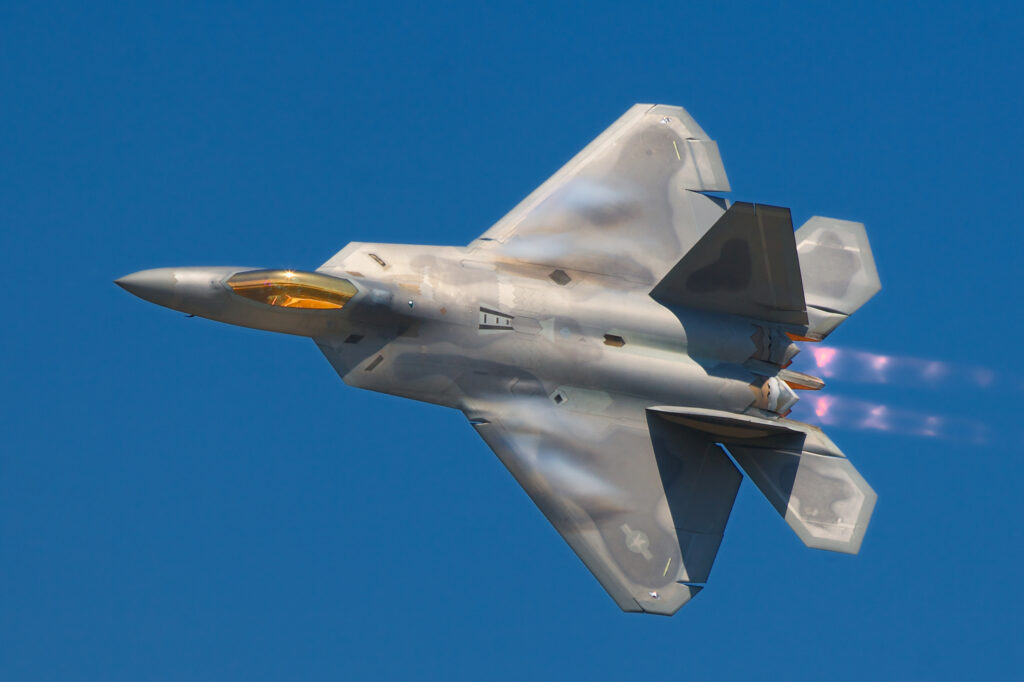
Currently, the USAF operates approximately 185 F-22 Raptors. These aircraft are stationed at Elmendorf-Richardson (Alaska), Langley-Eustis (Virginia), Nellis (Nevada), Pearl Harbor-Hickam (Hawaii), and Edwards AFB (California). The only active variant is the F-22A, and pilot training operations were relocated to Langley AFB in 2023.
Armament and Combat Loadouts
The F-22 can carry a versatile and lethal payload depending on mission type:
Air-to-Air Loadout:
- 6 × AIM-120 AMRAAM
- 2 × AIM-9 Sidewinder
- 1 × Internal M61A2 20 mm cannon (480 rounds)
Air-to-Ground Loadout:
- 2 × AIM-120 + 2 × GBU-32 JDAMs
- or 8 × Small Diameter Bombs (SDBs)
General Specifications
| Specification | Value |
|---|---|
| First Flight | September 7, 1997 |
| IOC (Initial Operational Capability) | December 15, 2005 |
| Total Produced | 195 (185 in active inventory) |
| Dimensions (L-W-H) | 62 ft – 44.5 ft – 16.6 ft |
| Max Takeoff Weight | 83,500 lb |
| Engines | 2 × F119-PW-100 turbofans |
| Max Speed | Mach 2 (with supercruise) |
| Range | 1,850+ miles (with fuel tanks) |
| Service Ceiling | Above 50,000 ft |
| Ejection Seat | ACES II (Zero/Zero capability) |
The F-22 Raptor continues to dominate the skies, adapting to evolving threats while preparing for future combat scenarios. Both technologically and tactically, it remains at the pinnacle of fighter aircraft, playing a pivotal role in the United States’ air superiority doctrine.
