

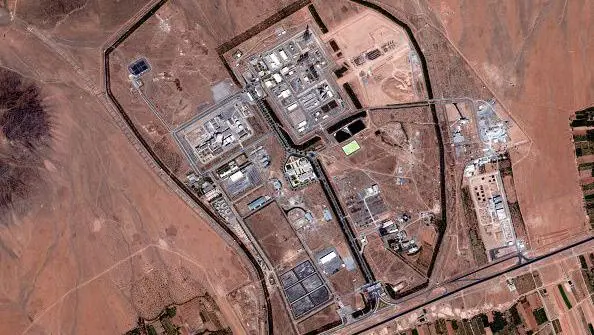
Following the ceasefire between Israel and Iran, a classified intelligence report allegedly prepared by the U.S. Department of Defense (Pentagon) was leaked to the American media. According to the report, Iran’s nuclear infrastructure suffered limited damage during U.S. strikes. However, U.S. President Donald Trump rejected these claims, asserting that Iran’s nuclear facilities were completely destroyed.
Both the United States and Israel hailed the post-ceasefire operations as a major success, declaring that Iran’s ability to develop nuclear weapons had been eliminated.
Nevertheless, the leaked Pentagon assessment—shared with the media by anonymous sources—contradicted these statements. The report suggests that Iran’s underground nuclear facilities sustained minimal damage and that the country could resume its nuclear activities after only a brief pause.
Fordow Facility Withstood U.S. Deep-Penetration Strikes
On June 13, as Israel began its strikes, it struggled to damage Iran’s deeply buried uranium enrichment sites and requested U.S. support. The U.S. responded by deploying bunker-busting bombs capable of reaching depths of up to 60 meters. Initial Pentagon assessments indicated that surface-level targets and surrounding infrastructure at Natanz, Fordow, and Isfahan were significantly damaged.
However, the core section of the underground Fordow facility reportedly remained largely intact. U.S. sources speaking anonymously to the media claimed that the strikes only caused a temporary disruption and that Iran could quickly resume its nuclear program.
Iran Safeguarded Its Enriched Uranium
According to a CBS News report, Iran relocated its stockpiles of enriched uranium prior to the strikes, thereby protecting these critical materials from damage.
White House Issues Strong Rebuttal
Following the leaks, White House Press Secretary Karoline Leavitt issued a statement on social media, calling the intelligence report “false and misleading.” Leavitt claimed the leak came from a “low-level, disgruntled individual” and emphasized that American pilots had successfully completed their mission to eliminate Iran’s nuclear threat.
President Trump echoed this view in a post on his social media platform, saying the media reports were an attempt to discredit “one of the most successful military operations in history” and reaffirming that “Iran’s nuclear facilities have been completely destroyed.”
Netanyahu: The Threat Has Been Eliminated
Israeli Prime Minister Benjamin Netanyahu, in a televised address later that evening, declared the operation a success. “Iran will never acquire nuclear weapons. The ceasefire is a historic victory for Israel. We have neutralized two existential threats: the nuclear and ballistic missile threats,” he stated.
Netanyahu explained that Israel had destroyed facilities in Arak, Isfahan, and Natanz, while the U.S. targeted the deeply buried Fordow site.
IAEA Requests Emergency Meeting
Rafael Grossi, Director General of the International Atomic Energy Agency (IAEA), sent a letter to Iranian Foreign Minister Abbas Araghchi requesting an urgent meeting. Grossi emphasized that only through IAEA inspections and cooperation could a diplomatic solution be found. Meanwhile, Tehran continues to insist that its nuclear program is entirely peaceful and not aimed at producing weapons.
Life Returns to Normal in Israel
After intense security measures were implemented in Israel when the conflict began on June 13, daily life started returning to normal with the ceasefire. Schools and businesses reopened, and the country’s airspace and Tel Aviv airport resumed civilian flights. Educational and medical services outside the Gaza border also returned to regular operations.
Additionally, the U.S. eased the security restrictions imposed on its personnel in Israel and announced plans to reopen its embassy in Jerusalem.
