

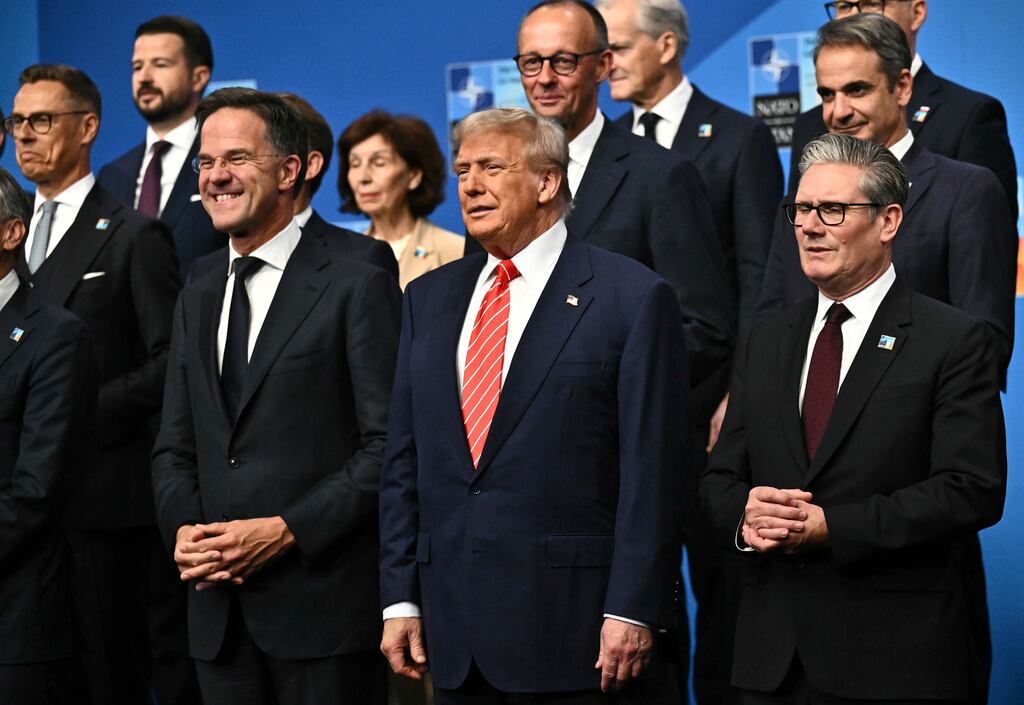
U.S. President Donald Trump concluded his first NATO summit of his second term with many of the gains he had long sought. Unlike the tense meetings of his first term, this year’s gathering in The Hague reflected a tone more aligned with Trump’s foreign policy views.
While Trump has historically kept a distance from multilateral alliances under his “America First” approach, most NATO countries this time responded to his demands. His long-standing call for increased defense spending was finally addressed. In the summit’s final declaration, member states pledged to allocate 5% of their GDP to defense expenditures by 2035.
Mentions of Ukraine were notably limited in the declaration, with only a brief reference to Russia’s invasion. Ukrainian President Volodymyr Zelenskyy’s presence at the summit was also less prominent compared to previous years.
Trump’s “Reassurance” Message to NATO
Prior to the summit, Trump had been unclear about his stance on NATO’s collective defense clause, Article 5. But during the event, he clarified: “The reason I’m here is because I stand by that article. If I didn’t, I wouldn’t be here.”
Once known for calling NATO a structure that “lives off the U.S.,” Trump adopted a more constructive tone this time. “I’m leaving with a different perspective,” he said. “These leaders really want to protect their people. This isn’t a rip-off. We’re here to help them defend their countries.”
Flattery from World Leaders Toward Trump
Throughout the summit, many leaders made striking efforts to connect with Trump. UK Prime Minister Keir Starmer personally visited the Oval Office in February to hand-deliver an invitation from King Charles III. Italian Prime Minister Giorgia Meloni echoed Trump’s campaign slogan, saying, “We will make the West great again.” NATO Secretary-General Mark Rutte wrote to Trump: “You have achieved what no American president has managed in decades.”
King Willem-Alexander of the Netherlands hosted Trump at the royal palace, a gesture warmly received by the president, who described the royal couple as “wonderful people, with big, beautiful hearts.”
Rutte likened Trump to a “father figure” who sometimes has to use strong words to stop conflicts—a reference he made while commenting on the Israel-Iran war. German Chancellor Friedrich Merz said he did not find Rutte’s approach to be excessive.
Lithuanian President Gitanas Nausėda also echoed Trump’s language while advocating for increased defense spending: “Let’s make NATO great again.”
Iran-Israel Tensions and Controversial Assessments
Another major topic that dominated the summit was the recent U.S. strikes on Iranian nuclear facilities. Although Trump claimed the attacks had “completely eliminated” Iran’s nuclear capabilities, a leaked U.S. intelligence report suggested the damage only delayed the program by a few months.
The Trump administration strongly pushed back against these media reports. Defense Secretary Pete Hegseth announced an investigation into the leak and emphasized that those responsible for sharing classified information with the press would be held accountable.
