

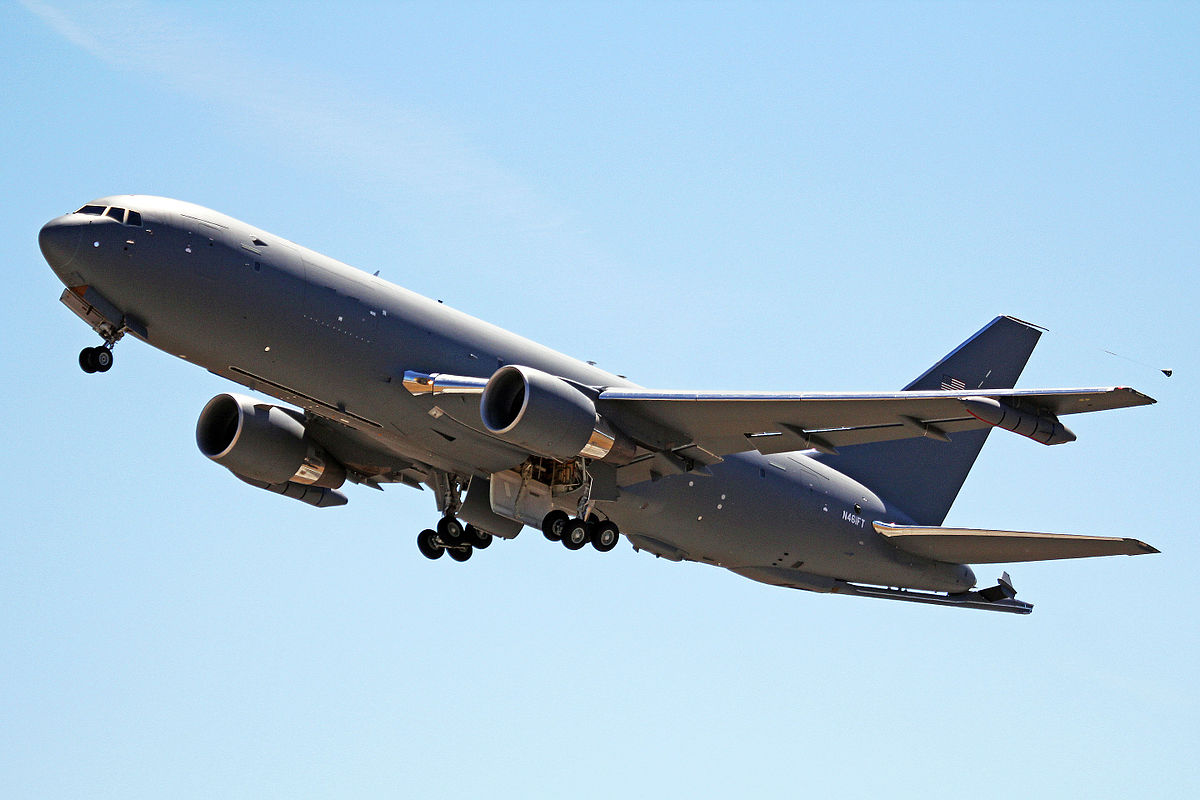
During the Royal International Air Tattoo held from July 18 to 20, 2025, U.S. Air Force Chief of Staff Gen. David Allvin confirmed that the service has approved the procurement of up to 75 more KC-46A Pegasus tankers from Boeing. This move marks a strategic pivot in the Air Force’s aerial refueling approach, opting to expand the current KC-46 fleet instead of launching a fresh competition for a new tanker platform.
The acquisition forms part of the KC-46A Production Extension Program, designed as a stopgap measure while the aging KC-135 Stratotanker fleet is gradually retired. With long-term plans hinging on the development of the Next Generation Air-Refueling System (NGAS), the extension helps ensure production continuity and cost-efficiency amidst ongoing operational and technical challenges.
The KC-46A, introduced in 2019, is powered by dual Pratt & Whitney PW4062 engines, delivering a total of 124,000 pounds of thrust. It has a maximum takeoff weight of 188.2 tonnes, a fuel capacity of 96.3 tonnes, and can transport 29.5 tonnes of cargo or up to 58 passengers. The aircraft is also equipped for aeromedical evacuation missions, with seating for a full crew and medical staff.
Cleared for global operations in September 2022, the KC-46 saw its first major deployment to the Middle East in October 2024. It played a key role during Operation Midnight Hammer in June 2025, refueling B-2 bombers en route to strike Iranian nuclear sites.
The original KC-46 contract—initially for 179 aircraft and later expanded to 188—is nearing completion, with final deliveries expected by the end of the decade. The 75 new aircraft will begin production immediately afterward.
The Air Force’s tanker roadmap now rests on three pillars: sustaining capacity through continued KC-46 production, scaling down ambitions for an interim commercial-based tanker, and laying the groundwork for NGAS. With only $13 million allocated for NGAS in the FY2026 budget, and focus shifting to sixth-generation platforms like the F-47, the KC-46 remains the cornerstone of current U.S. aerial refueling capability.
