

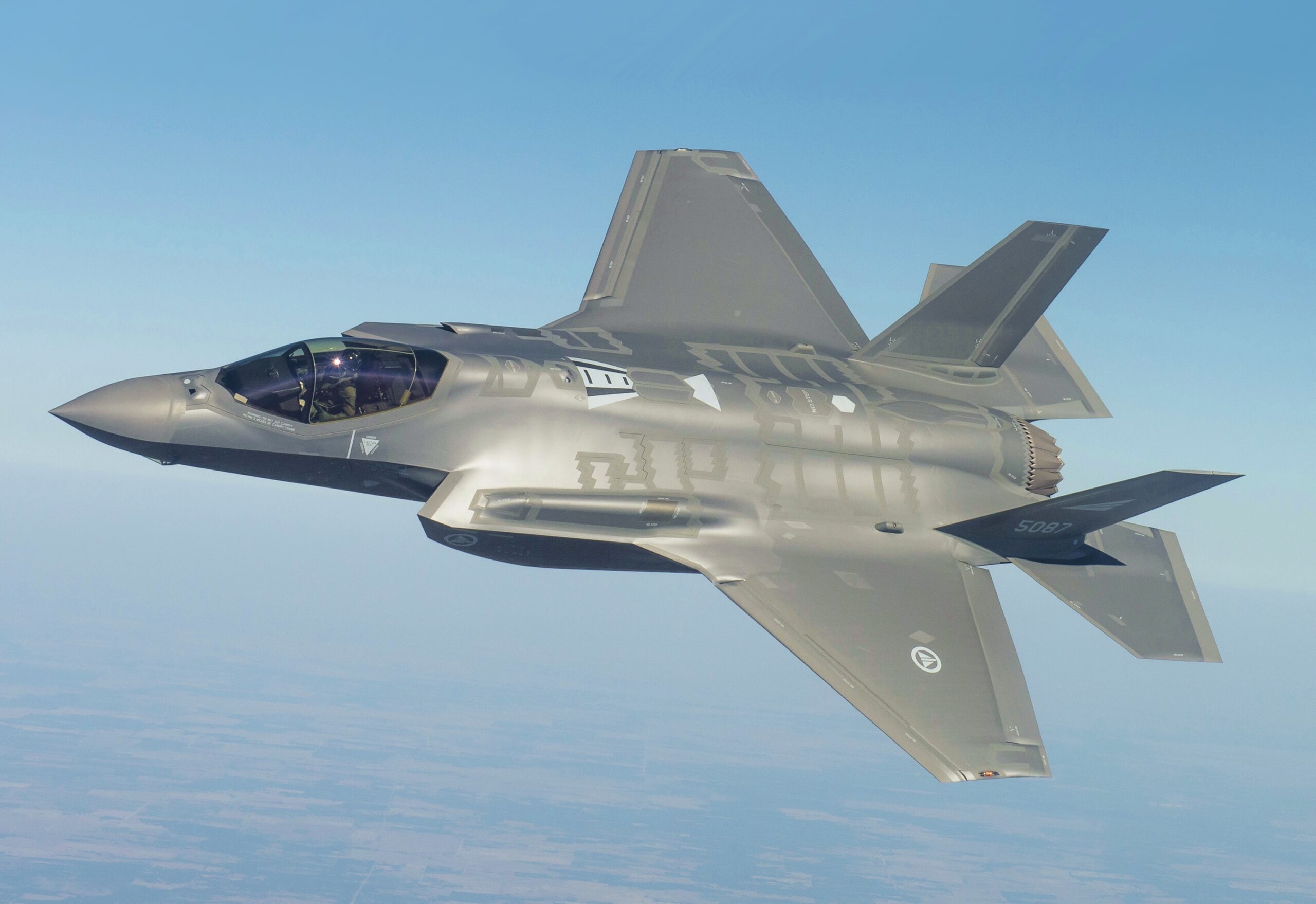
The U.S. Department of Defense confirmed on August 21, 2025, that the 125th Fighter Wing of the Florida Air National Guard has officially taken delivery of its first permanently assigned F-35A Lightning II aircraft. On July 9, three jets landed at Jacksonville Air National Guard Base, symbolizing a historic transition as the unit retires its long-serving F-15C/D Eagles in favor of fifth-generation stealth fighters. Notably, one of the aircraft delivered marks the 500th F-35A produced for the U.S. Air Force, underscoring the scale of America’s modernization in tactical aviation.
The Florida unit, known by the callsign “Thunder,” previously operated loaned F-35s for training but now gains full operational control with its own fleet. This step boosts the wing’s readiness for both homeland defense missions in the southeastern U.S. and rapid overseas deployments. The arrival of stealth fighters enhances its combat autonomy while reinforcing the broader U.S. air defense network.
Lt. Col. Joseph Pasko, commander of the 159th Fighter Squadron, highlighted the significance of the upgrade, noting that the F-35 offers a level of combat capability far beyond the legacy F-15C/D, which has been flying since the late 1970s. He emphasized that the Guard’s citizen-Airmen are now fully equipped to apply the advanced stealth, sensor, and multirole capabilities of fifth-generation warfare.
Unlike the F-15’s reliance on radar performance, electronic countermeasures, and speed, the F-35 is purpose-built for survivability with radar-absorbing design, sensor fusion, and integrated electronic warfare. While the Eagle remains a respected dogfighter, the Lightning II represents a paradigm shift—operating not only as a strike aircraft but also as a battlefield information hub, linking air, land, and sea forces in real time.
The F-35A’s design brings together long-range strike, electronic attack, and ISR (intelligence, surveillance, reconnaissance) in a single airframe. It carries the AN/APG-81 AESA radar, advanced targeting sensors, and distributed aperture systems, giving pilots unmatched situational awareness. Its internal weapons bays preserve stealth while accommodating precision-guided munitions like AIM-120 AMRAAMs and Small Diameter Bomb II. With a combat radius exceeding 1,000 km and seamless integration into joint command networks, the aircraft delivers decisive battlefield dominance.
With more than 500 operational F-35As, the U.S. Air Force now fields a fleet larger than the combined fifth-generation inventories of Russia and China. Moscow’s Su-57 Felon remains limited to fewer than 30 active aircraft, while China has around 200–250 J-20 Mighty Dragons in service. Beijing has ambitions to field nearly 1,000 stealth fighters by 2030, but neither rival has demonstrated the same level of interoperability, sustainment, or combat readiness as the U.S. and its global network of F-35 partner nations.
Forward-deployed U.S. F-35 units in Europe, the Pacific, and the Middle East further expand America’s global reach. From defending NATO airspace to deterring Chinese assertiveness in the Indo-Pacific, the Lightning II operates both as a frontline striker and an airborne command node. Its presence ensures the U.S. retains unmatched reach, survivability, and multi-domain combat power.
The milestone comes as Washington accelerates development of its Next Generation Air Dominance (NGAD) program, ensuring the U.S. retains technological superiority even as China and Russia advance their own stealth projects. For now, the Lightning II firmly anchors America’s global air dominance, with the Florida-based 125th Fighter Wing at the leading edge of this transformation.
