

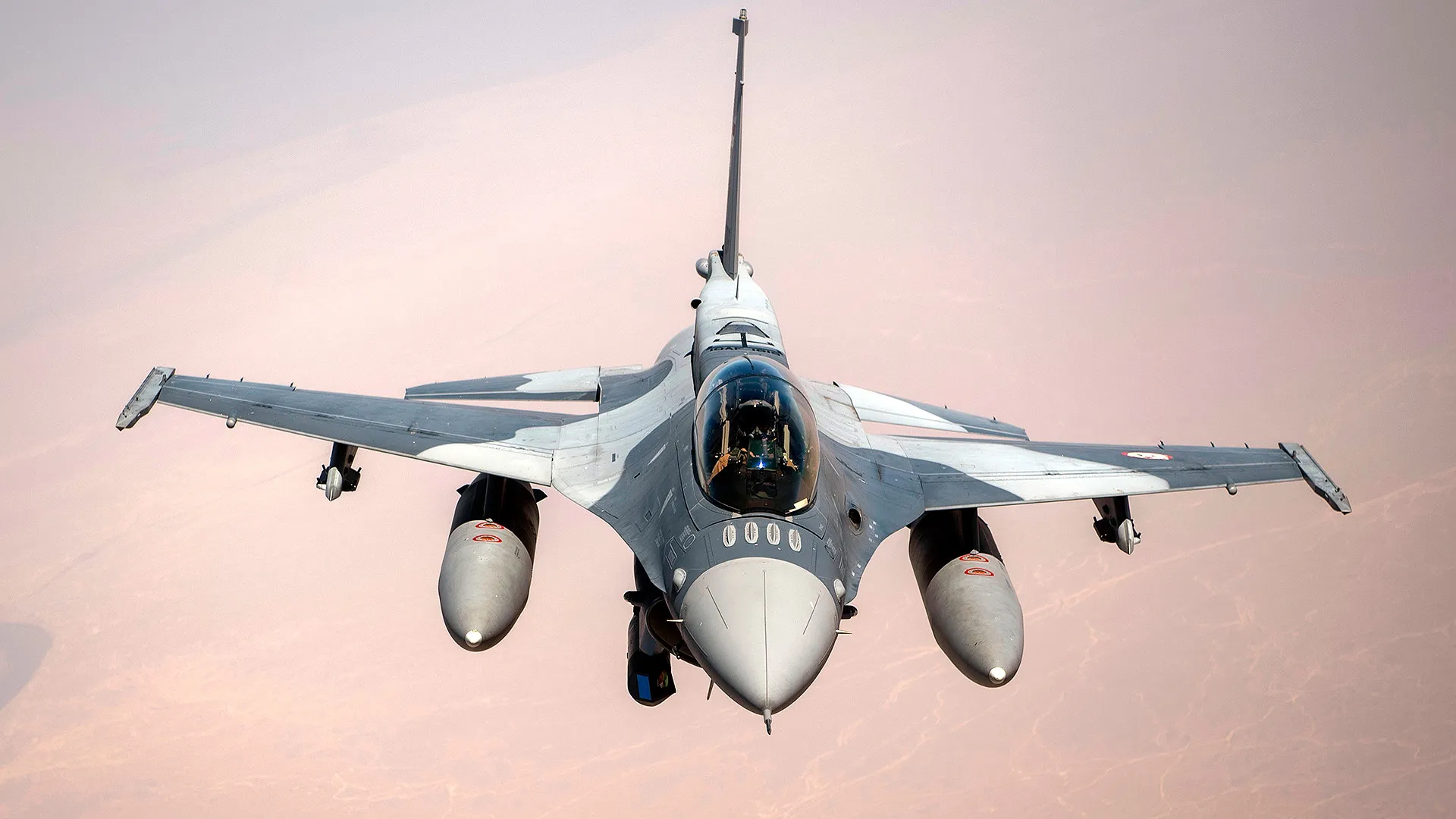
The United States has authorized a major sustainment contract to ensure Iraq’s F-16IQ fighter fleet remains fully operational at Martyr Brigadier General Ali Flaih Air Base. The agreement strengthens Baghdad’s airpower capabilities and represents a renewed long-term defense commitment between Washington and Iraq.
According to a U.S. Department of War announcement issued on 21 November 2025, Vectrus Systems LLC has been awarded a $252 million contract to support the Iraqi F-16 program through September 2026 under the Foreign Military Sales (FMS) framework. Nearly $124 million was obligated at the time of award. The package includes base operations support, life-support services, logistics functions, and force protection — elements essential for sustaining the aircraft and maintaining consistent sortie generation.
A Unified Framework for Base Operations
The agreement is structured as a cost-plus-fixed-fee, indefinite-delivery/indefinite-quantity contract that consolidates all major support functions under one provider. Vectrus will oversee key systems such as:
- power and water infrastructure,
- communications and housing,
- airfield services and hangar operations,
- warehousing, fuel distribution,
- and multi-layered airbase security.
This unified model ensures the airfield remains fully functional even under fluctuating threat levels or political instability — a challenge that has repeatedly affected the F-16 mission in past years.
A Fleet Dependent on Consistent Technical Support
For over a decade, Iraq’s ability to keep its F-16 fleet operational has depended heavily on U.S. contractors. Previous withdrawals following militia rocket attacks demonstrated how sensitive the fleet is to gaps in technical support, with readiness rates dropping sharply whenever maintenance teams were forced to leave. The new Vectrus contract is designed to prevent such disruptions by providing uninterrupted support through at least 2026.
A Strategically Critical Airbase
Martyr Ali Flaih Air Base, roughly 70 km north of Baghdad, serves as the hub of Iraq’s F-16IQ squadrons and plays a central role in ongoing counter-ISIS operations across Salah al-Din, Kirkuk, the Hamrin mountain range and border regions. The base also facilitated cross-border strikes into Syria during earlier phases of the anti-ISIS campaign.
However, it remains a frequent target of rocket and drone attacks attributed to Iran-aligned militias. Strengthening force protection and life-support systems at this particular installation therefore addresses both operational needs and long-standing vulnerabilities.
Wider Geopolitical Implications
The contract comes at a moment of elevated U.S.–Iran tension. Washington has intensified pressure on Iran-aligned groups in Iraq, designating several militias as foreign terrorist organizations after years of attacks on bases hosting U.S. and coalition personnel. Amid this climate, maintaining a secure and functioning Iraqi F-16 base on Iran’s western flank is a strategic priority for the U.S.
Iraq’s Balancing Act
Baghdad continues to emphasize that foreign combat missions are ending, yet simultaneously seeks sustained technical and logistical assistance for platforms like the F-16IQ, which it cannot fully support on its own. By choosing a government-to-government FMS framework instead of commercial short-term arrangements, Iraq signals that the F-16 fleet remains a core component of its long-term national defense strategy.
A Base Being Hardened for the Future
Once a major U.S. hub during the Iraq War, the Balad installation has evolved into the primary operating base for Iraq’s modern air force. The new contract’s emphasis on security, resilient infrastructure, and stable life-support systems reflects a deliberate effort to shield the base from both kinetic attacks and political turbulence.
The Vectrus sustainment package represents far more than routine maintenance:
- it secures the operational future of Iraq’s F-16 fleet,
- fortifies one of the country’s most important airbases,
- and deepens institutional ties between the Iraqi and U.S. defense establishments.
In practical terms, the agreement ensures Iraq retains a credible air arm for counter-terrorism missions and regional contingencies — even as the broader security architecture in the Middle East continues to shift.
