

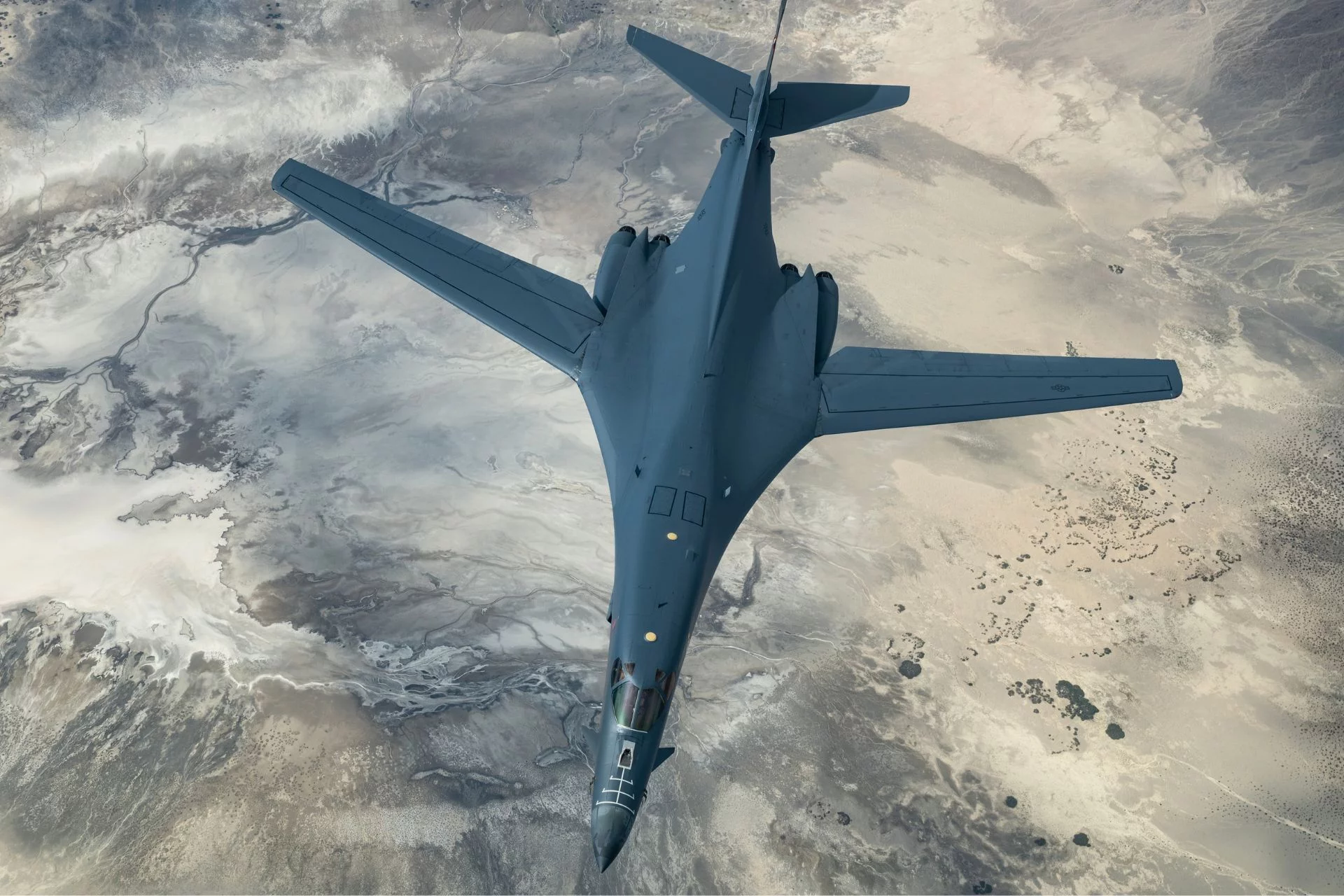
Two U.S. Air Force B-1B Lancer bombers conducted a training flight over the Caribbean toward Venezuelan waters on October 24, remaining in international airspace throughout the mission. The aircraft departed from Dyess Air Force Base in Texas. While the Pentagon described the sortie as a “routine training operation,” it comes amid a notable buildup of American air and naval power in the region.
The flight followed a recent “bomber attack demonstration” involving B-52s and F-35B Lightning II jets. The U.S. currently maintains a dense military presence across Puerto Rico and the southern Caribbean, consisting of amphibious assault groups, destroyers, a submarine, and regular air patrols. F-35Bs operate from Puerto Rico, P-8A Poseidons monitor maritime activity, and MQ-9 Reapers conduct long-endurance intelligence, surveillance, and reconnaissance (ISR) missions.
The B-1B Lancer remains one of the U.S. Air Force’s most capable long-range strike bombers, combining high speed, large payload capacity, and mission flexibility. Powered by four General Electric F101-GE-102 afterburning turbofans, the aircraft can reach speeds up to Mach 1.2 and carry nearly 34 metric tons of ordnance internally. It is equipped to deliver JASSM, JDAM, and Quickstrike naval mines and is fully networked via advanced radar and data link systems for integrated joint operations.
In response, Venezuela has increased its air defense posture by deploying Igla-S man-portable air defense systems (MANPADS) nationwide and fielding Su-30MK2 fighters armed with Kh-31 supersonic anti-ship missiles. However, analysts note that these assets are insufficient to offset the United States’ technological and operational advantages.
Washington maintains that such missions are part of counter-narcotics operations, though regional observers warn that the growing number of U.S. deployments could signal broader strategic intentions. Analysts believe these operations serve to test allied interoperability and crisis response in the Caribbean, while maintaining steady military pressure on President Nicolás Maduro’s government.
