

U.S. Defense Secretary Pete Hegseth announced on October 5 that he holds “every authorization needed” to launch military strikes in the Caribbean targeting vessels suspected of narcotics trafficking near Venezuelan waters. The statement, reported by Reuters, highlights a sharper American posture in the region and signals a potential escalation in tensions with Caracas.
According to Pentagon officials, the U.S. has shifted from traditional interdiction missions to a more assertive deterrence strategy, with at least four confirmed strikes in recent weeks. The latest, on October 3, destroyed a small vessel off Venezuela’s coast, killing four. A similar attack in September—acknowledged by former President Donald Trump—targeted a suspected cartel-linked craft, resulting in eleven deaths.
Expanded U.S. Military Presence
Open-source intelligence and defense briefings reveal that the U.S. force posture near Venezuela now constitutes a full-spectrum maritime strike package. The deployment features Arleigh Burke-class guided-missile destroyers, a Virginia-class nuclear-powered attack submarine, and an amphibious ready group centered on USS Iwo Jima. These assets combine long-range Tomahawk missile capability, integrated air defenses, and advanced electronic warfare suites.
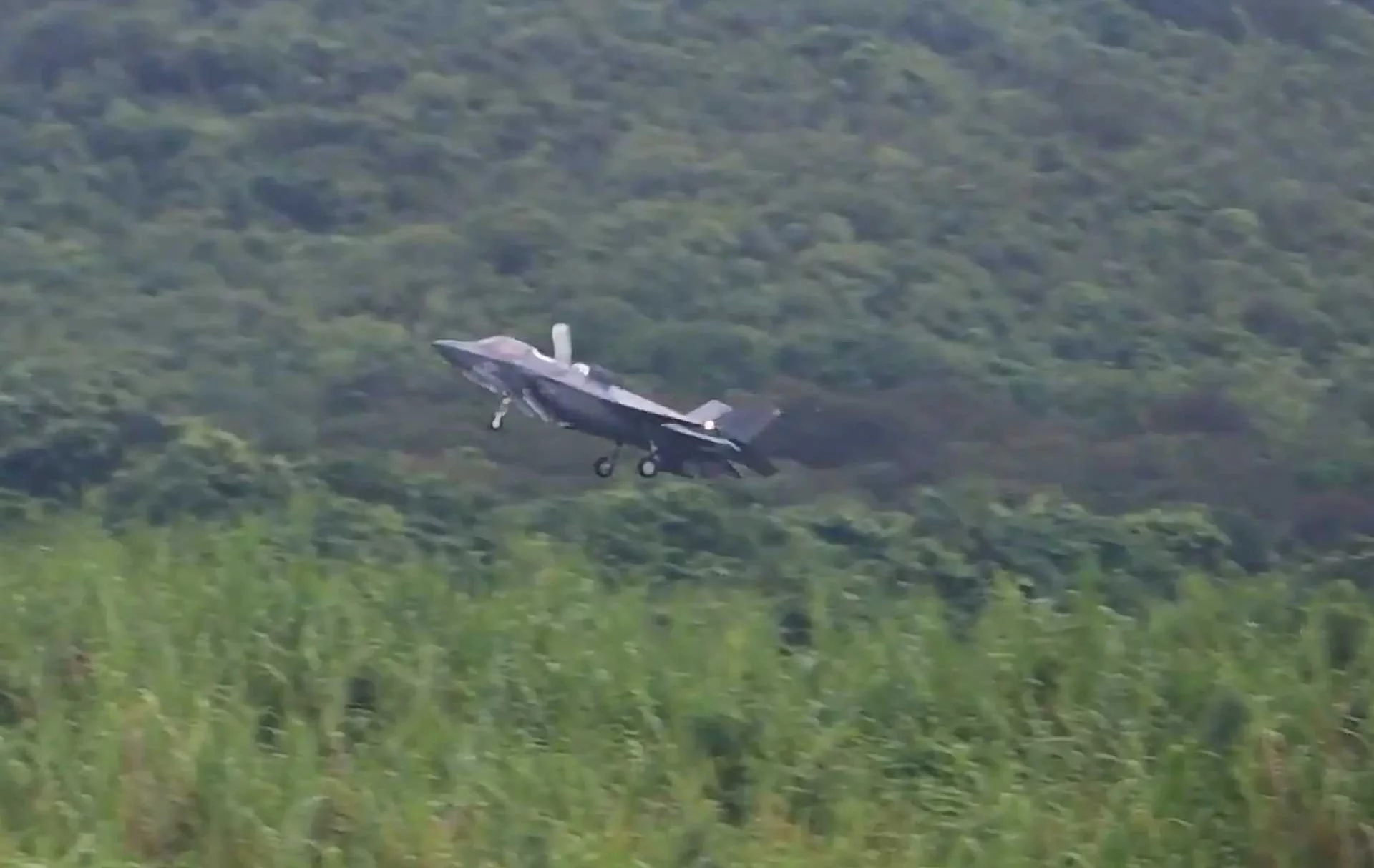
Air operations have also intensified. F-35A Lightning II fighters stationed in Puerto Rico and Curaçao now provide stealth strike and ISR coverage across the Caribbean, supported by P-8A Poseidon patrol aircraft and MQ-9B SeaGuardian drones. Intelligence centers in Key West and Puerto Rico fuse satellite and airborne data to deliver real-time tracking of maritime and coastal activity around Venezuela.
This networked architecture gives Washington the ability to identify and neutralize threats far from U.S. shores. Analysts note that the posture could enable a rapid maritime exclusion zone or precision strikes against coastal targets within hours of a presidential directive.
Venezuela’s Defensive Outlook
Despite possessing advanced Russian-built systems, Venezuela’s military readiness has eroded due to maintenance and economic constraints. Its primary deterrent remains a limited fleet of Su-30MK2 Flanker fighters armed with R-77 missiles, supported by aging F-16A/Bs. The nation’s layered air defense network, anchored by S-300VM systems, can challenge high-altitude aircraft but is unlikely to withstand sustained electronic and kinetic attacks.
The Venezuelan Navy maintains a modest fleet of missile boats and corvettes but lacks modern radar and air-defense coverage. Shore-based anti-ship missile batteries could threaten nearby vessels but would likely be destroyed early in any confrontation. Meanwhile, Venezuela’s vast militia network—claimed by President Nicolás Maduro to include over four million personnel—poses an asymmetric challenge, potentially prolonging any ground engagement through guerrilla-style resistance.
Strategic Balance and Risk of Escalation
The balance of power clearly favors the United States. However, misjudged strikes could provoke direct retaliation from Venezuelan air-defense systems or irregular forces. Russia’s condemnation of the October 3 attack underscores the geopolitical stakes, warning Washington against further “aggressive acts” in the Caribbean.
By asserting full authorization for continued operations, Hegseth effectively grants the Pentagon broad latitude that blurs the line between counter-narcotics enforcement and military intervention. As U.S. destroyers patrol within sight of Venezuela’s coastline and F-35s conduct round-the-clock sorties, the Caribbean once again becomes a stage for power projection—and a potential flashpoint of 21st-century great power competition.
