

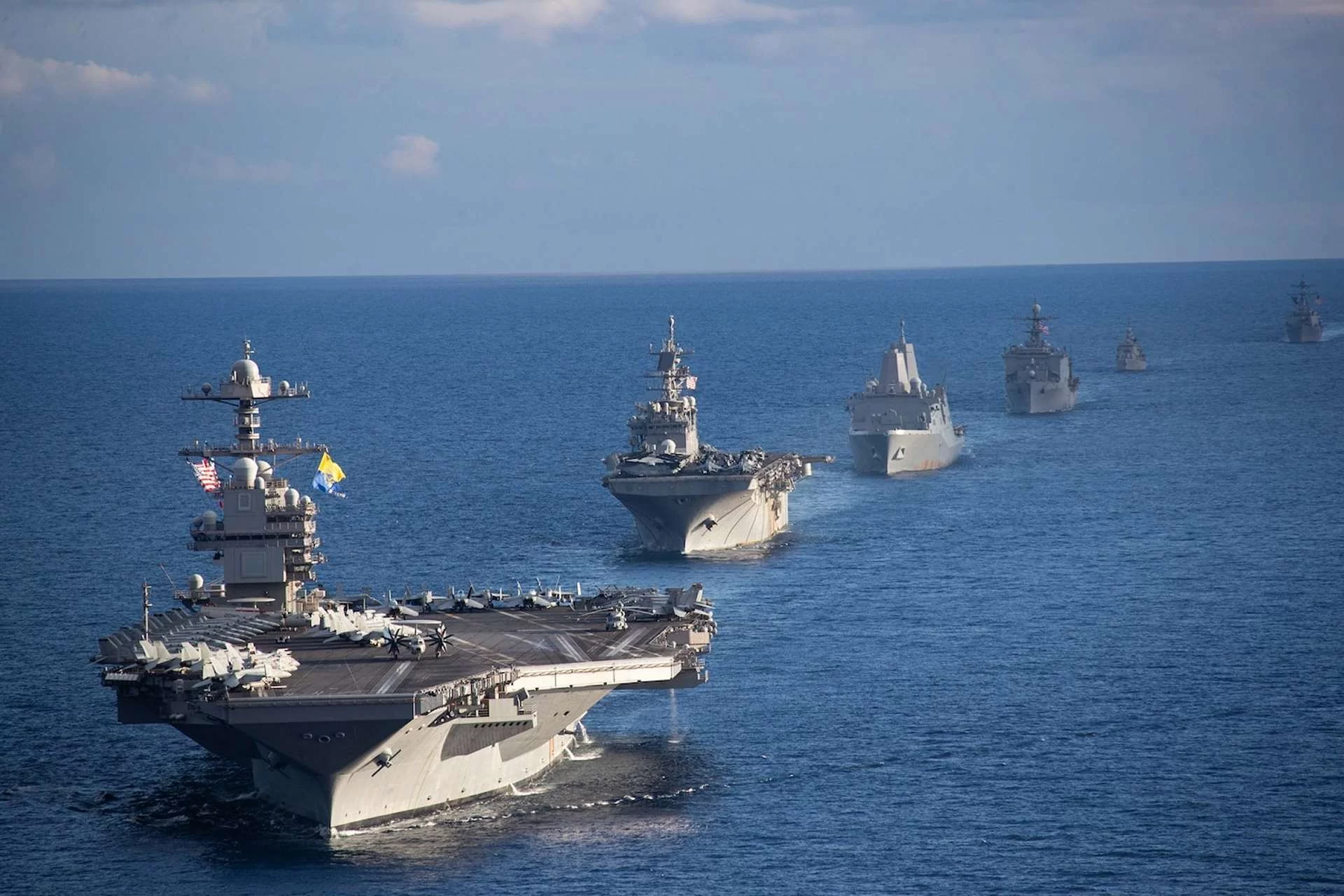
The United States has deployed its most advanced naval force, Carrier Strike Group 12 (CSG-12), led by USS Gerald R. Ford (CVN 78), to Europe and the Mediterranean, strengthening its deterrence and operational capabilities across a critical region. According to the U.S. Navy, this mission is not just about presence—it’s about power projection, protecting allied interests, and demonstrating America’s readiness for multi-domain operations in a shifting global security environment.
Airborne Fortress: Gerald R. Ford Strike Group on Duty
At the heart of the deployment is USS Gerald R. Ford, the world’s largest and most technologically advanced aircraft carrier. With approximately 4,500 sailors, the strike group integrates air, surface, cyber, and electronic warfare into a single operational force. Its cutting-edge electromagnetic launch system (EMALS) and advanced radar architecture make Ford a mobile nerve center for modern naval warfare.
Key elements of the strike group include:
- Carrier Air Wing Eight (CVW-8):
- F/A-18E/F Super Hornets (multirole strike)
- EA-18G Growlers (electronic warfare)
- E-2D Advanced Hawkeyes (airborne early warning and C2)
- MH-60R/S Seahawks (ASW, ASuW, logistics)
- Destroyer Squadron 2 (DESRON 2) and Arleigh Burke-class destroyers:
- USS Winston S. Churchill
- USS Mitscher
- USS Mahan
- USS Bainbridge
- USS Forrest Sherman
Strategic Timing, Strategic Message
This deployment comes amid rising tensions with Russia, instability around the Black Sea, and potential conflict escalation scenarios in the Middle East. In 2023, CSG-12 reinforced U.S. presence in the Eastern Mediterranean during regional crises near Syria and Lebanon. Now, it bolsters NATO’s southern flank and offers rapid-response capability for future contingencies.
The deployment of Gerald R. Ford to the U.S. European Command (EUCOM) area of responsibility is also viewed as a strategic signal, especially with two other carrier groups already stationed in the Red Sea and the Arabian Gulf. The positioning of this third group may reflect plans for coordinated deterrence operations or escalation preparedness, particularly with respect to threats in the Strait of Hormuz or the Iraq-Syria corridor.
Shield Against Gray Zone Threats
Ford’s role is not limited to conventional warfare. It is also a critical asset against “gray zone” threats such as naval harassment, disinformation campaigns, drone incursions, and cyber disruptions. Its enhanced radar and electronic warfare capabilities allow it to counter a wider range of threats than older Nimitz-class carriers.
America’s Message at Sea
The deployment of the Gerald R. Ford Strike Group is more than a military maneuver—it’s a global message. At a time of mounting geopolitical uncertainty, the U.S. demonstrates that it can project fully integrated, multi-domain naval power across oceans with unmatched agility and scale.
As the Navy emphasizes, “This is not just a symbol of strength—it’s an operational engine of American seapower, capable of shaping outcomes across continents, securing maritime trade, and maintaining a favorable balance of power for the U.S. and its allies.”
The Ford Strike Group represents the future of naval warfare—advanced, lethal, and ready to act wherever the U.S. flag flies.
