

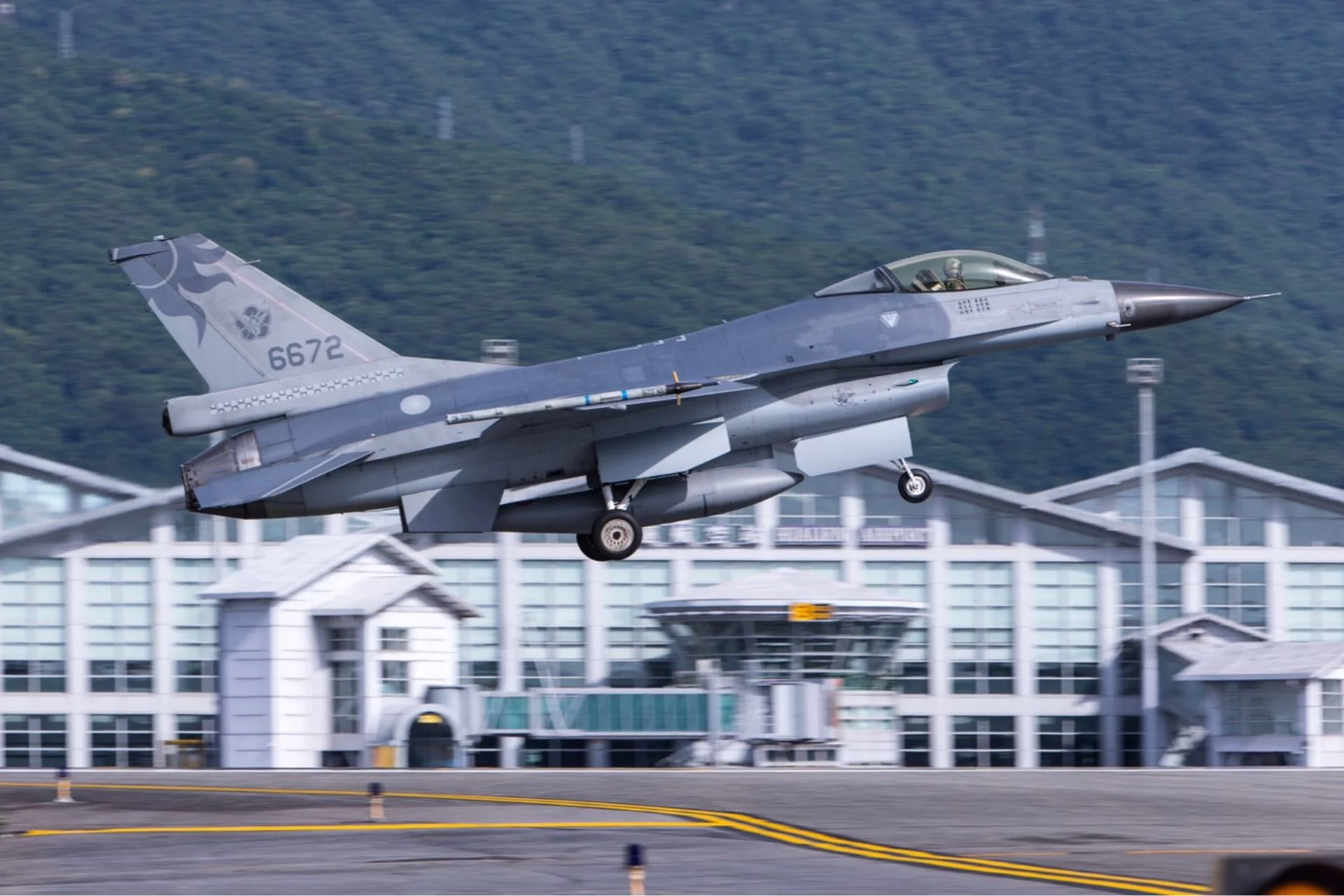
The U.S. State Department has approved a $330 million Foreign Military Sales (FMS) package for Taiwan, covering non-standard spare parts, technical support, and repair services for the island’s F-16, C-130, and Indigenous Defense Fighter (IDF) fleets. The deal focuses on sustaining operational readiness rather than expanding combat capability.
The package, routed through the Taipei Economic and Cultural Representative Office (TECRO) in Washington, emphasizes hard-to-source components, repair-and-return services, and engineering support drawn largely from U.S. Department of Defense stocks. Officials stressed that no permanent U.S. personnel deployment is involved and the measure is intended to maintain, not alter, the military balance across the Taiwan Strait.
F-16s remain Taiwan’s backbone for air defense and strike operations. Upgraded F-16Vs feature AN/APG-83 AESA radars that enhance detection range, tracking capacity, and resistance to jamming. Without timely delivery of specialized parts—power units, avionics modules, and cooling systems—airframes risk cannibalization and reduced availability, explaining the non-standard focus of the package.
The C-130 Hercules fleet is critical for tactical logistics, enabling resupply of outlying islands, troop movements, and airdrop missions. Maintaining hydraulic systems, wing components, and legacy avionics demands access to technical data and specialized repair services beyond standard supply chains.
Taiwan’s IDF Ching-Kuo jets rely on GD-53 multimode radars and digital fly-by-wire systems, requiring specific actuator, computer, and software maintenance. Non-standard spares ensure the fleet remains mission-capable and interoperable with U.S. and allied systems through a recognized maritime/common operational picture.
While these spare parts do not appear on the battlefield, they directly influence the number of ready aircraft. Sustaining the F-16, C-130, and IDF fleets reduces cannibalization, maintains combat air patrol coverage, and preserves a high operational tempo under emission control conditions. The program also supports Taiwan’s defense industrial base (BITD), strengthening AIDC and local maintenance capabilities while allowing U.S. contractors to maintain expertise on older platforms.
By focusing on sustainment rather than new acquisitions, Washington signals commitment under the Taiwan Relations Act, reassuring regional partners while sending a measured message to Beijing. The practical effect is enhanced resilience: Taiwan’s air forces can stay on station longer, conduct sustained sorties, and maintain readiness amid rising Indo-Pacific tensions.
