

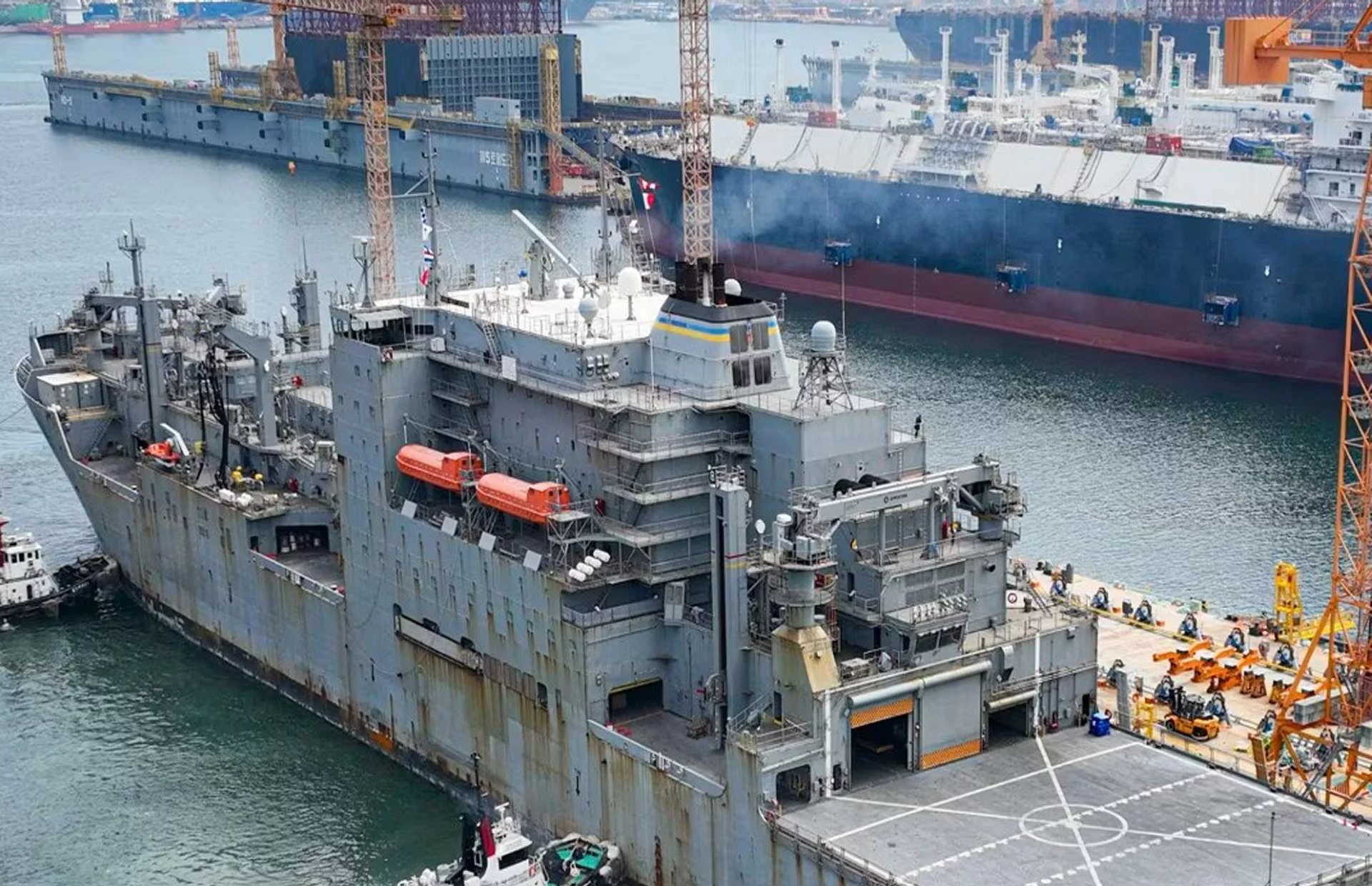
The U.S. Navy is exploring partnerships with South Korean and Japanese shipyards to alleviate growing production delays in submarines, destroyers, and support vessels. Admiral Daryl Caudle, the Navy’s new chief of naval operations, used his first overseas tour to assess whether allied shipbuilding capacity could help close the United States’ warship shortfall.
Domestic yards face labor shortages, aging infrastructure, and rising demand in the Pacific, prompting a push for allied assistance. Caudle praised the scale and efficiency of Japanese and Korean facilities while emphasizing that China’s rapid naval expansion leaves little margin for delay.
Decades of commercial work shifting abroad have left the U.S. shipbuilding sector hollowed out, with the Navy as the primary domestic customer. The current fleet is under 300 ships, below the goal of 355, creating schedule pressure across nuclear submarines, frigates, and amphibious support vessels.
Allied yards could provide relief by handling maintenance, building hull modules, and collaborating on mine countermeasure initiatives. Notable agreements, such as HD Hyundai’s partnership with Huntington Ingalls for U.S. Navy auxiliary ships, show these concepts moving from theory to practice.
Challenges remain around sovereignty, control, and domestic workforce rebuilding. South Korea and Japan must balance U.S. expectations with Chinese pressure and local labor politics, while the U.S. navigates “Buy American” rules and strategic priorities.
The urgency is driven by China’s growing naval capacity and commitments under AUKUS, where delays could compromise U.S. and allied operational readiness. The next 12–18 months will reveal whether allied shipbuilding partnerships can meaningfully accelerate U.S. naval production and relieve domestic yard bottlenecks.
