

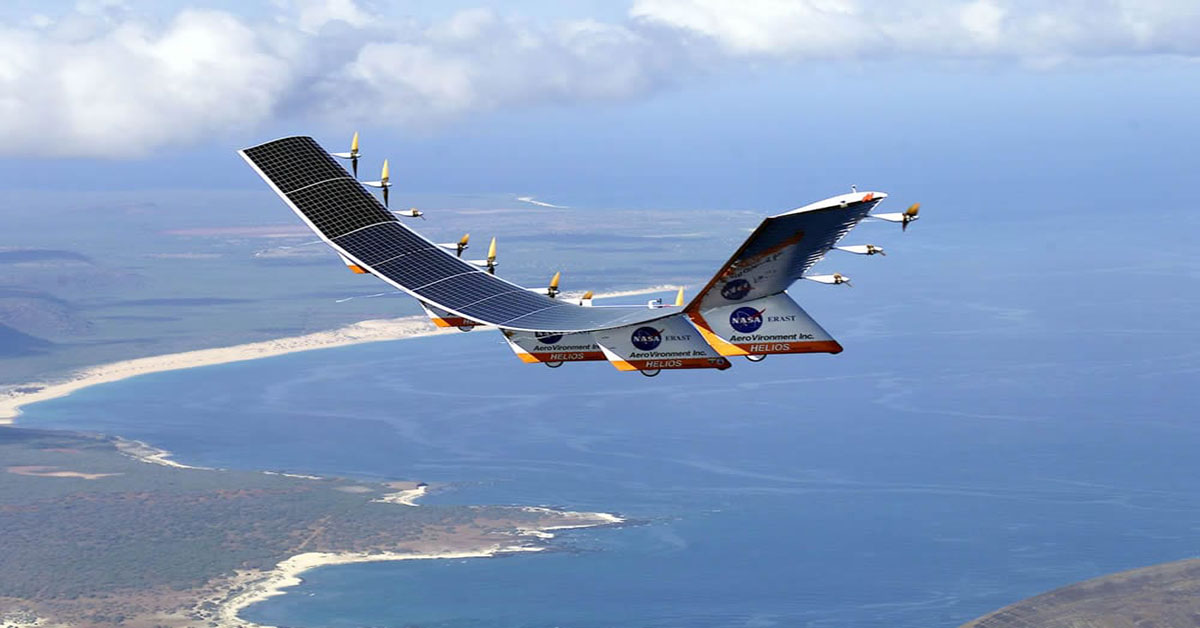
Stennis, Mississippi – In collaboration with Skydweller Aero, the U.S. Navy has successfully completed a 73-hour continuous flight of a solar-powered unmanned aerial vehicle (UAV) designed for long-range maritime intelligence, surveillance, and reconnaissance (ISR) missions. This demonstration is regarded as a major milestone in energy independence and autonomous flight.
Conducted by the Naval Air Warfare Center Aircraft Division (NAWCAD) at the Naval Air Facility in Stennis, Mississippi, the test flight represents a significant achievement in the development of energy-independent unmanned aerial systems. Despite challenging weather conditions, the test proved the aircraft’s ability to maintain a positive energy balance throughout day and night cycles without fuel resupply or human intervention.
Derived from the Solar Impulse 2 platform, Skydweller is a next-generation autonomous aircraft optimized for wide-area maritime surveillance. With a 72-meter wingspan, the platform is covered with more than 17,000 photovoltaic cells capable of generating up to 100 kilowatts of solar power. The energy is stored in 635 kilograms of lithium-ion batteries, enabling uninterrupted night operations.
Weighing approximately 2,500 kilograms at takeoff, Skydweller can carry a mission payload of up to 360 kilograms. This includes electro-optical/infrared (EO/IR) sensors, maritime radars, AIS receivers, and communications relay systems. Designed to operate at altitudes between 7,500 and 13,500 meters, the aircraft can carry out uninterrupted missions exceeding 30 days.
Since 2020, the Navy has worked with Skydweller Aero under the U.S. Southern Command (SOUTHCOM) to address persistent maritime surveillance needs such as counter-narcotics operations, border monitoring, and surveillance in logistically constrained environments. Its lightweight carbon fiber body, quad-redundant flight control systems, and self-healing software provide durability in hostile or degraded conditions.
Rear Admiral Todd Evans, Commander of NAWCAD, commented on the successful test:
“Skydweller demonstrates how innovation and strategic partnerships can rapidly translate into practical operational capabilities. This test is a significant step toward achieving persistent, distributed, and resilient ISR operations.”
Thanks to its renewable energy system and minimal logistical requirements, Skydweller is highly suitable for deployment in regions lacking infrastructure or where base access is limited. Its integration into the Navy’s ISR architecture contributes to a layered surveillance network, improving the efficiency of both manned and unmanned systems.
Additional flight tests are scheduled this summer within SOUTHCOM’s area of responsibility. As global maritime threats evolve and the need for continuous ISR grows, Skydweller stands out as a promising solution for sustainable surveillance with reduced reliance on fuel and logistics chains.
