

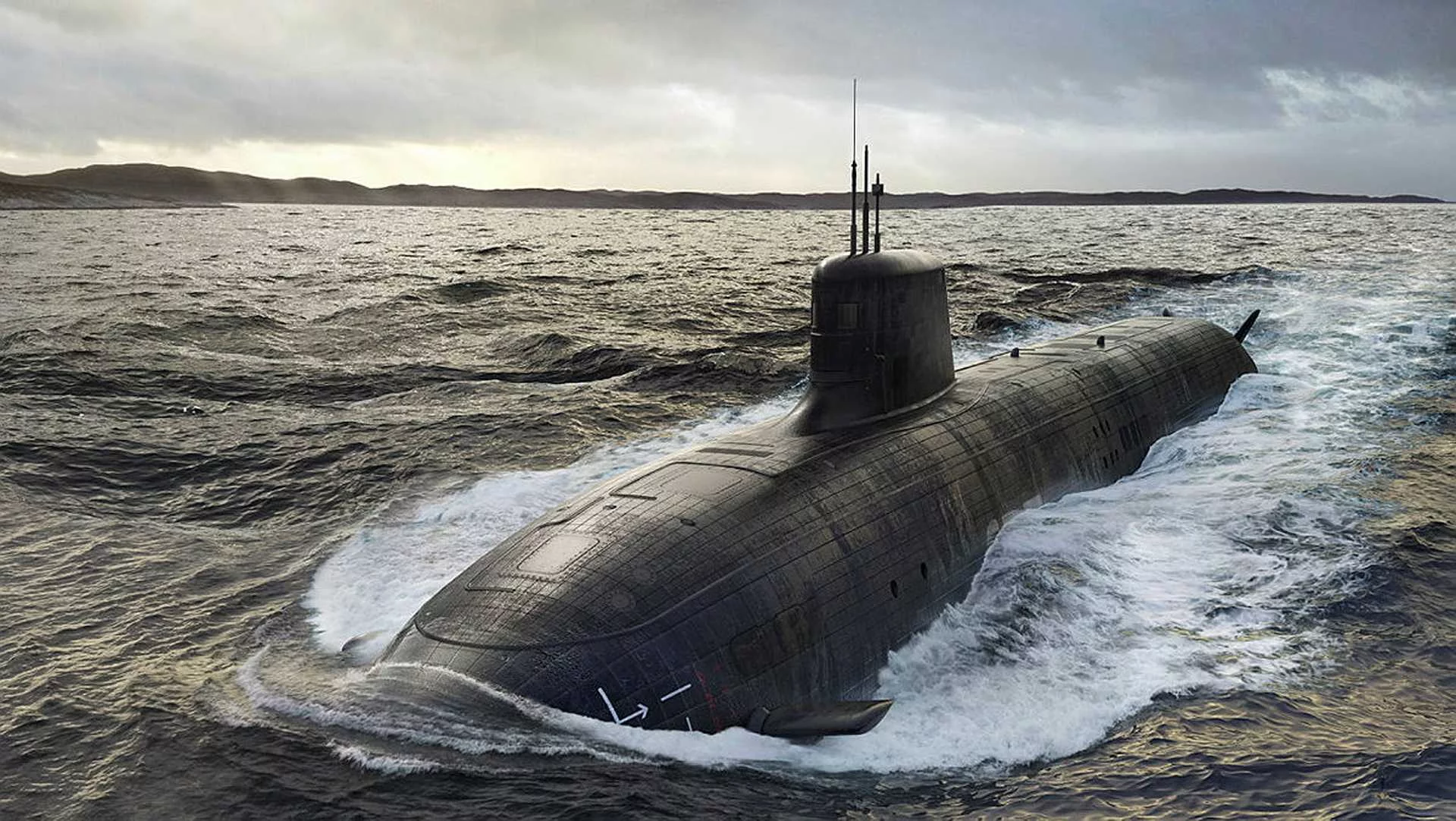
The United Kingdom has officially begun production work on the SSN-AUKUS nuclear-powered attack submarine program, aimed at supporting both the United States and Australia in the Indo-Pacific region. On June 25, 2025, Babcock announced the start of initial long-lead activities for this trilateral effort between the UK, Australia, and the US, highlighting one of the UK’s first industrial contributions to the partnership. This update was shared as part of Babcock’s preliminary financial results for the year ending March 31, 2025. The company’s Mission Systems division secured two contracts during this period, enabling it to start acquiring components for the weapon handling and launch system that will be part of the successor to the Astute-class submarines. Babcock’s role in SSN-AUKUS builds on its extensive experience with submarine programs like Astute and Dreadnought, including manufacturing missile tube assemblies for the UK and US strategic deterrent fleets.
The SSN-AUKUS submarine is designed to succeed the UK’s Astute-class vessels from the late 2030s onward, and will also serve as the backbone for Australia’s first fleet of nuclear-powered attack submarines with conventional armaments. This program, forming a key element of the AUKUS Pillar 1 initiative, originates from the UK’s SSN(R) concept, itself evolved from the Maritime Underwater Future Capability project launched in 2018. After delays in previous submarine programs, the initiative was rebranded SSN-AUKUS in March 2023 when Australia officially joined. The UK and Australia are collaboratively developing this new class, incorporating advanced US technologies including propulsion systems, vertical launch capabilities, and a shared combat system based on the AN/BYG-1, enhancing interoperability among the three navies. The UK plans to build up to 12 boats, while Australia aims to construct five submarines at Osborne Naval Shipyard and acquire up to five Virginia-class submarines from the US.
Built on the SSN(R) design foundation, the SSN-AUKUS boats are expected to displace over 10,000 tons, powered by Rolls-Royce’s PWR3 reactor driving a turbo-electric propulsion system, and equipped with X-shaped control surfaces for improved maneuvering. Features anticipated include a shrouded propulsor to reduce noise, hull-mounted hydroplanes, and optronic masts replacing traditional periscopes. Armament will likely consist of six 21-inch torpedo tubes suitable for torpedoes, mines, or unmanned underwater vehicles, plus three modular payload compartments with seven vertical launch tubes each, enabling deployment of land-attack cruise missiles and future weapons. Sensor suites are projected to feature bow sonar, flank arrays, and fin-mounted sensors for comprehensive underwater surveillance. These details derive from publicly available concept imagery and analysis rather than official technical specs.
Construction of the first UK SSN-AUKUS submarine is planned for late 2020s at BAE Systems’ Barrow-in-Furness facility, with service entry expected in the late 2030s. Australia aims to start building its first vessel by decade’s end, targeting delivery in the early 2040s. Rolls-Royce’s Raynesway plant in Derby will produce the reactors, undergoing expansion funded by both UK and Australian governments. Australia has committed £2.4 billion over ten years to support the facility’s growth alongside its own shipyard investments. Workforce integration is progressing with Australian personnel embedded in UK and US submarine programs. Over the next decade, the program is projected to generate 30,000 UK-based jobs, 30,000 apprenticeships, and 14,000 graduate roles. Full-rate production is expected to begin in the 2030s, delivering a submarine every 18 months, pending a production approval anticipated in 2028 following the completion of the Detailed Design and Long Leads phase.
The UK Government’s 2025 Strategic Defence Review (SDR) announced increased defence spending targets—2.6% of GDP by 2027, potentially rising to 3% in the following parliamentary term—including £6 billion for nuclear submarine production and £4.5 billion for munitions. The SDR highlighted defence’s role in economic growth and stressed enhanced industrial cooperation. Investments include £250 million for expanding facilities at HMNB Clyde in Scotland. The SSN-AUKUS initiative is integral to strengthening the UK’s submarine readiness and industrial base. Australia’s involvement also includes the H&B Defence joint venture between Babcock and HII, which secured a contract in May 2025 to lead a two-year supplier qualification program aimed at integrating Australian firms into the Virginia-class supply chain.
The SSN-AUKUS program has emerged amid challenges faced during the Astute-class build, where only five of the planned boats have been commissioned and two remain under construction. Infrastructure delays at key bases like Devonport and Faslane have restricted operational availability. Some vessels, such as HMS Ambush and HMS Artful, have not conducted missions for years, while HMS Audacious awaited dry dock access for 18 months. The new submarine class aims to resolve previous design issues affecting maintenance and upgrades. Infrastructure projects like EUSTON are underway to acquire floating dry docks and reduce congestion. However, workforce expansion remains challenging due to the specialized skills required and competition with civilian employment.
US contributions include transferring three Virginia-class submarines to Australia starting in the early 2030s, with potential for two more. The Submarine Rotational Force – West, based at HMAS Stirling, will feature a rotation of one UK Astute-class and up to four US Virginia-class submarines beginning in 2027. Australia’s IAEA safeguards restrict domestic nuclear fuel production, so reactor units will be manufactured and sealed in the UK. A bilateral UK-US Status of Forces Agreement signed in 2024 enables Royal Navy participation in rotations. Concerns about US industrial capacity to supply both navies have prompted a Pentagon review and calls for Australia to increase defence spending from 2% to 3.5% of GDP. Political analysts warn of potential delays or reduced US submarine deliveries, emphasizing contingency planning by Australia.
As of mid-2025, SSN-AUKUS remains a trilateral program with design and technology sharing across the three nations. The UK’s submarine count target stands at up to 12, with no official cap yet. Total program costs are projected to exceed $40 billion. The initiative overlaps with the UK’s Dreadnought ballistic submarine build continuing through the 2030s, both forming part of the Defence Nuclear Enterprise, which is receiving additional funding. Australian investments in UK industrial capacity aim to ease supply chain pressures and support critical component production like pressure hull steel, valves, batteries, and electrical systems. This industrial participation also prepares Australia’s domestic sector for future submarine manufacturing. The Nuclear Skills Taskforce, established in 2023, coordinates workforce development and academic partnerships to address nuclear defence personnel shortages.
If delivered as planned, SSN-AUKUS submarines will perform intelligence gathering, surveillance, anti-submarine and anti-ship warfare, and precision strike missions. They are expected to penetrate anti-access/area-denial zones, conduct extended patrols, deploy unmanned underwater vehicles, and support special operations. Designed for decades-long service, the class will form a cornerstone of UK and Australian naval strategy and contribute to US strategic presence in the Indo-Pacific. While industrial, financial, and personnel challenges persist, SSN-AUKUS is central to AUKUS Pillar 1 submarine cooperation and will shape defence plans for the participating countries well into the 2030s and beyond.
