

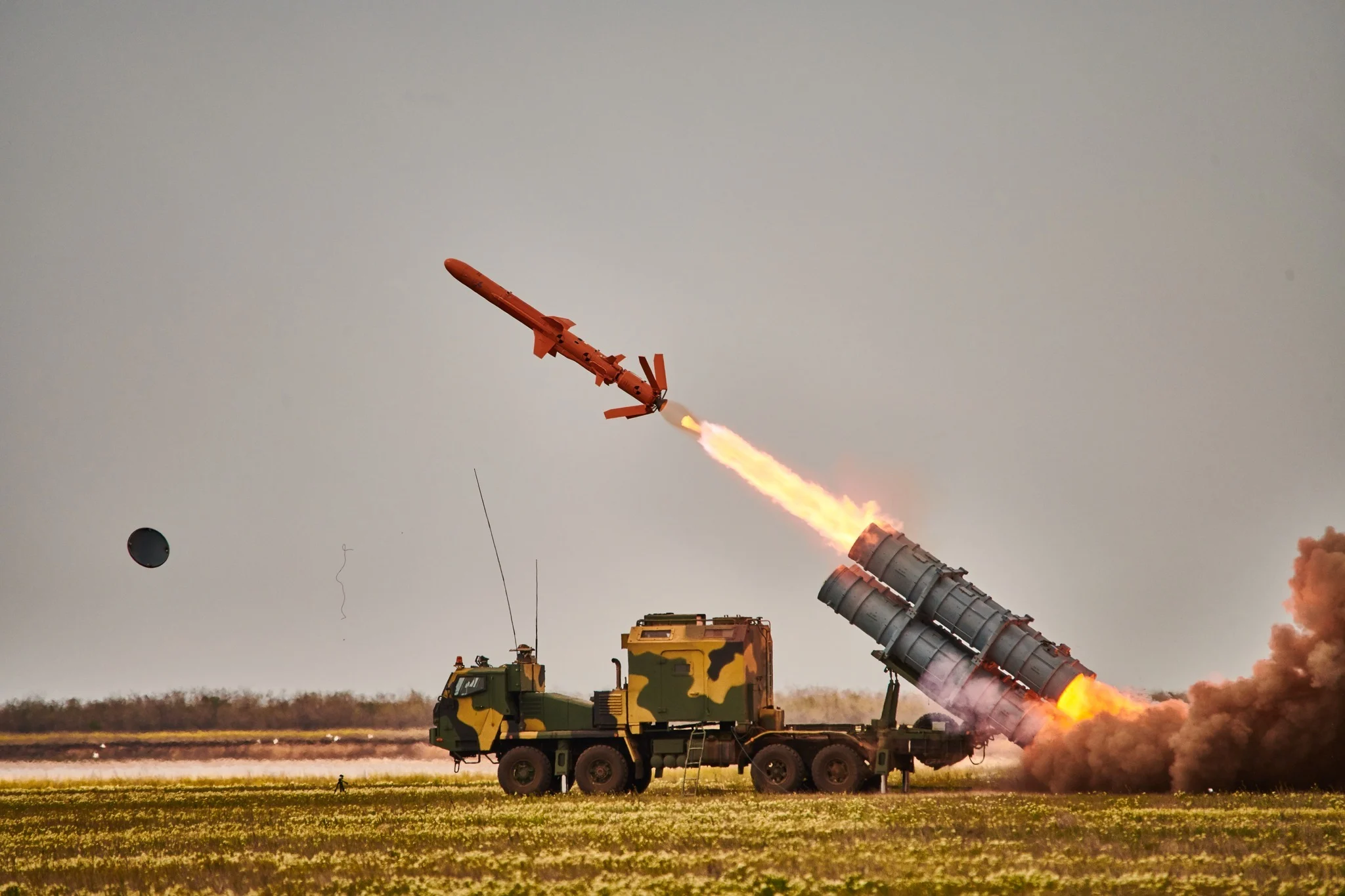
According to a report by Militarnyi on August 25, 2025, Ukraine has officially confirmed the existence of the Long Neptune, an extended-range version of its domestically developed Neptune cruise missile. The system was revealed through footage published by Zbroya, putting an end to months of speculation.
By enlarging its fuselage and fuel capacity, the missile can reportedly achieve a strike range of up to 1,000 kilometers. President Volodymyr Zelensky announced in March 2025 that testing was complete and that the missile had already been used in combat. Explosions at Russia’s Tuapse oil refinery and an energy facility in Bryansk have been linked to the system.
Compared to the original R-360, the new missile is about 1.5 meters longer and is believed to carry a warhead of 300–350 kilograms. Its guidance system combines inertial and satellite navigation for midcourse flight with infrared or electro-optical seekers for terminal accuracy.
The Neptune family first gained global attention in April 2022 when two missiles struck and sank the Russian cruiser Moskva in the Black Sea. Since then, Ukraine has adapted Neptune for land-attack missions. The Long Neptune now gives Ukraine the ability to hit critical Russian infrastructure deep inside its territory, reducing reliance on Western-provided long-range weapons. This milestone underscores the rapid evolution of Ukraine’s defense industry under wartime pressure.
