

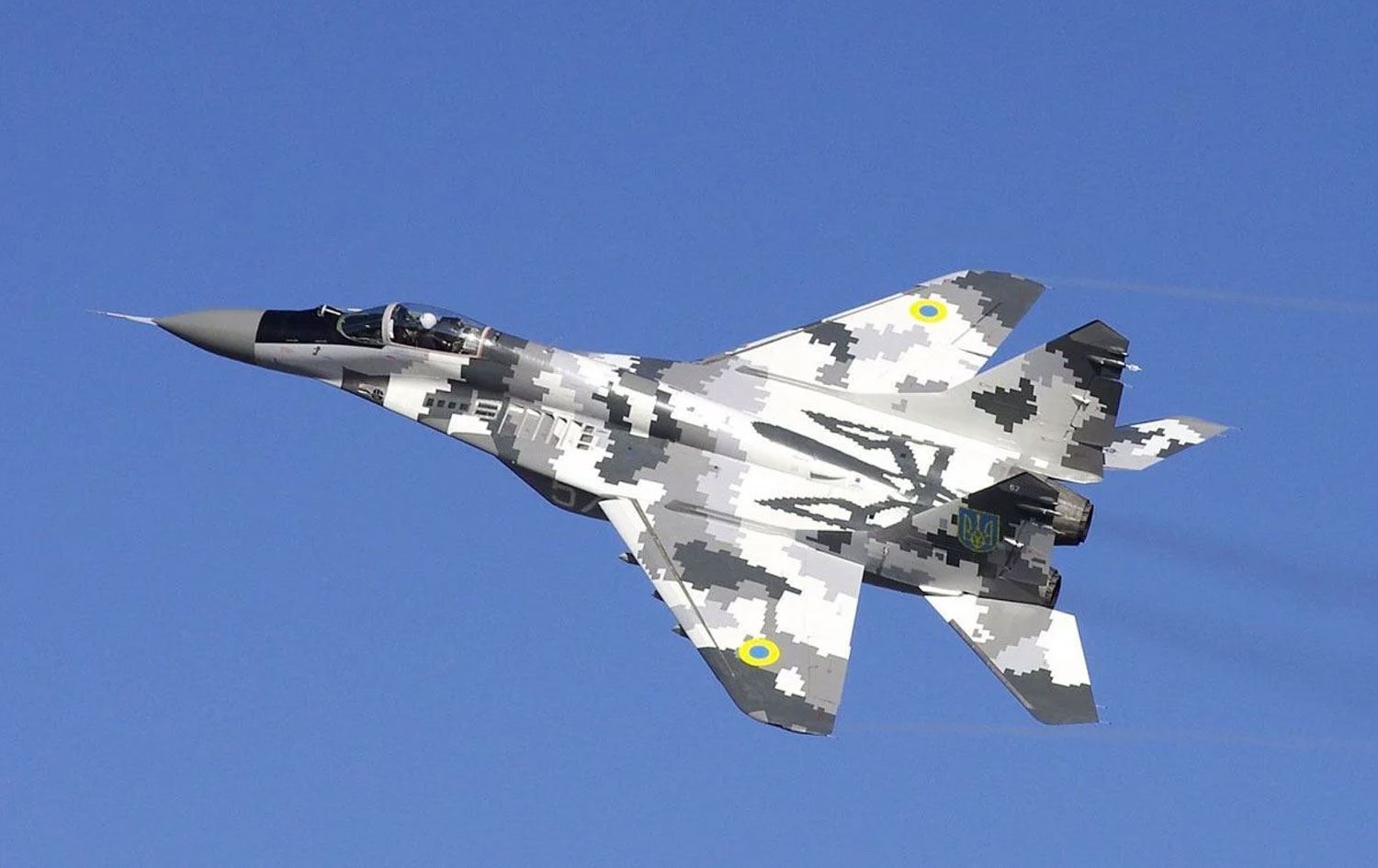
A Ukrainian Air Force MiG-29 struck a key Russian-held bridge in the Zaporizhzhia region on 16 November 2025 using two U.S.-supplied GBU-62 guided bombs equipped with JDAM-ER kits. The long-range precision strike disabled one of the most important supply routes supporting Russian operations in the south.
JDAM-ER Equipped MiG-29s Targeting Russian Logistics Network
Footage shared by Ukrainian sources shows the MiG-29 releasing two GBU-62 glide bombs on a critical crossing near Kamianske. The direct hit destroyed one of the bridge’s supporting pillars, rendering the asphalt route unusable. This road had been the most reliable supply line for Russian forces in that sector.
According to the Soniashnyk platform run by Ukrainian Air Force personnel, the MiG-29/JDAM-ER pairing is now being used systematically to target high-value infrastructure such as bridges and crossings. This tactic has become a central element of Ukraine’s broader strategy to wear down Russian logistics along the southern front.
Soviet-Era MiG-29 Evolving Into a Hybrid Western Strike Platform
Originally developed in the 1970s as a highly maneuverable air-superiority fighter, the MiG-29 has been extensively adapted by Ukraine throughout the war. Once limited to unguided Soviet munitions, the aircraft can now deploy Western missiles like AGM-88 HARM and precision glide bombs such as the GBU-62.
The JDAM-ER kit—combining GPS/INS guidance with fold-out wings—allows the bomb to glide up to 70–80 kilometers depending on release altitude. Ukrainian engineers designed a custom launcher rail compatible with the MiG-29, enabling accurate data transfer to the bomb even without a NATO-standard avionics system.
Stand-Off Strike Capability Shaping Battlefield Dynamics
JDAM-ER gives Ukraine the ability to hit deep Russian rear-area targets without entering dense air-defense zones. This capability:
- rivals the stand-off range of HIMARS GMLRS rockets,
- provides a far more cost-effective alternative to cruise missiles,
- delivers significant operational impact on fixed targets such as bridges, depots, and command nodes.
Destroying crossings forces Russian units to reroute supplies through longer, more vulnerable paths, complicating efforts to sustain offensive operations.
Russian UMPK Glide Kits Show a Similar Concept
Russia also uses UMPK kits to convert FAB-series bombs into glide munitions for aircraft like the Su-34. However, Ukraine employs its limited JDAM-ER inventory more selectively, focusing on high-value strategic infrastructure. The strike near Kamianske is a clear example of this targeted approach.
Strategic Impact: A Major Blow to Russian Movements in the South
The targeted bridge had served as the main supply artery for Russian forces advancing toward settlements such as Stepove and Lobkove. Its destruction disrupts Russia’s operational tempo and forces additional resources toward securing and repairing alternative routes.
The mission highlights Ukraine’s transformation of its MiG-29 fleet into hybrid platforms capable of long-range precision warfare. As these systems appear more regularly over Zaporizhzhia and even Russian territory, commanders must account for potential JDAM-ER strikes on any major crossing or logistics hub within dozens of kilometers of the front line.
