

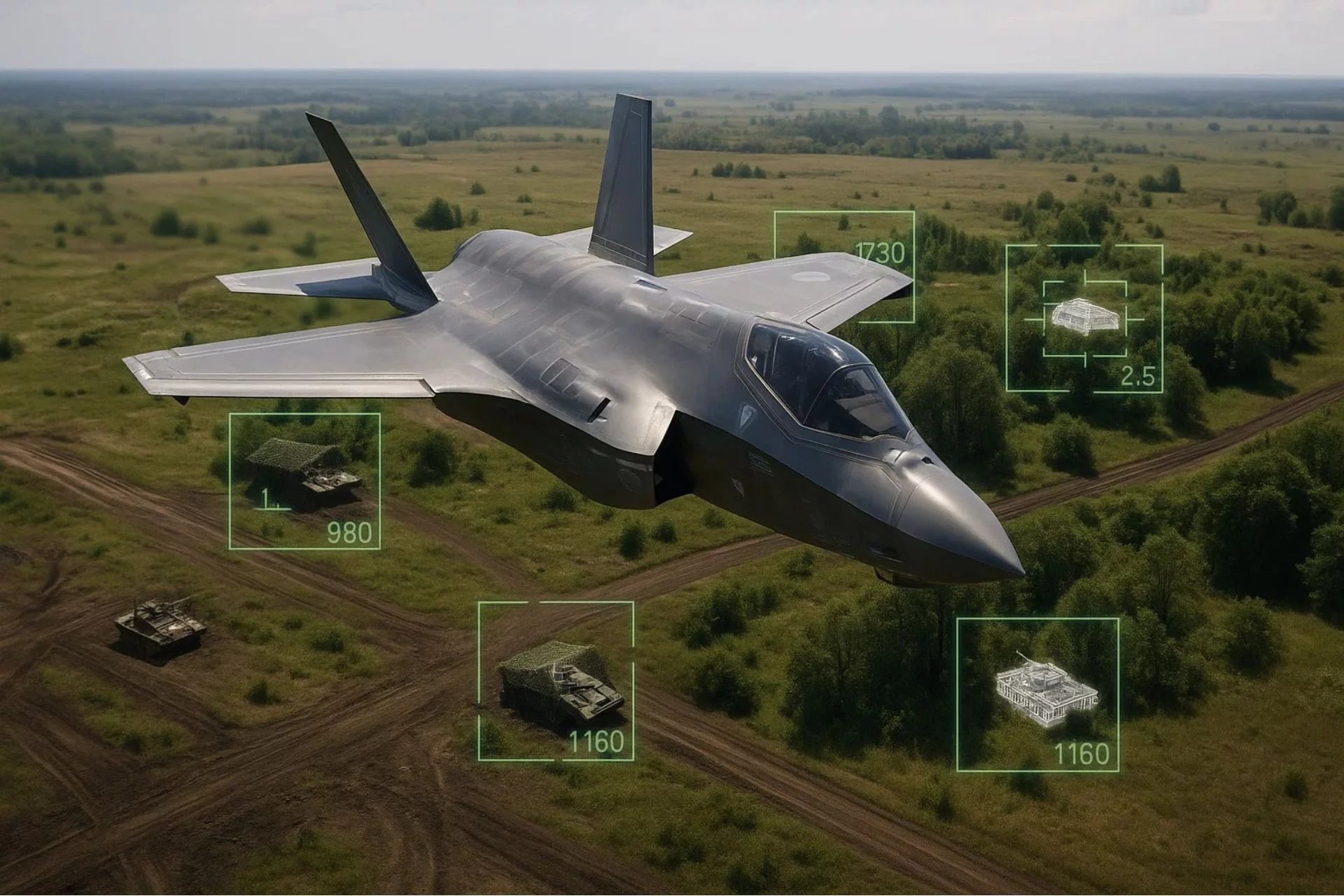
The US Air Force is pushing forward with its Advanced Tracking Architecture Using AI (ATA-AI) program, a $99 million initiative launched in July 2024 to revolutionize target tracking in modern operational environments. Reported by Military AI on August 13, 2025, the program seeks to deliver a next-generation architecture capable of detecting, classifying, and tracking a wide range of targets—even in the most contested battlespaces.
ATA-AI aims to leverage artificial intelligence, machine learning, and high-performance computing to process vast amounts of heterogeneous data in real time. Inputs may include 3D pixel streams, vectors, and point clouds from diverse sensor platforms, ranging from radar and electro-optical systems to infrared and synthetic aperture radar (SAR). The architecture will fuse these sources into a unified operational picture while filtering and prioritizing information for rapid human or automated decision-making.
The system is being designed to counter increasingly stealthy, agile, and unpredictable threats that may use radar signature reduction, electronic countermeasures, or coordinated drone swarms. By integrating multi-source data fusion and predictive analysis, ATA-AI aims to compress the sensor-to-shooter loop—even in degraded conditions such as electronic warfare, GPS disruption, or anti-access/area-denial (A2/AD) environments.
Interoperability is central to the program’s concept. ATA-AI will be built to fit into the Pentagon’s Joint All-Domain Command and Control (JADC2) framework, enabling US and allied forces to share a constantly updated tactical picture across air, land, sea, space, and cyber domains. This adaptability could see the system adopted beyond the Air Force, benefiting the US Navy, Army, and Space Force in areas such as missile defense, surveillance, and space domain awareness.
Strategically, ATA-AI is part of Washington’s effort to match or surpass the AI-driven targeting and ISR capabilities of rivals like China and Russia. Both have accelerated development of autonomous targeting systems and integrated battle management tools. For the US, ATA-AI not only strengthens operational capabilities but also shapes the evolution of future command-and-control doctrines. It could serve as a testbed for advanced decision-support tools and sensor integration methods, with applications reaching far beyond its initial scope.
