

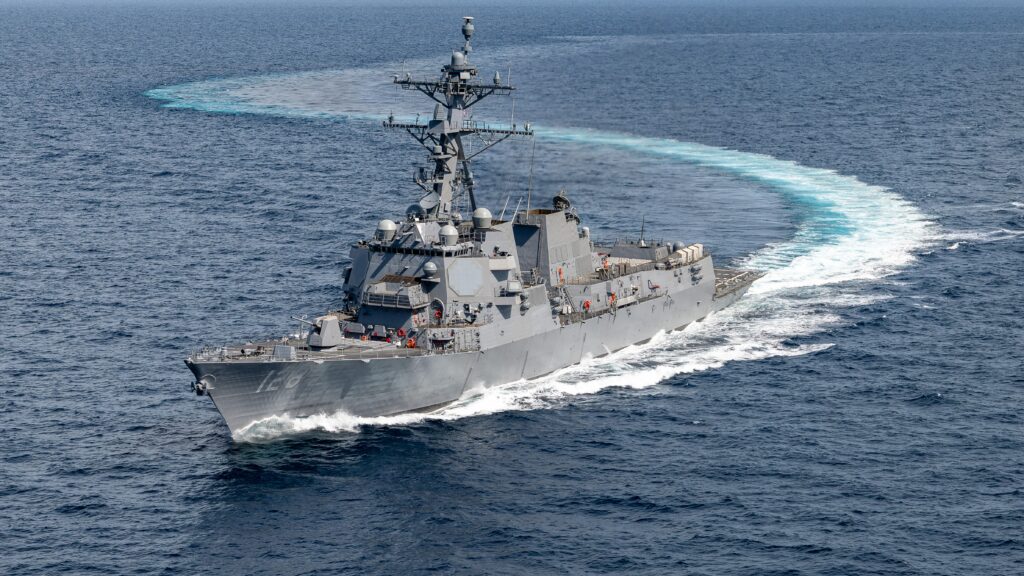
Huntington Ingalls Industries has announced that the future USS Ted Stevens (DDG 128), one of the latest Flight III Arleigh Burke–class destroyers, has successfully concluded its acceptance trials in the Gulf of Mexico under the evaluation of the Navy’s Board of Inspection and Survey (INSURV). The achievement confirms the vessel’s readiness for delivery and marks another milestone in the Navy’s ongoing surface fleet modernization effort.
Critical Performance Metrics Verified
Constructed at HII’s Ingalls Shipbuilding facility in Pascagoula, the destroyer underwent comprehensive testing covering propulsion performance, navigation accuracy, combat system integration and overall seaworthiness. According to the Navy’s announcement on November 21, 2025, the ship met all contractual and technical requirements during the multi-day evaluation.
Flight III: A Major Evolution of the Arleigh Burke Class
USS Ted Stevens is the second Flight III destroyer built by HII and one of the first in its class to reach the acceptance milestone. Flight III represents the most significant leap in capability within the Arleigh Burke program, incorporating major sensor, power and combat systems upgrades.
At the core of the enhancement is Raytheon’s AN/SPY-6(V)1 Air and Missile Defense Radar, an AESA system using gallium nitride technology that provides more than 30 times the sensitivity of the SPY-1D(V). The new radar offers greatly improved detection and discrimination against advanced cruise missiles, maneuverable ballistic missiles and emerging hypersonic threats. Integrated with the Aegis Baseline 10 combat system, SPY-6 enables simultaneous engagement across air, surface and subsurface domains.
To support the radar’s power demands, Flight III ships feature redesigned electrical generation and distribution systems, expanded cooling and HVAC capacity, and structural modifications on the upper deck. Although they retain the classic Arleigh Burke hull, their internal layout and warfare systems represent a generational upgrade.
Path to Delivery and Commissioning
During trials, Navy inspectors assessed the destroyer’s propulsion plant, communications architecture, weapons integration and damage control readiness under operational conditions. The successful evaluation now clears the vessel for final outfitting before delivery, expected within weeks, with commissioning projected for 2026.
Strengthening the Future U.S. Surface Fleet
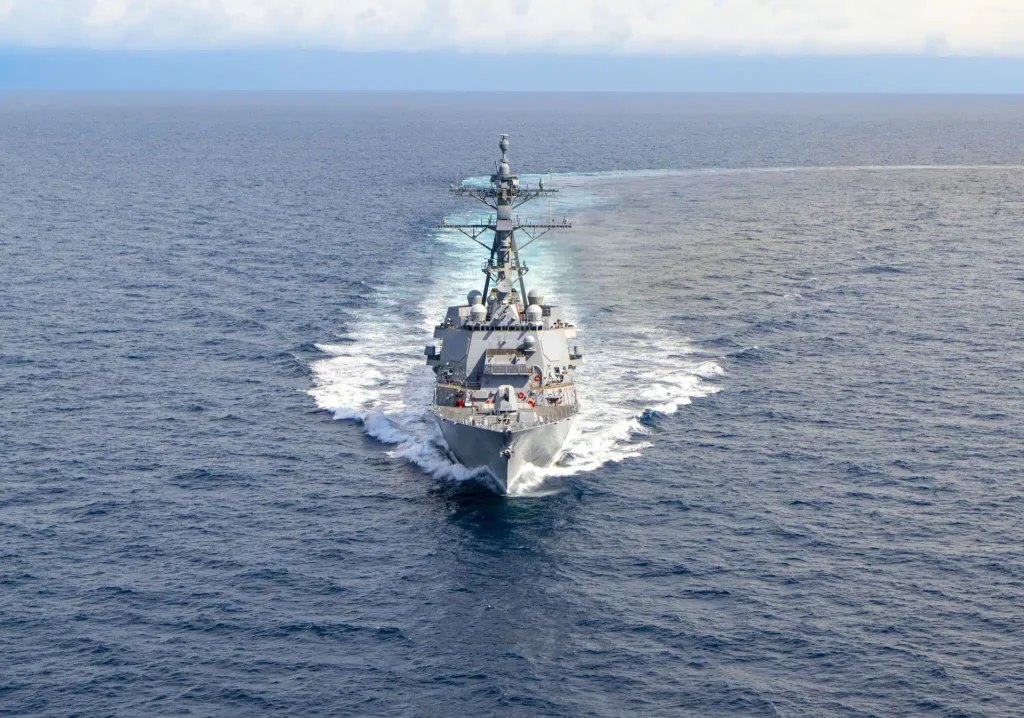
Named after the late Senator Ted Stevens of Alaska, the destroyer will join the U.S. Navy’s largest and longest-serving class of surface combatants. With 74 Arleigh Burke-class ships in active service as of late 2025, the class remains central to U.S. maritime operations worldwide. Flight III destroyers are expected to remain in frontline service into the 2070s as primary air-defense escorts for carrier strike groups and forward-deployed naval forces.
HII currently has five additional Flight III destroyers under construction, including Jeremiah Denton (DDG 129), George M. Neal (DDG 131), Sam Nunn (DDG 133) and Thad Cochran (DDG 135), all featuring the advanced SPY-6 radar and Aegis Baseline 10 architecture.
Strategic Impact in Key Maritime Regions
As geopolitical competition intensifies, Flight III destroyers like USS Ted Stevens will provide enhanced missile-defense coverage and sensor reach in contested theaters such as the Western Pacific, Eastern Mediterranean and Arctic regions. Their expanded integration capability and layered-defense architecture offer critical advantages against the increasingly complex anti-ship and long-range strike weapons fielded by China and Russia.
The successful trials of DDG 128 reaffirm the technical maturity of the Flight III platform and highlight its role in equipping the U.S. Navy with the capabilities required to maintain maritime superiority in the decades to come.
