

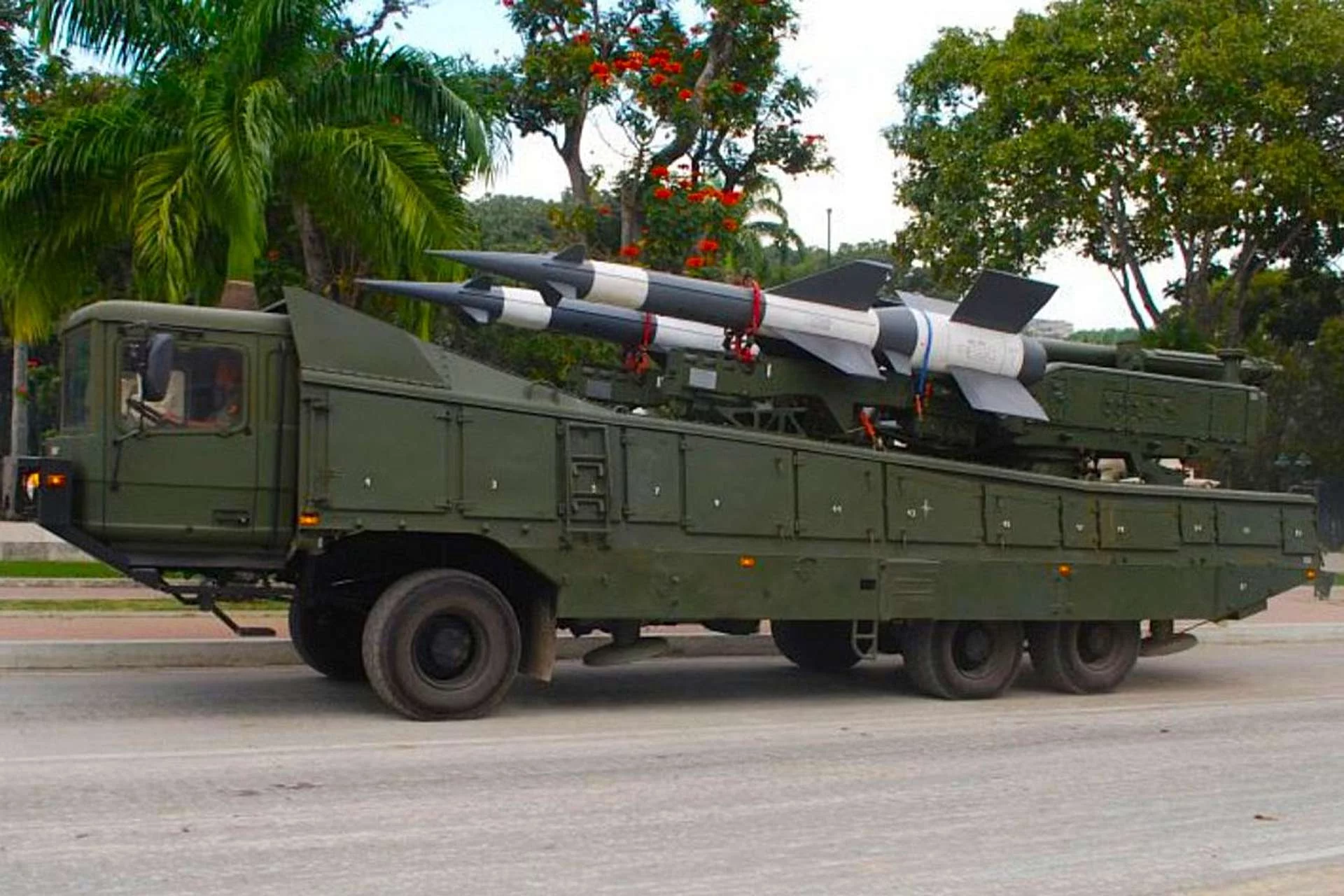
On October 3, 2025, social media posts showed Venezuela’s S-125 Pechora-2M moving west from Maracay toward Carabobo via Peaje La Cabrera. This corridor connects the central valley to the Caribbean coast, forming a strategic link between Aragua and Carabobo. The redeployment follows U.S. notifications on October 1–2 labeling actions against drug cartels as an “armed conflict” and Caracas’ claims of offshore F-35 activity.
By combining mobility, medium-altitude coverage, and coastal positioning, the Pechora-2M raises the cost of any potential operation and deters opportunistic probing. The upgraded system features digital processing, enhanced electronic protection, and electro-optical fallback modes, allowing it to engage targets even in degraded conditions. Truck-mounted launchers and radar units can relocate quickly, complicating adversary targeting and delaying strike packages.
Positioned toward Carabobo, the battery strengthens Venezuela’s layered anti-access and area-denial strategy along the central coast. Coastal industrial zones, ports, and transport hubs become more resilient, while low-altitude corridors for U.S. ISR and maritime patrol aircraft are restricted. The La Cabrera corridor allows rapid redeployment westward toward Valencia or back to the central valley, enhancing unpredictability.
Strategically, the forward deployment of the Pechora-2M forms a mid-tier defensive layer, signaling that any U.S.-led operation would face early friction. It forces adversaries to commit sorties for intelligence and electronic warfare, narrows permissive airspace, and increases the operational cost of approaching the central coastline. Venezuela’s move demonstrates a clear intent to protect critical infrastructure and coastal approaches while amplifying risk and resource demands for any potential U.S. action in the southern Caribbean.
