

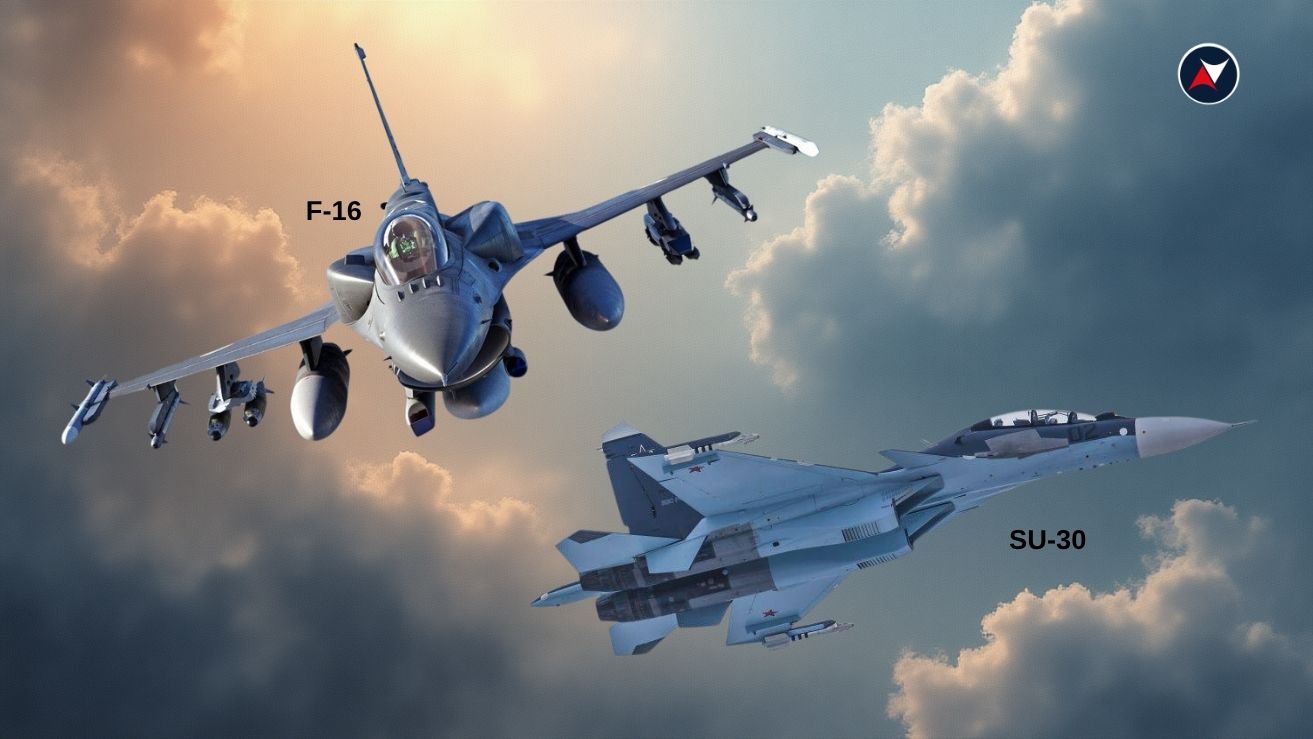
Venezuela has released new cockpit-recorded footage showing F-16 and Su-30 fighter jets conducting joint maneuvers, a move widely interpreted as a signal of deterrence at a time of heightened U.S. military activity in the Caribbean. The video, published on 14 November 2025 through official Venezuelan Air Force channels, features three F-16 Fighting Falcons flying in formation alongside four Su-30MK2 multirole fighters during coordinated tactical flights.
The footage—captured on a pilot’s phone—comes just days after a similar video from 8 November showing several F-16s over Maracay. Together, these releases appear to form part of a broader communication effort by Caracas as U.S. naval deployments and discussions of potential intervention increase regional tension.
Although informal in style, the video provides insight into the current operational readiness of Venezuela’s combat aviation fleet. Mixed formations executing basic air maneuvers indicate that at least part of the F-16 and Su-30 inventory remains flyable despite years of sanctions, parts shortages and well-documented maintenance challenges.
The contrast between the two aircraft types highlights Venezuela’s shifting defense relationships over time. The F-16s—obtained in the 1980s under a U.S. military assistance program—once formed the backbone of Venezuela’s fighter fleet but have since been crippled by escalating U.S. sanctions that restricted access to spare parts and upgrades. Only a limited number remain mission capable today, making their presence in the footage symbolically significant.
By contrast, the Su-30MK2s reflect Venezuela’s pivot toward Russia in the mid-2000s. Equipped for long-range strike and maritime operations, the Su-30s provide the heavy combat punch of the Venezuelan Air Force, even though their operational availability has also been affected by maintenance difficulties.
Together, the aircraft offer Venezuela a flexible—though limited—mix of capabilities. The F-16s still serve roles such as rapid intercept, airspace monitoring, and close escort, while the Su-30s are suited for long-range patrols, anti-ship missions, and deep-strike operations. In theory, mixed fighter packages could complicate U.S. surveillance and create operational dilemmas in a crisis.
However, against a vastly superior U.S. presence—including carrier strike groups, advanced fighters, and integrated air-and-missile defense networks—Venezuela’s realistic strategy centers on selective, small-scale sorties aimed at signaling political resolve rather than contesting air superiority.
This is where the strategic purpose of the video becomes apparent. For domestic audiences, the footage projects strength and preparedness. For regional observers, it signals that Caracas still views its fighter fleet as a core element of deterrence. And for the U.S., the imagery serves as a reminder that Venezuela maintains a residual air combat capability that could complicate operational planning.
The release follows similar clips published throughout October and November, suggesting that Venezuela is deliberately using airpower imagery as a tool of crisis messaging—highlighting its ability to keep fighters operational even under sanctions and economic strain. Despite a small fleet and limited resources, the display reinforces Venezuela’s intention to remain visible and assertive in the regional security landscape.
