

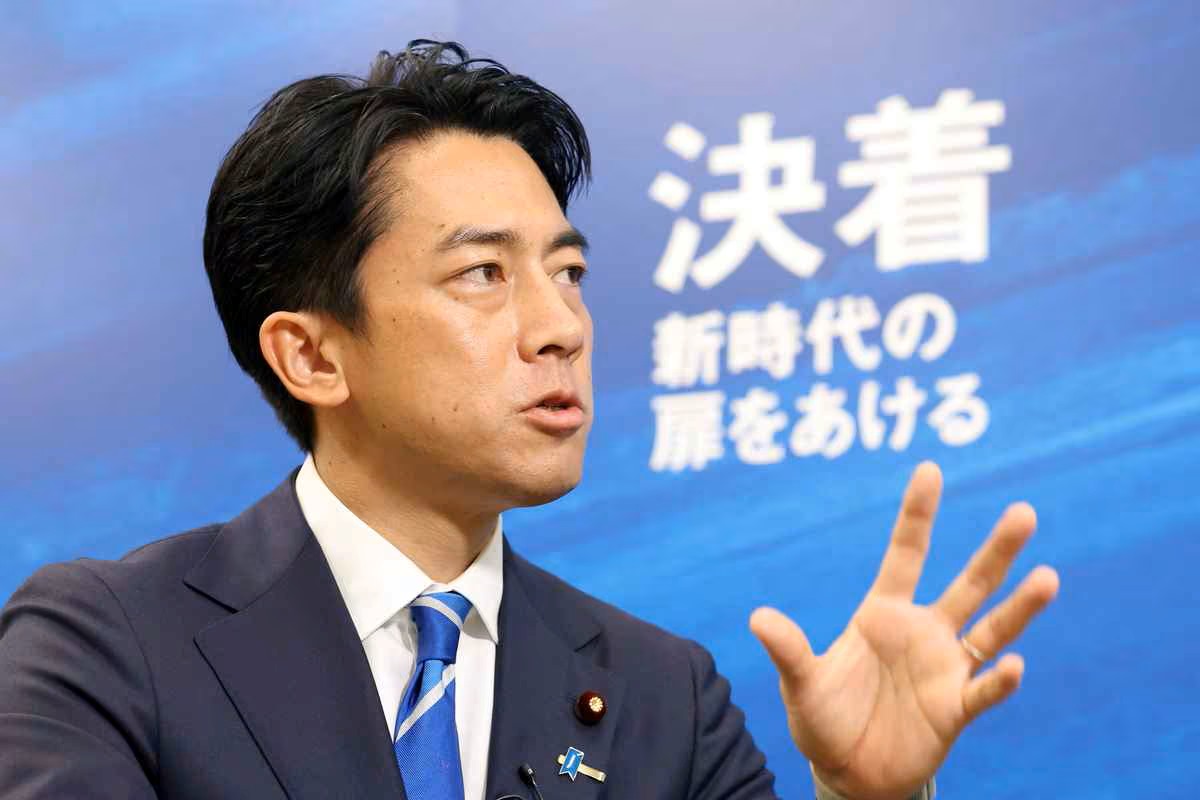
Japan’s Defense Minister Shinjiro Koizumi has called for a nationwide debate on whether future submarines should adopt nuclear propulsion, as regional security dynamics continue to evolve rapidly across East Asia.
Speaking on November 7, Koizumi stated that no decision had yet been made but emphasized the need for public discussion, noting that “the regional balance is tilting toward nuclear-powered fleets.” In a televised interview the previous day, he remarked, “Every neighboring country is moving toward possessing nuclear submarines — this is no longer something unusual.”
Koizumi’s comments came shortly after reports of U.S. approval for South Korea to develop its own nuclear submarine program. China continues to expand both its nuclear attack and ballistic missile submarine fleets, while North Korea has openly declared plans to build nuclear-powered submarines under its five-year defense roadmap. With these shifts, Tokyo is reassessing its maritime strategy.
A blue-ribbon panel formed by Japan’s Ministry of Defense in September recommended studying “next-generation propulsion systems” for submarines equipped with vertical launch systems capable of firing long-range missiles. Officials identified solid-state batteries and fuel cells as promising options but declined to rule out nuclear power. Meanwhile, the October 20 coalition agreement between the ruling Liberal Democratic Party and Nippon Ishin included a commitment to pursue VLS-equipped submarines with advanced propulsion — wording that keeps the nuclear path open.
Japan has three plausible options should it decide to move forward with nuclear propulsion:
- The AUKUS model (UK-U.S.): Offers interoperability, shared safety standards, and allied integration.
- France’s Barracuda design: Features a quiet pump-jet system, strong endurance, and industrial cooperation potential.
- The U.S. Virginia class: Provides unmatched strike and ISR capabilities but faces strict export and capacity constraints.
Japan’s current Taigei-class diesel-electric submarines are among the world’s quietest, offering excellent coastal defense and endurance. Yet, they must periodically surface to recharge and cannot maintain high submerged speeds for extended missions. Nuclear-powered submarines, by contrast, can stay underwater for months, sustain high-speed operations, and deliver constant strategic pressure.
For Koizumi, the key question is not whether nuclear propulsion is unusual — but whether Japan can afford to remain the only major naval power in its region without it.
