

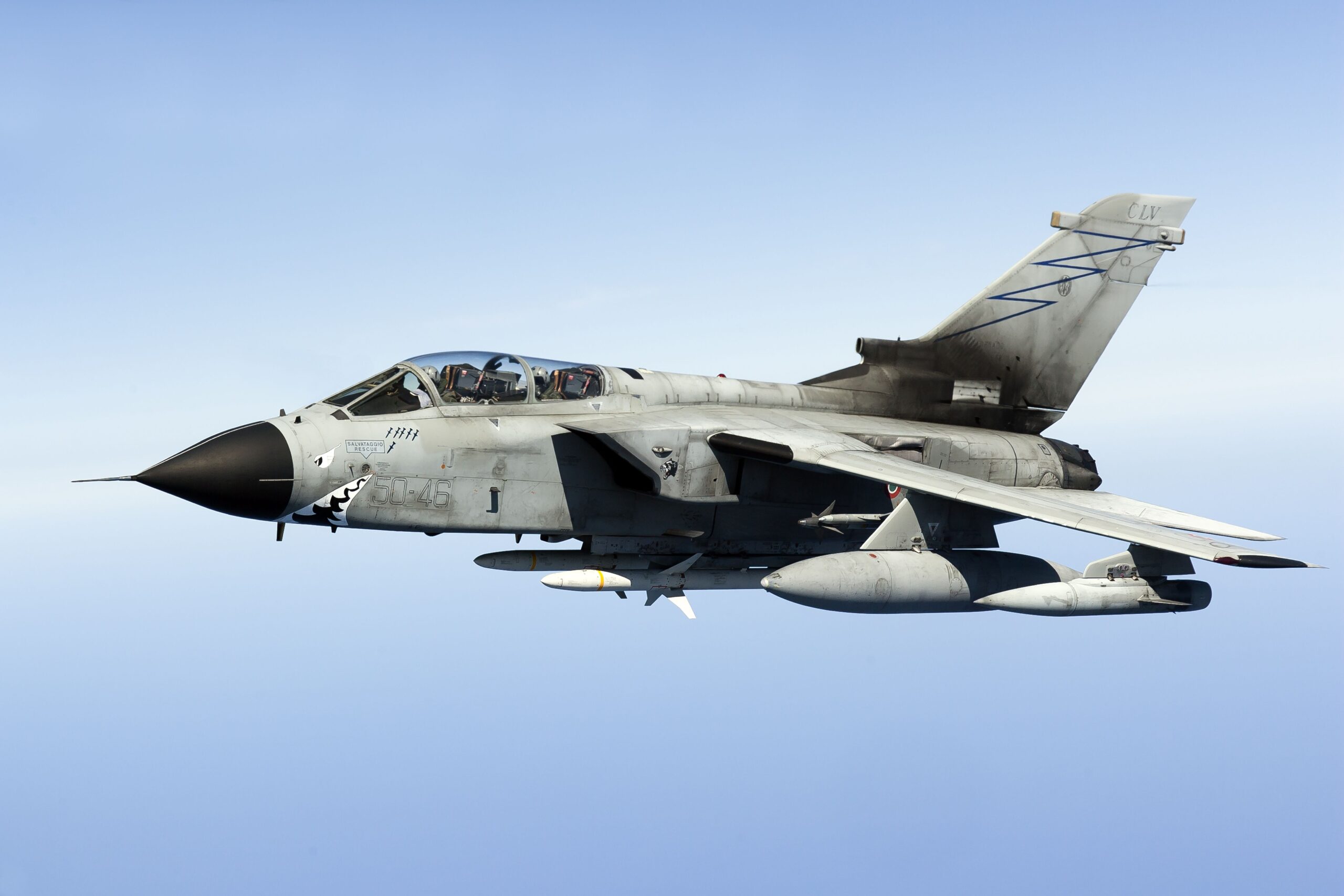
Developed to meet the strategic needs of the Cold War era, the Panavia Tornado became a cornerstone of modern military aviation, emerging from the collaborative engineering vision of the United Kingdom, West Germany, and Italy. This twin-engine, variable-sweep wing jet stood out for both its advanced technical features and proven operational performance.
Developed Through a Tri-National Partnership
The development of the Tornado was undertaken by Panavia Aircraft GmbH, a multinational consortium established in 1969. The consortium brought together British Aerospace from the UK, MBB from Germany, and Aeritalia from Italy. The aircraft’s maiden flight took place on August 14, 1974, and it officially entered service in 1979.
Three Primary Variants for Diverse Missions
The Panavia Tornado was designed in three primary variants based on mission requirements:
- Tornado IDS (Interdictor/Strike): Used for strike and ground-attack missions.
- Tornado ECR (Electronic Combat/Reconnaissance): Developed for electronic warfare and suppression of enemy air defenses (SEAD).
- Tornado ADV (Air Defence Variant): Designed for long-range air interception missions.
Thanks to its versatility, the Tornado was able to replace multiple aircraft across various roles in the air forces of its users.
Combat-Proven Across Multiple Conflicts
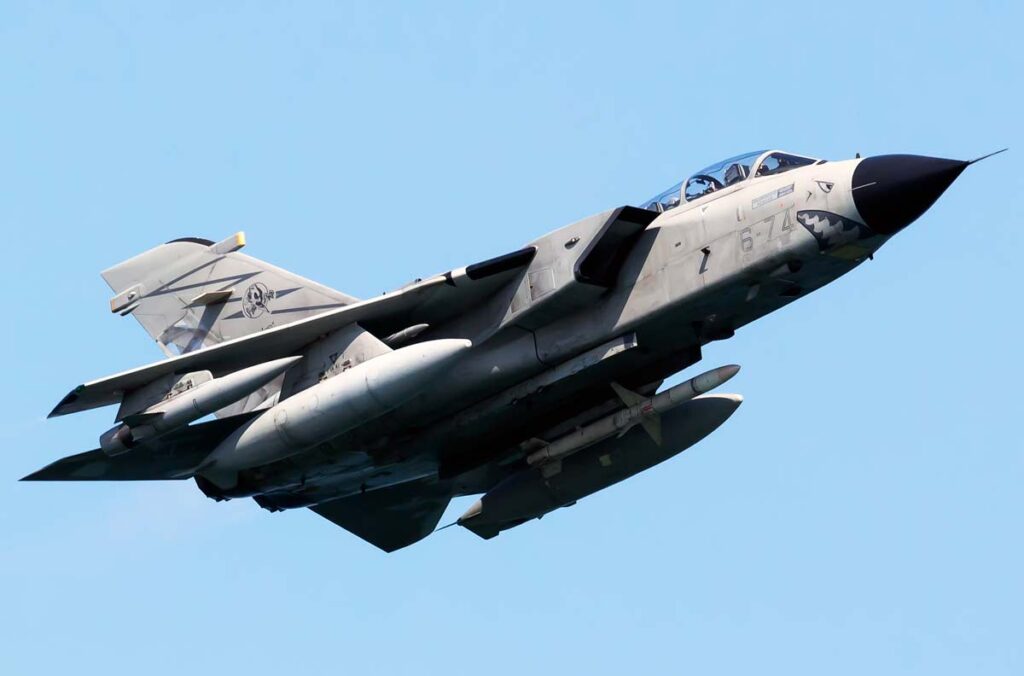
The Tornado saw its first combat deployment during the 1991 Gulf War, where it was operated by the Royal Air Force (RAF), the Italian Air Force, and the Royal Saudi Air Force (RSAF), playing a key role in low-altitude bombing missions. It was later deployed in conflicts across Bosnia, Kosovo, Iraq, Libya, Afghanistan, Yemen, and Syria.
Technical Power and Speed
The Tornado boasts a top speed of 2,340 km/h, a service ceiling of 50,000 feet, and a range of 1,391 km. Its variable-geometry wings provide excellent maneuverability at high speeds and the ability to take off from shorter runways. The aircraft is capable of carrying precision-guided munitions such as laser-guided bombs, making it highly effective in modern combat scenarios.
Production and Operators
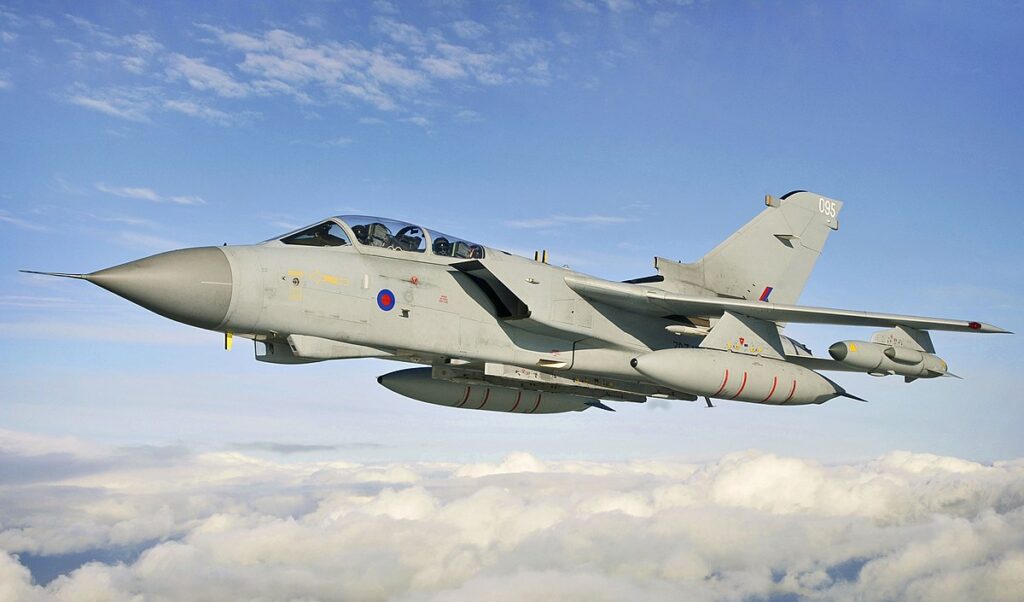
A total of 990 Tornado aircraft were produced. In addition to the original partner nations, Saudi Arabia became the sole export customer. While the Royal Air Force retired its Tornado fleet in 2019, the aircraft remains in active service with Germany, Italy, and Saudi Arabia.
Beyond being a prime example of European defense cooperation, the Panavia Tornado secured its place in military aviation history as one of the pioneers of the multi-role combat aircraft concept.
