

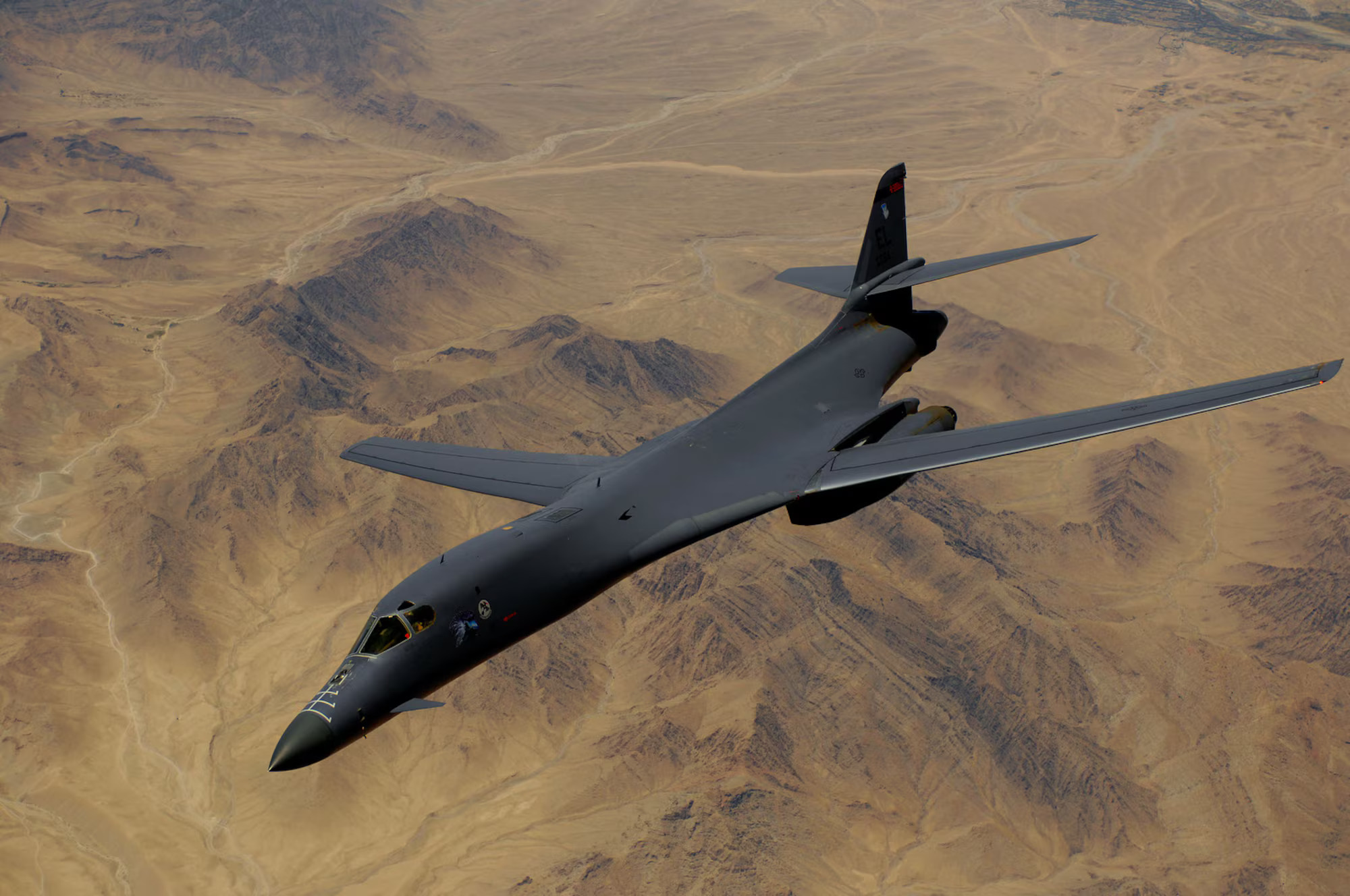
The U.S. Air Force has taken a decisive step to enhance the firepower and flexibility of its B-1B Lancer bombers by awarding Boeing a contract to supply Load Adaptable Modular (LAM) pylons. These next-generation mounting systems will dramatically increase the aircraft’s payload options, ensuring the B-1 remains a vital asset in an evolving combat environment shaped by emerging threats and mission demands.
Each B-1B will be equipped with six LAM pylons, specially engineered to carry either two standard 2,000-pound (907 kg) munitions or one heavyweight payload exceeding 5,000 pounds (over 2,268 kg). This modular configuration gives ground crews the agility to tailor bomb loads in real time to fit specific operational objectives — whether it’s precision strikes, heavy penetrator missions, or the integration of future hypersonic weapons.
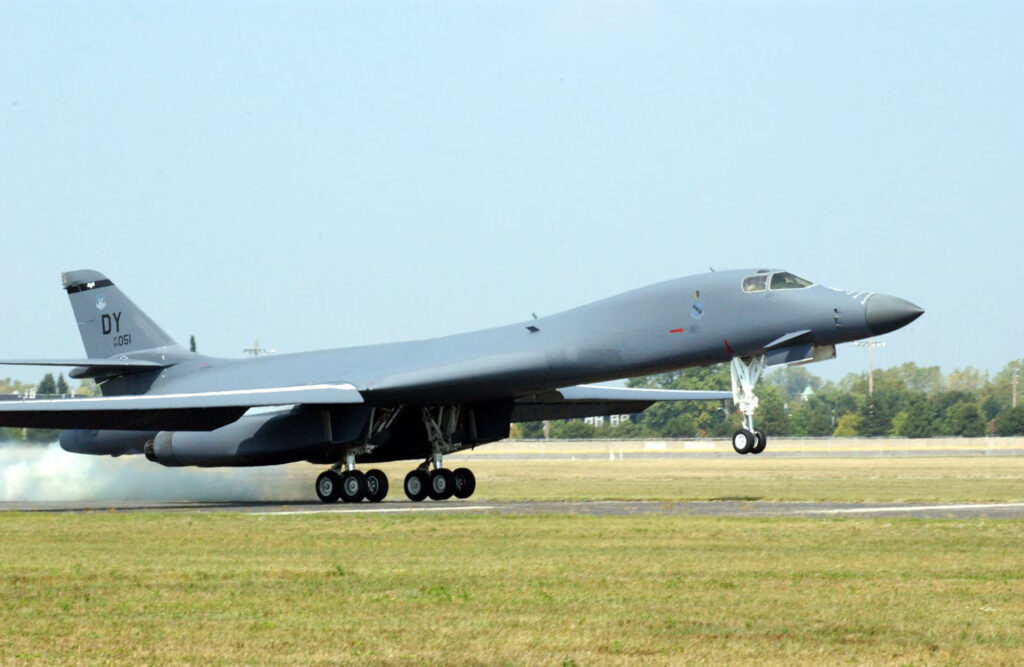
The LAM pylons not only expand the B-1’s strike envelope but also align with the U.S. military’s emphasis on speed, adaptability, and mission-specific lethality. Boeing highlights that this system enhances both “mass and flexibility,” key parameters in today’s high-threat environments where air superiority relies on rapid payload adaptability and long-range strike capacity.
First introduced in the 1980s, the B-1B Lancer — originally built by Rockwell and now managed by Boeing — continues to serve as the backbone of America’s conventional bomber force. With its variable-sweep wings, supersonic capability, and ability to fly at low altitudes, the B-1 has long been a cornerstone for deep-strike missions, strategic bombing campaigns, and theater-level dominance. Over time, it has proven adaptable to a wide spectrum of missions, including maritime strike and close air support — capabilities rarely associated with strategic bombers.

The latest upgrade underscores the Air Force’s intention to keep the B-1B operationally relevant into the future. Recent ground and flight tests conducted by the 412th Test Wing at Edwards Air Force Base validated the safe use of LAM pylons with inert test loads. Ongoing trials will ensure full fleet certification, paving the way for global deployment with live weapons — including advanced air-launched systems that extend well beyond traditional bombing roles.
What makes this development particularly significant is the B-1’s newfound role as a platform for cutting-edge munitions. As the U.S. Air Force pivots toward integrating hypersonic weapons into its arsenal, the B-1 — equipped with LAM pylons — is poised to become a launchpad for these game-changing systems. This ensures the bomber’s relevance not just in today’s missions, but in the high-speed, precision-focused warfare of tomorrow.
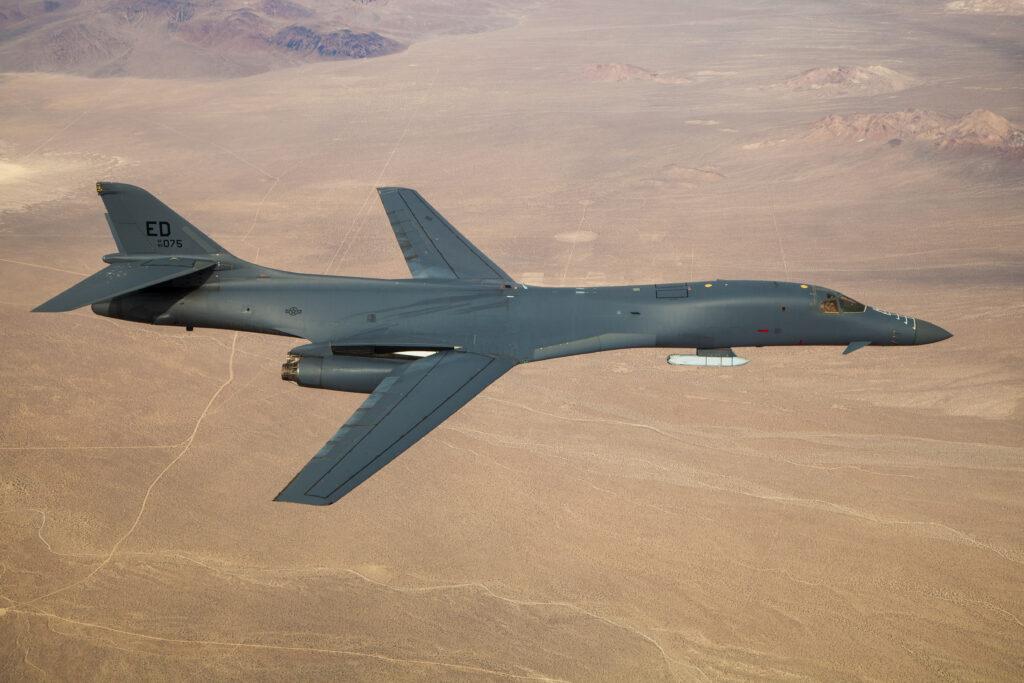
In essence, the LAM pylon contract is more than a technical upgrade — it’s a strategic investment in the future of American airpower. By amplifying the B-1’s payload diversity and enabling it to carry heavier, more advanced ordnance, the Air Force is reinforcing its global strike capability with a platform that’s faster, more versatile, and better prepared for 21st-century challenges.
