

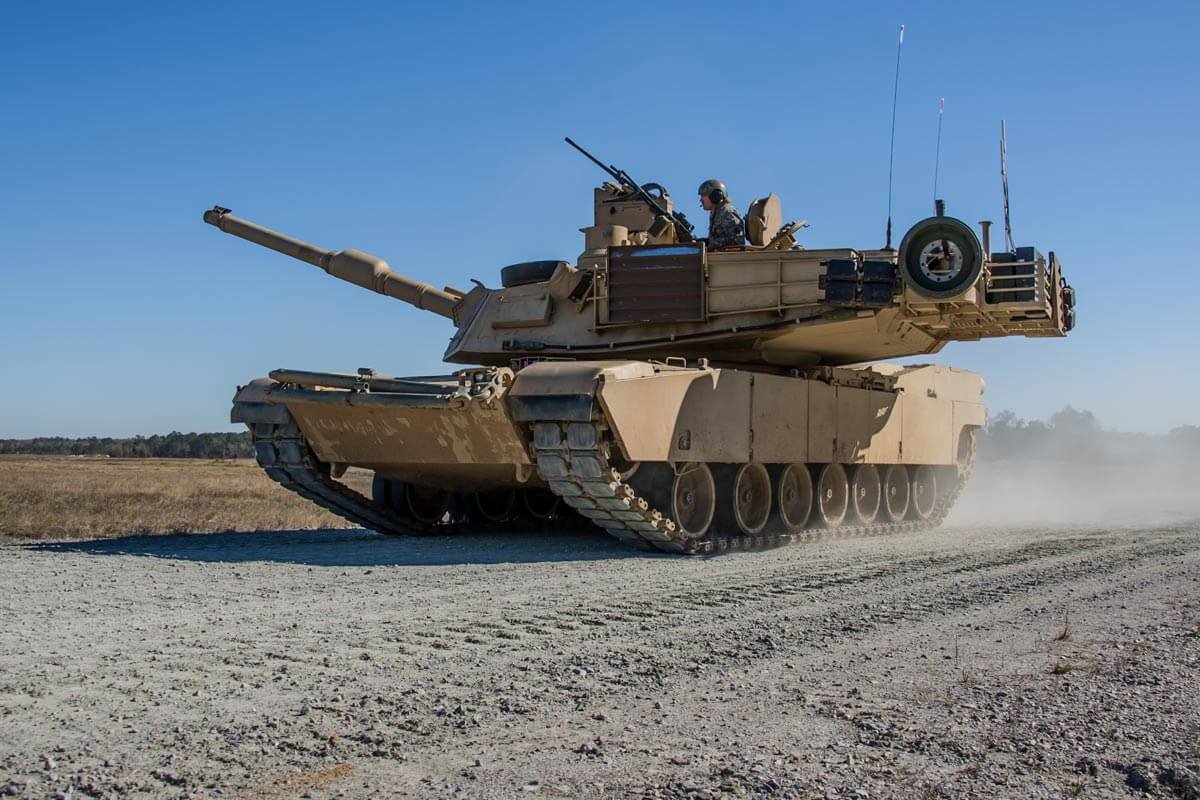
The first batch of second-hand M1A1 AIM Abrams main battle tanks donated by the Australian government arrived on Ukrainian soil last week.
Manufactured in the United States and still bearing Australia’s distinctive AusCam camouflage paint, the tanks were loaded onto a commercial cargo ship in early May at the port of Geelong, Australia, and set off on a long and careful journey to war-torn Ukraine. Accompanied by Australian tank crews, the armored vehicles were unloaded at an undisclosed port in Europe—likely in Poland—where they underwent maintenance and final preparations before delivery to Ukraine.
On July 19, Australia’s Department of Defence announced, “Ukraine has now taken possession of the majority of these tanks, with the final tranche set to be delivered in the coming months.”
Australia had pledged to donate 49 M1A1 Abrams tanks recently retired from its military inventory. Ukraine’s Ambassador to Australia, Vasyl Myroshnychenko, commented on X, saying the decision was “more than military support—it’s a lifeline, a powerful message of solidarity showing we’re not alone in our darkest hour.”
Valued at approximately 245 million Australian dollars (roughly 160 million U.S. dollars), the donation is part of a broader assistance package totaling A$1.5 billion that Australia has committed since Russia’s full-scale invasion of Ukraine in February 2022.
Before being shipped, the tanks were modified to meet Ukrainian battlefield requirements. Minister for Defence Industry Pat Conroy noted that “these specially adapted M1A1 Abrams tanks will provide enhanced firepower and mobility for the Ukrainian Armed Forces.”
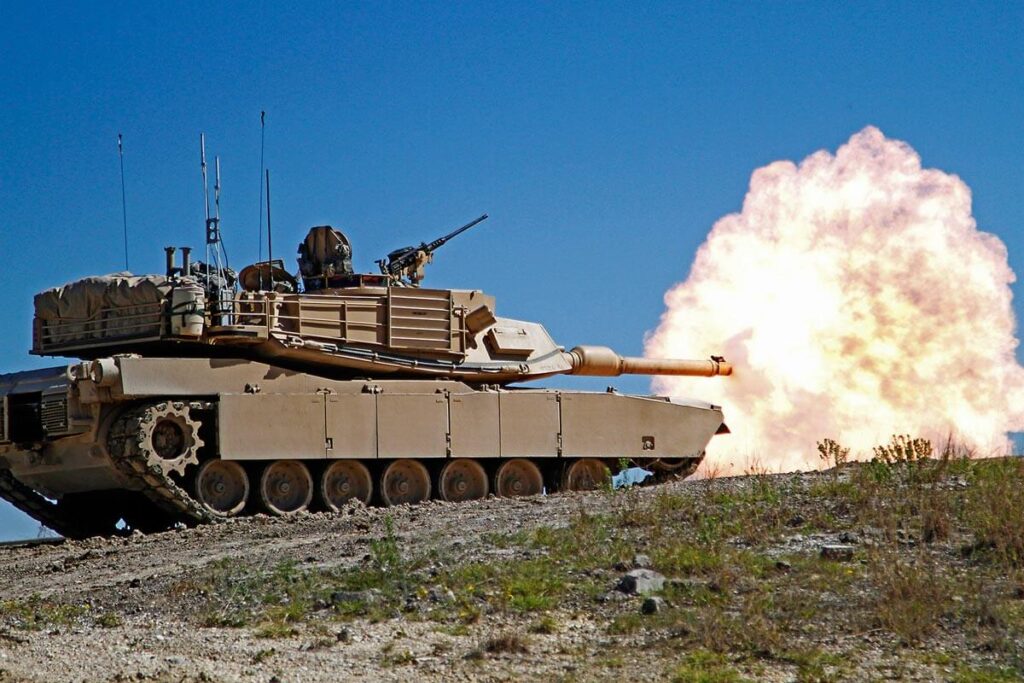
These tanks were removed from the Australian Army’s inventory as the country began receiving its newer M1A2 SEPv3 Abrams tanks. Australia ordered 75 units of this latest variant in 2022.
Meanwhile, the M1A2 SEPv3 tanks are currently being tested intensively in the ongoing Talisman Sabre exercise, which began on July 13 in Australia. As part of the exercise, four M1A2 Abrams tanks and one M88A2 recovery vehicle were loaded onto a U.S. Army landing craft in Townsville and transported to the port of Gladstone. This activity was designed to demonstrate interoperability between Australia and the U.S. military.
Speaking on the importance of such amphibious operations, Lieutenant Eugene Lynch, troop commander from D Squadron, 2nd Cavalry Regiment of the Australian Army, told Defense News: “It’s extremely important for us. Our strategic focus is the Indo-Pacific region, which is characterized by archipelagos and coastal environments. Being able to project force into that area is absolutely essential.”
Lieutenant Lynch highlighted the significant upgrade from the M1A1 to the M1A2 SEPv3, saying Australian tank crews were “extremely excited” to operate the new generation vehicles:
“We know it’s the best,” he added.
When asked whether tanks have become less relevant on the modern battlefield, Lynch pointed directly to Ukraine:
“The fact that every tank factory in the world is still running at full production is the answer to that question. When a tank shows up on the battlefield, it immediately becomes the top-priority target.”
