

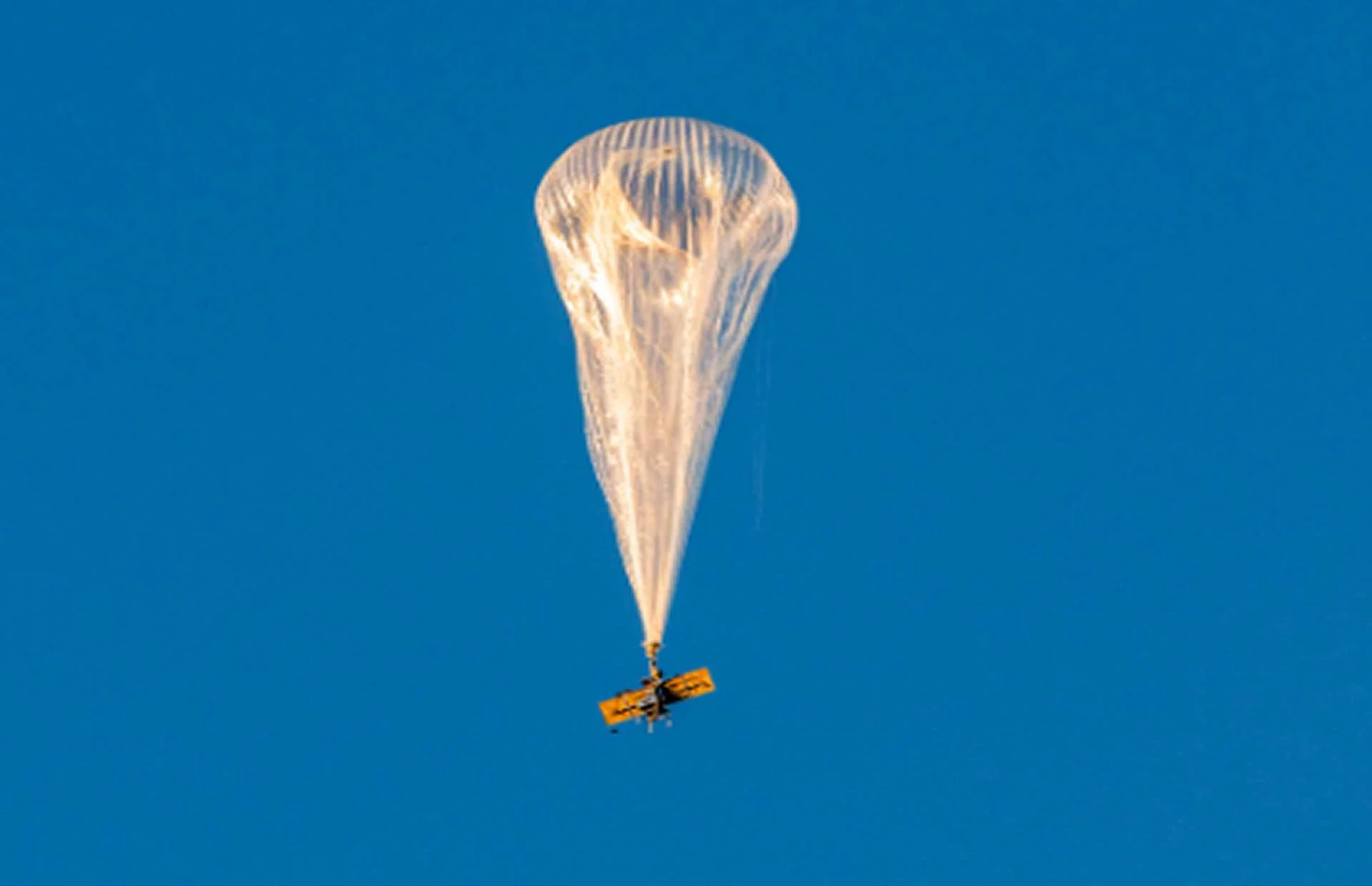
The U.S. Northern Command announced on August 6, 2025, that a high-altitude balloon was launched on August 4 from the Malemute Drop Zone at Joint Base Elmendorf-Richardson in Alaska. Conducted with support from Aerostar, the mission is part of the large-scale ARCTIC EDGE 2025 exercise, aimed at enhancing U.S. and allied preparedness in the Arctic, validating advanced lighter-than-air (LTA) technologies, and strengthening interoperability in one of the world’s most strategically sensitive and environmentally harsh regions.
Organized by U.S. Northern Command and NORAD, ARCTIC EDGE 2025 brings together the U.S. Army, Air Force, Navy, Marine Corps, Coast Guard, and the Canadian Armed Forces in a joint training framework. The exercise tests all-domain operations — including ground maneuvers, airlift, maritime security, space-based communications, and cyber defense — under extreme Arctic conditions.
The Aerostar High-Altitude Platform System (HAPS) used in the exercise represents a new generation of stratospheric intelligence, surveillance, and reconnaissance (ISR) technology. Operating at altitudes between 60,000 and 100,000 feet, the balloon is built from ultra-light polyethylene, filled with helium or hydrogen, and kept aloft via solar-powered flight controls and variable ballast systems. Its payload bay can be configured with high-resolution EO/IR cameras, synthetic aperture radar (SAR), electronic support measures (ESM), signals intelligence (SIGINT) receivers, and long-range communications relays. Data is securely transmitted to ground stations via encrypted links or satellite channels.
With endurance ranging from 30 to 60 days depending on conditions, these platforms provide persistent coverage at a fraction of the cost of satellites or high-end UAVs. In the Arctic — where severe weather, magnetic interference, and limited infrastructure hinder traditional ISR assets — such balloons can monitor key chokepoints, track ice drift, oversee vessel movements, and extend communications beyond satellite reach.
Unlike the covert Chinese surveillance balloons that entered U.S. and allied airspace in 2023, the Aerostar deployment is transparent, defensive, and cooperative. The Chinese incursions were seen as violations of sovereignty and international norms, triggering the shootdown of multiple balloons and heightened strategic competition over stratospheric capabilities.
The Arctic’s growing strategic importance stems from its vast untapped resources and newly accessible sea lanes due to melting ice. While Russia expands its military footprint with new bases, airfields, and Arctic-specific weapon systems, China — branding itself a “near-Arctic state” — is investing in polar infrastructure and dual-use research projects. In response, the U.S., Canada, and allies like Norway and Denmark are upgrading infrastructure, increasing patrols, and investing in Arctic-adapted ISR platforms.
The integration of high-altitude balloons into ARCTIC EDGE 2025 is more than a technical milestone — it is a clear strategic message. It signals a determination to maintain domain awareness, deter hostile actions, and respond rapidly to emerging threats in a region where isolation and extreme conditions have historically worked in adversaries’ favor.
