

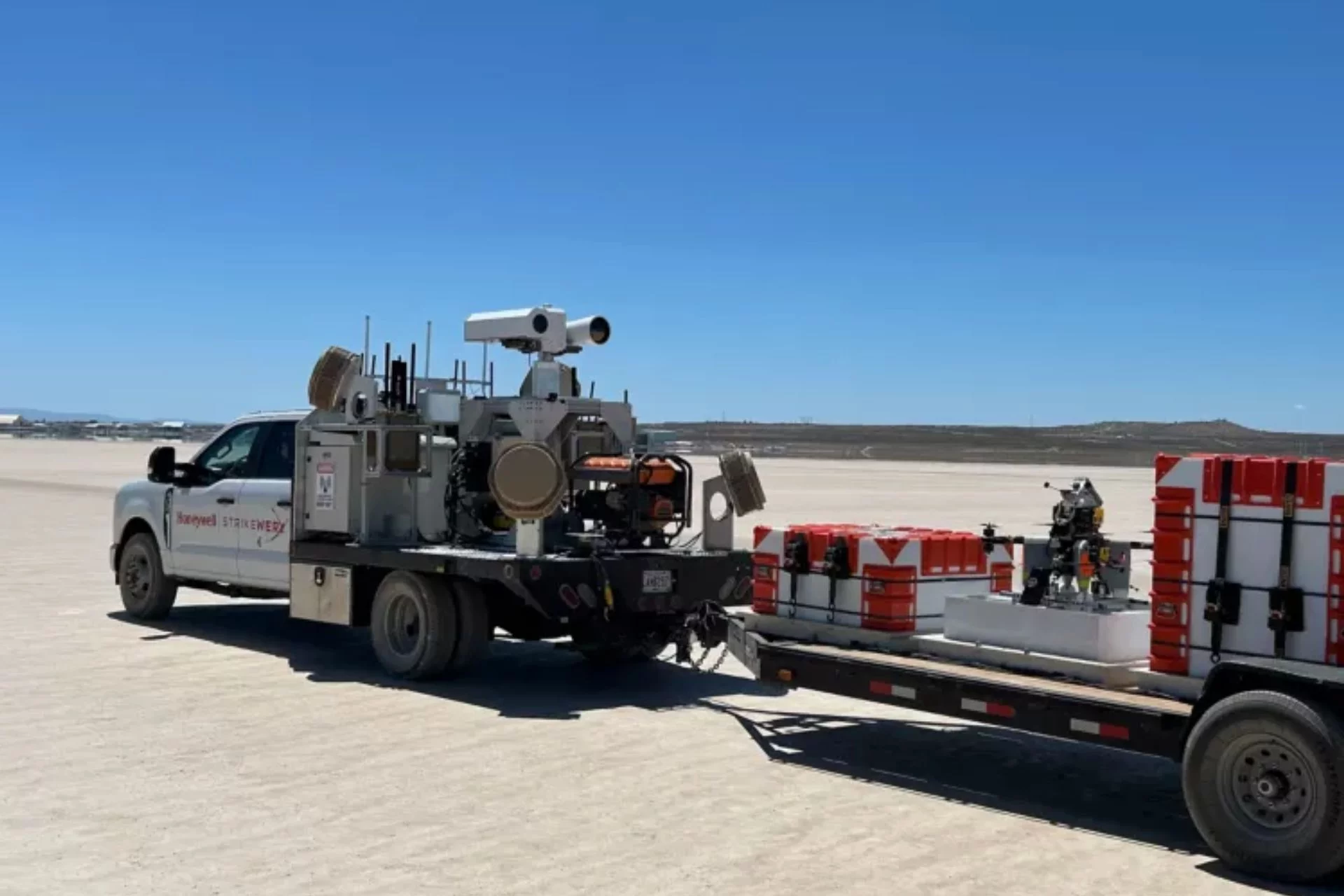
U.S. technology company Honeywell announced it has successfully demonstrated its SAMURAI counter-unmanned aerial system (C-UAS) to American military operators. The demonstration, held on September 22, showcased the system operating from a ground vehicle and from an aerostat positioned more than 1,000 feet in the air.
SAMURAI is designed as a modular architecture that integrates with existing military assets, linking radio frequency detection, electro-optical and infrared tracking, and identification tools with both electronic and kinetic countermeasures under a single command-and-control interface. This allows operators to view a unified air picture without jumping between multiple consoles.
Honeywell emphasizes that the system is optimized to respond to drone swarms rapidly. Using an aerostat extends line-of-sight for earlier detection, while the ability to operate from a vehicle enables mobile protection of convoys or high-value assets on the move.
The company partnered with industry players such as BlueHalo, Leonardo DRS, Pierce Aerospace, and Silent Sentinel to enhance system flexibility. Its MOSA-compliant open architecture enables easy integration of new sensors and interceptors, cutting costs and reducing training time – a key advantage for units with limited budgets.
Honeywell plans to offer SAMURAI not only to U.S. forces but also to international partners, allowing them to integrate their existing national sensors and effectors into the system and improve coalition interoperability against evolving drone threats.
