

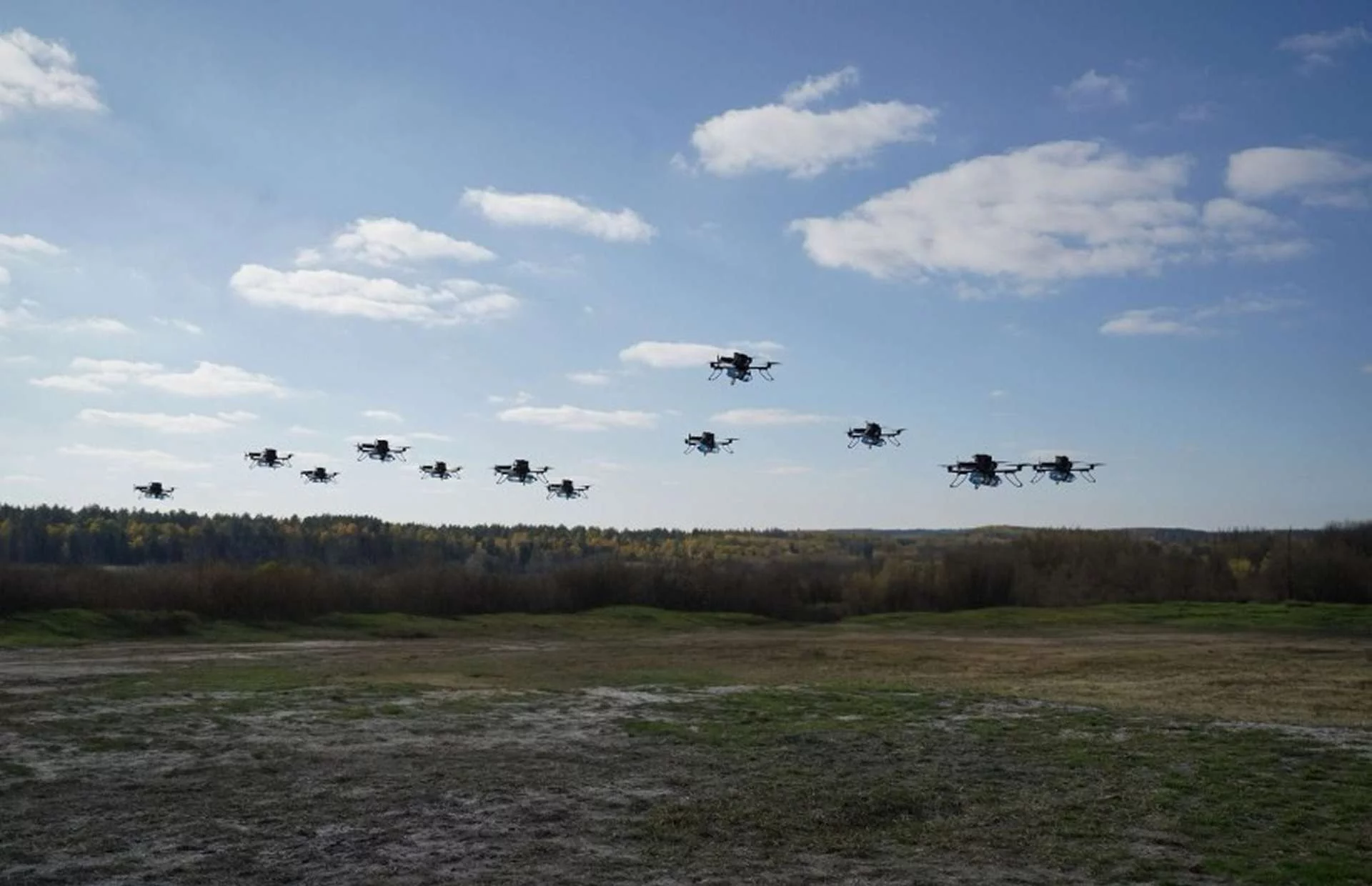
The United States and Ukraine are finalizing a landmark defense technology agreement granting the Pentagon access to Kyiv’s battle-proven drone systems in return for compensation and royalties. According to The Wall Street Journal, the framework, endorsed by Presidents Donald Trump and Volodymyr Zelensky, could reshape future military production by merging Ukraine’s low-cost UAV ecosystem with American defense planning.
The deal includes the potential for joint manufacturing in the U.S. and the removal of Chinese-made electronic components to meet national security requirements. The White House portrays the initiative as a way to integrate Ukraine’s wartime ingenuity directly into U.S. force modernization—beyond simply supplying an ally at war.
Multi-Billion Dollar Drone Ecosystem
Kyiv is negotiating to deliver millions of drones to the United States over several years, with a projected value in the tens of billions of dollars. The package reportedly spans FPV loitering munitions, long-range strike UAVs, and counter-drone interceptors.
Ukraine’s strength lies not in one aircraft but in its rapid, modular, and software-driven production model—featuring 3D-printed airframes, interchangeable warheads, encrypted datalinks, and real-time software adaptation drawn from battlefield telemetry. For the Pentagon, that offers a scalable, attritable drone fleet adaptable to evolving threats.
Security Vetting and Industrial Integration
U.S. defense officials emphasize that component origin is a key factor. Ukrainian drones will need to replace Chinese-origin chips and sensors with trusted Western substitutes to qualify for U.S. and NATO production standards. One proposal under review involves licensing Ukrainian IP to American subsidiaries to streamline the Defense Department’s certification process while maintaining royalty streams to Kyiv.
This approach also aligns with Europe’s emerging “drone wall” initiatives—linking allied co-production and regional air defense modernization.
Strategic Outlook
If completed, the deal would give U.S. ground and naval forces an attritable and replenishable UAV arsenal, while ensuring Ukraine’s defense industry remains active and interoperable with NATO partners.
Analysts interpret the move as a geopolitical signal that Western support for Ukraine is evolving into an embedded industrial partnership—one that strengthens transatlantic defense supply chains and accelerates the Pentagon’s push for mass and resilience in future conflicts.
