

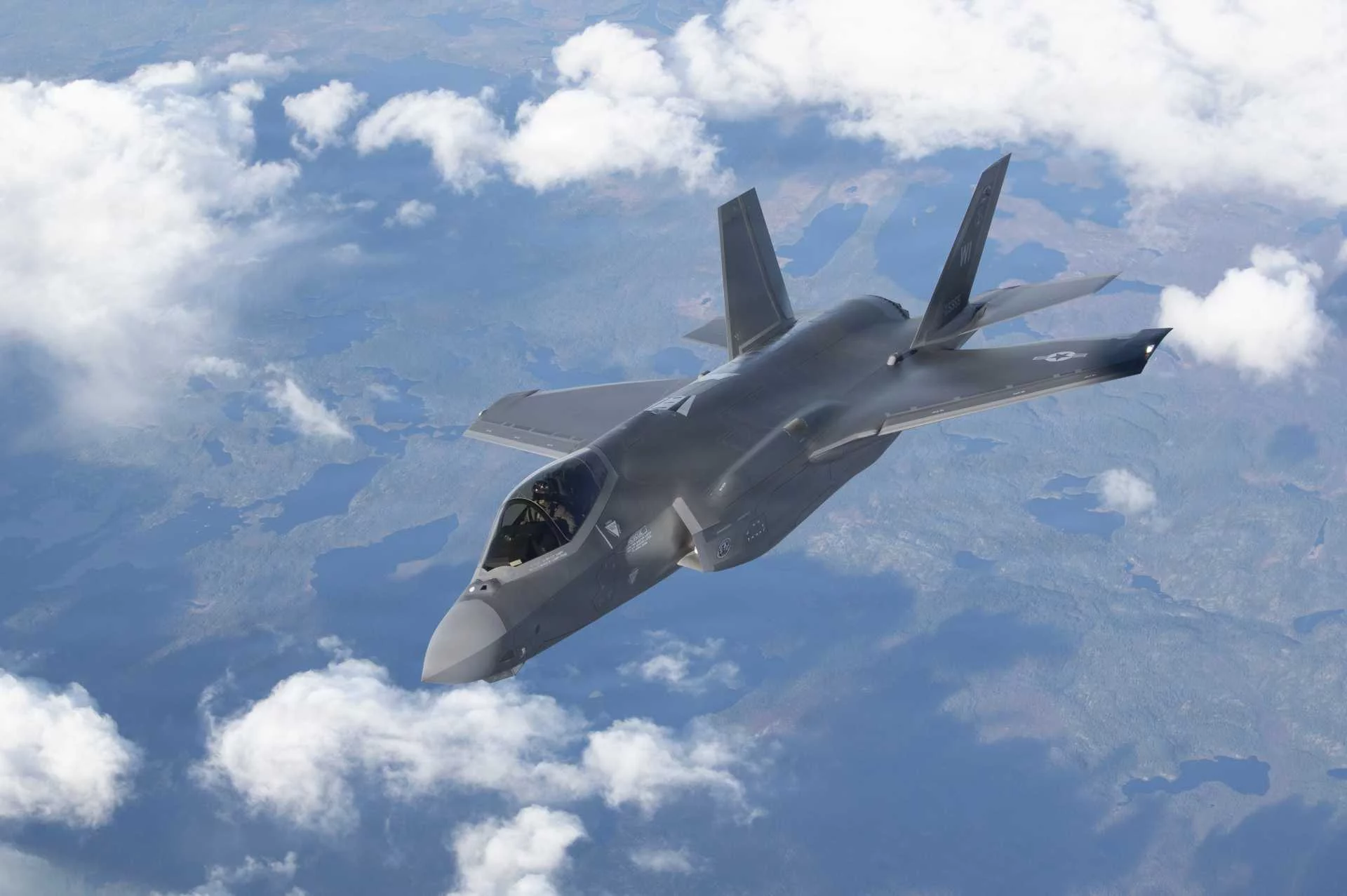
The United States and Morocco remain engaged in negotiations over a possible F-35 Lightning II sale, with unofficial estimates suggesting a package worth around $17 billion for up to 32 aircraft. Neither side has confirmed these figures, but discussions are proceeding within the Israel Qualitative Military Edge (QME) framework. The talks continue as Algeria advances its own air modernization program with the acquisition of Russian Su-57 Felon stealth fighters.
According to Africa Intelligence (October 21, 2025), the negotiations have entered an advanced stage and reportedly include long-term support and pilot training components covering a 45-year life cycle. Israel has not opposed the deal and may even contribute limited technical cooperation. If finalized, Morocco would become the first Arab and African nation to operate fifth-generation fighters, further integrating its Royal Moroccan Air Force (RMAF) into Western defense networks.
Powered by the Pratt & Whitney F135 engine generating 191 kN of thrust with afterburner, the F-35 can reach speeds of Mach 1.6 and a combat radius of approximately 1,240 kilometers. Its low-observable design incorporates radar-absorbent materials, an AN/APG-81 AESA radar, an Electro-Optical Targeting System (EOTS), and a Distributed Aperture System that provides 360-degree situational awareness.
Morocco’s modernization strategy extends beyond the F-35 program. The RMAF currently operates 23 upgraded F-16s and has ordered 24 new F-16C/D Block 72 Vipers equipped with APG-83 radars, Sniper pods, and advanced electronic warfare suites. Two Gulfstream G550 ISR aircraft are being converted in the U.S. with Israeli Elta systems. The North African nation is also expanding its capabilities with AH-64E Apache attack helicopters, M1A2 SEPv3 Abrams tanks, Bradley IFVs, and MQ-9B SeaGuardian drones, aiming for interoperability with Western defense standards.
Meanwhile, Algeria’s acquisition of Su-57 and Su-35 fighters continues to shape Morocco’s procurement policies. Analysts interpret the F-35 negotiations as part of the strategic realignment following the Abraham Accords, which strengthened U.S.–Israeli–Moroccan defense cooperation.
Should the deal be concluded, Morocco’s adoption of the F-35 would significantly alter the region’s airpower balance, granting it stealth, advanced sensor fusion, and network-centric warfare capabilities. These features would allow Moroccan pilots to operate within contested airspace with far greater survivability, aligning the nation’s air force with NATO interoperability standards and cementing its role as a key U.S. defense partner in North Africa.
