

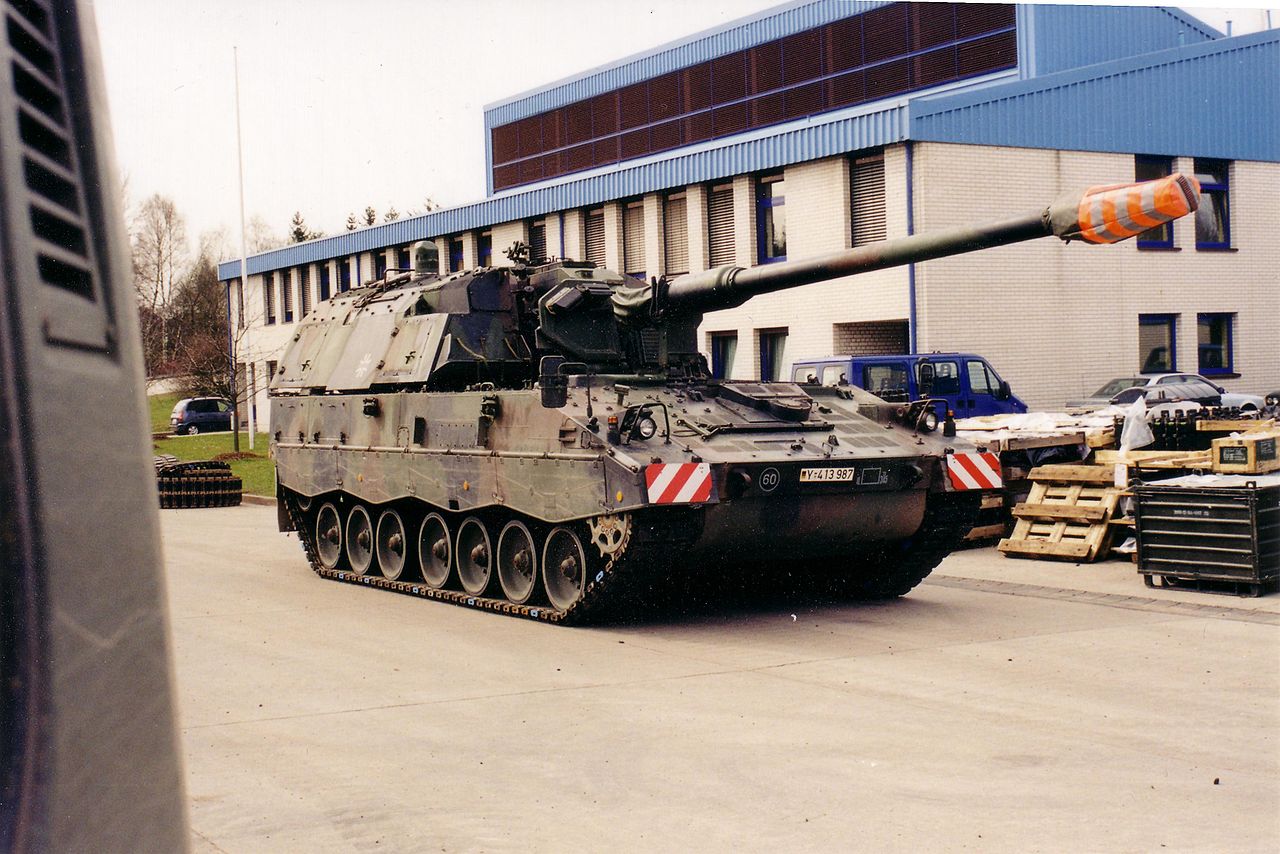
Dutch defense company COBBS Industries BV has begun developing the Netherlands’ first dedicated anti-drone net system designed specifically for the Royal Netherlands Army’s PzH 2000NL self-propelled howitzers. The Ministry of Defence program reflects the growing need for artillery platforms to withstand FPV kamikaze drones and small UAVs that have become a defining feature of the modern battlefield.
Announced on November 24, 2025, the project marks a shift from improvised “cope cages” to a fully engineered, standardized protection kit—indicating that overhead drone defense is no longer a temporary field adaptation but a core requirement for Western artillery forces.
The COBBS system features a structured mesh dome over the turret, along with extended panels covering the glacis, sides, and rear of the vehicle. This standoff layer is designed to disrupt or prematurely detonate FPV munitions and entangle rotor blades before they reach the howitzer’s vulnerable roof areas. While reminiscent of the ad-hoc “turtle tank” cages seen in Ukraine, the Dutch system differs by being a professionally engineered kit rather than a field improvisation.
The net is expected to use hardened steel or alloy mesh optimized to counter small, fast-moving drones without overloading the 55-ton platform. Likely features include full 360-degree coverage, reinforced arches against steep top-attack angles, and added shielding over ammunition stowage areas. The open-lattice design also helps preserve airflow and maintain mobility by avoiding excessive thermal or mechanical strain.
The PzH 2000NL, the Dutch variant of Germany’s 155 mm Panzerhaubitze 2000, has a strong operational track record—from Afghanistan to recent support for Ukraine. Heavy usage on the Ukrainian front has underscored the need for improved overhead protection against an evolving drone threat.
COBBS Industries is not a traditional armor maker but an integrator specializing in tactical equipment, unmanned systems and C4ISR solutions. This suggests the anti-drone net may evolve into a more comprehensive protection package, potentially integrating sensors or lightweight counter-UAS components.
The Netherlands is pairing this passive protection with substantial investment in active air defense, including 22 Rheinmetall Skyranger 30 counter-UAS systems entering service from 2028. The COBBS net serves as the innermost defensive layer—intercepting FPV drones that slip past long-range and short-range air defense systems and close in on individual vehicles.
The initiative draws heavily from lessons learned in Ukraine, where millions of FPV drones have been used by both sides, forcing militaries to innovate rapidly. By adopting a standardized solution early, the Netherlands aims to combine battlefield lessons with professional engineering, addressing survivability needs without the drawbacks of improvised armor.
Strategically, the program positions the Netherlands among the first NATO countries to formalize drone-cage armor as a structured capability. If successful, the system could become an exportable upgrade package for European PzH 2000 operators and a model for modern artillery survivability in drone-saturated environments.
Ultimately, the COBBS anti-drone net represents a broader shift in land warfare: artillery systems must now be designed not only to deliver long-range fire, but also to survive under the persistent threat of cheap, abundant unmanned systems.
