

On August 20, 2025, the Center for Strategic and International Studies (CSIS), through its Beyond Parallel project, released a report confirming the existence of the Sinpung-dong Missile Operating Base in North Pyongan Province. Located just 27 kilometers from the Chinese border, this marks the first open-source confirmation of the facility. The base lies about 146 kilometers north-northwest of Pyongyang and 340 kilometers northwest of Seoul.
According to CSIS, the Sinpung-dong base has never been part of any denuclearization talks despite evidence from satellite imagery showing continuous development since 2003. Construction began around 2004, with operational capability achieved by 2014, and later upgrades aligned with North Korea’s pursuit of intercontinental ballistic missile (ICBM) systems.
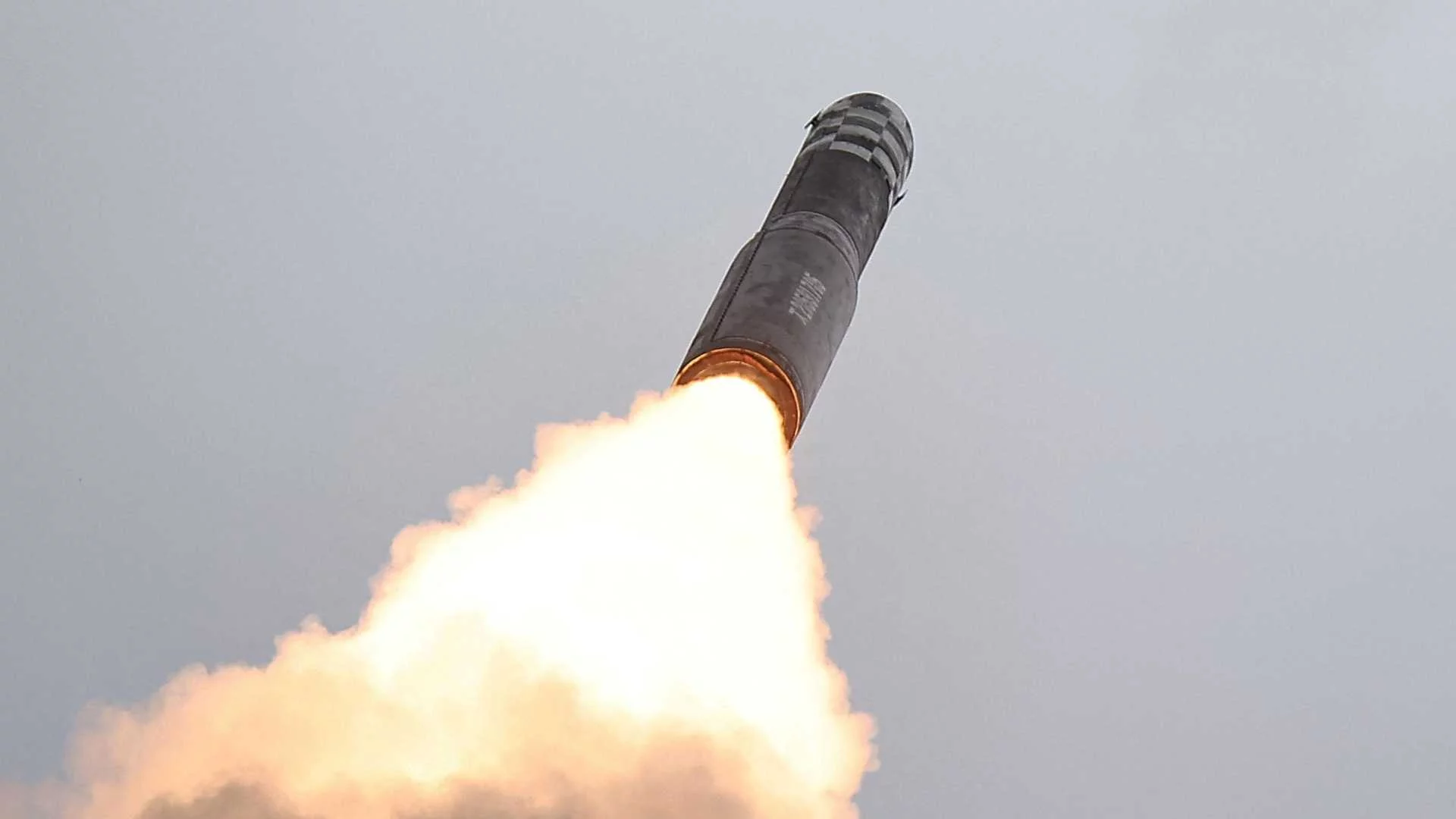
Situated in a narrow mountain valley spanning roughly 22 square kilometers, the installation includes checkpoints, command and administrative buildings, barracks, warehouses, hardened missile checkout shelters, underground facilities, and agricultural support zones. Analysts believe a brigade-sized unit is stationed there, consisting of three missile battalions equipped with Hwasong-15 or Hwasong-18 nuclear-capable ICBMs. In a crisis, missiles and launchers would disperse from the base to pre-surveyed firing positions.
The underground complex, built between 2006 and 2014, features two wide entrances suitable for mobile launchers and support vehicles. Security infrastructure includes smaller compounds and agricultural fields, while nearby villages provide logistical support. The proximity to China may further shield the base from potential preemptive U.S. strikes.
CSIS assesses that Sinpung-dong is only one of an estimated 15 to 20 undeclared missile facilities across North Korea. Together, these sites form the backbone of Pyongyang’s nuclear deterrent, enhancing its ability to threaten both East Asia and the continental United States while complicating monitoring and arms control efforts.
