

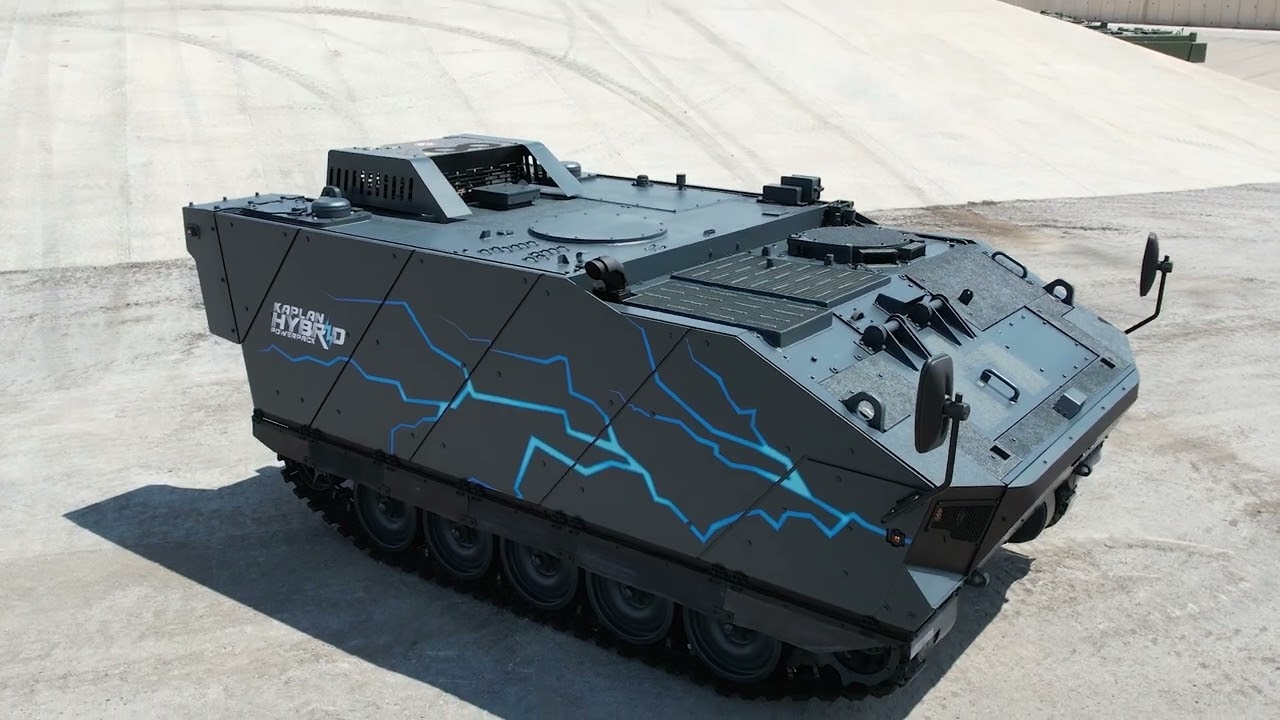
Türkiye’s defense technology leader FNSS is charting a bold course into the hybrid battlefield era with its latest trials featuring the Kaplan Hybrid Fighting Vehicle. Positioned alongside its standard diesel-powered counterpart, the Kaplan 10, the new hybrid variant has been put through its paces in a series of comparative demonstrations aimed at showcasing the future of tracked vehicle propulsion. A teaser released by the company hints at more detailed footage to be revealed at the highly anticipated IDEF 2025, where FNSS is expected to present its innovation as a landmark step in tactical vehicle evolution.
The Kaplan Hybrid is engineered with a diesel-electric drivetrain, delivering a peak power of 617 horsepower, offering flexible power-to-weight ratios between 22 to 35 hp/ton, depending on its mission payload. What sets the hybrid model apart is its electric-only silent mode, which allows it to operate in total acoustic and thermal stealth for up to 48 hours—a game-changer for reconnaissance, ambush, and low-visibility missions.
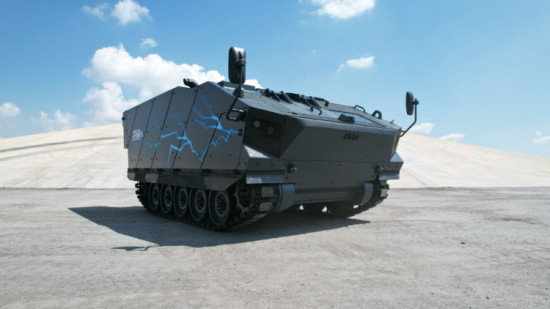
Retaining the amphibious nature and modular design of the original Kaplan 10, the Hybrid maintains a 6.6-meter length, torsion bar suspension, and compatibility with a variety of combat modules such as ATGMs and remote weapon stations. However, its twin-motor system significantly improves acceleration—reaching 0 to 32 km/h in under six seconds—and promises better fuel economy, making it a strong candidate for next-generation armored warfare.
FNSS’s pursuit of hybridization mirrors a growing global trend, aligning with efforts seen in platforms like Germany’s Puma IFV or South Korea’s K21. The Kaplan Hybrid’s long-duration silent movement capability further elevates its value in low-intensity conflict zones where stealth and survivability are critical.
On the strategic front, the Kaplan Hybrid showcases Türkiye’s commitment to building energy-efficient, low-signature military platforms. It positions FNSS as a potential partner for countries looking to modernize their fleets with vehicles that blend performance, adaptability, and sustainability. Although no production contracts have been announced yet, the Kaplan 10’s proven track record within Türkiye’s military suggests a solid platform for future procurement, especially if the IDEF 2025 trials deliver on their promise.
As armies around the world seek solutions that reduce fuel consumption, emissions, and detection risk, the Kaplan Hybrid stands as a beacon of transformation in armored mobility—merging tactical capability with strategic foresight.
