

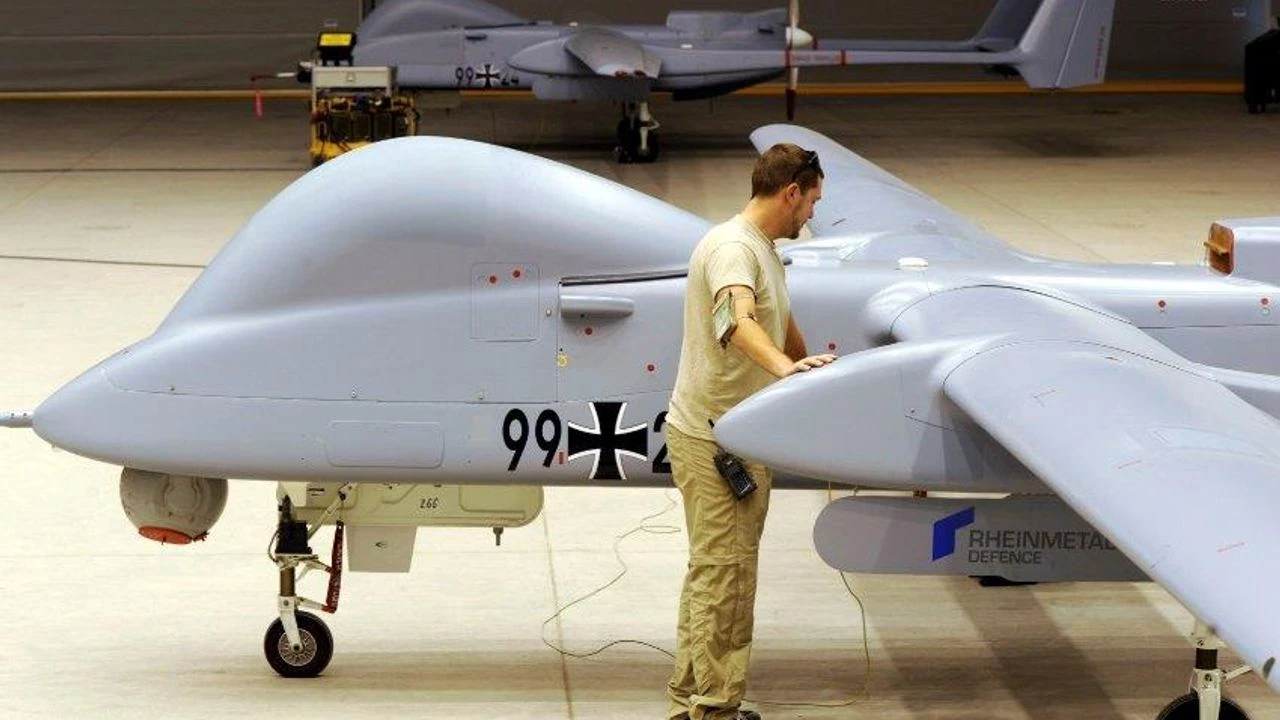
Germany is preparing to develop a new generation of unmanned aerial vehicles (UAVs) equipped with deep-strike capabilities, as part of a broader effort to bolster Europe’s defense posture.
According to German business daily Handelsblatt, the German Ministry of Defense is working on an ambitious plan to create UAVs capable of penetrating deep into enemy territory. The aim is to strengthen strategic autonomy within Europe and enhance NATO-aligned operational capabilities.
These next-generation drones, expected to enter service by the late 2020s, will be designed for high-risk missions such as neutralizing air defense systems, suppressing electronic warfare assets, and striking high-value targets behind enemy lines. Their deployment is intended to complement manned fighter aircraft and fill operational gaps in deep precision strike missions.
The project will involve key players from both the German armed forces and the national defense industry. Among the companies expected to participate are Airbus Defence and U.S.-based Kratos, known for its advanced drone platforms. Rheinmetall, another major German defense contractor, is reportedly collaborating with American drone tech firm Anduril. Munich-based AI startup Helsing is also involved, bringing cutting-edge artificial intelligence to the development process.
The future drones are intended to operate alongside the next-generation fighter jets that will replace the aging Tornado fleet. This integration will allow for more flexible, networked combat operations using both manned and unmanned systems.
Germany’s initiative comes at a time when the country is increasing its defense spending in alignment with NATO commitments. The development of deep-strike UAVs marks a significant shift in Germany’s military strategy, reflecting a broader trend in Europe toward building autonomous, high-tech defense solutions capable of addressing emerging threats.
