

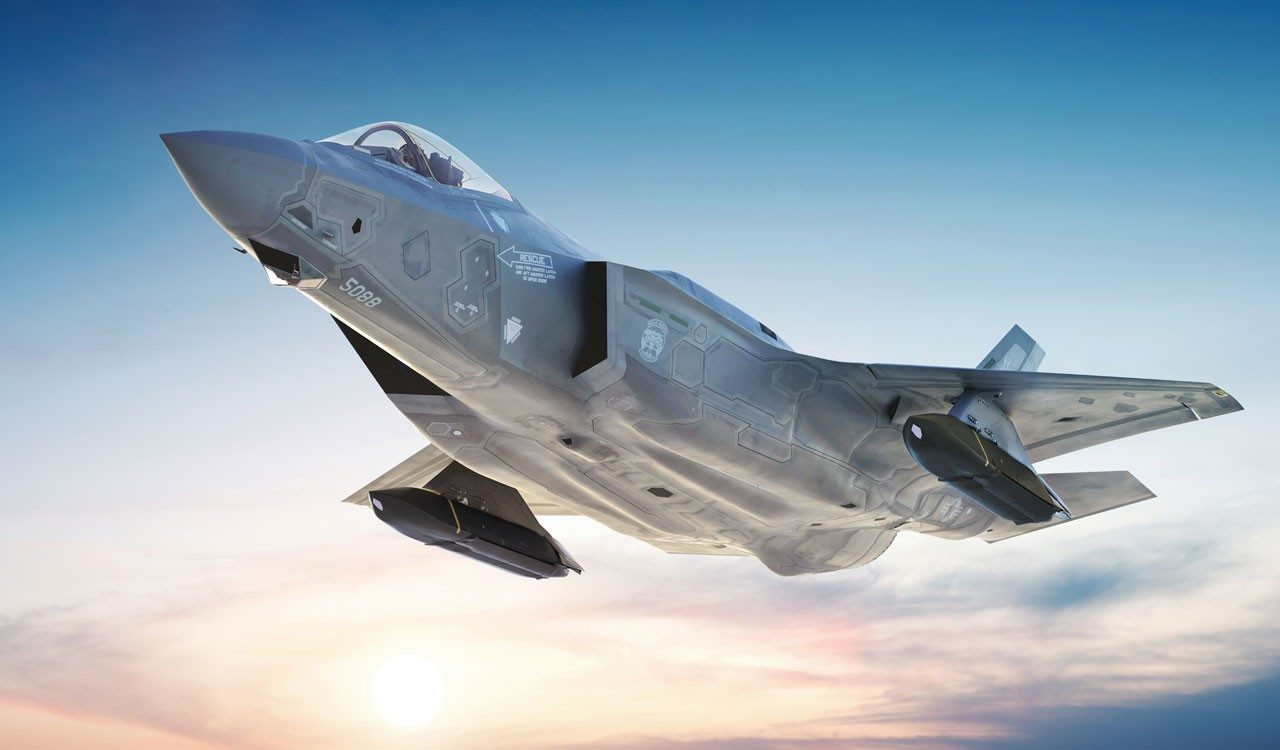
During Prime Minister Narendra Modi’s visit to the White House in February, U.S. President Donald Trump personally pitched the F-35 fighter jet as part of a broader strategic and defense collaboration. However, Indian officials made it clear that their country remains committed to defense programs emphasizing technology transfer and domestic manufacturing.
“The government prefers a model based on joint design and local production of defense systems,” one official told Bloomberg, aligning with the principles of the ‘Make in India’ initiative aimed at bolstering indigenous capabilities.
While Washington’s F-35 proposal was part of a wider effort to deepen defense-industrial ties—following India’s recent acquisitions of U.S. platforms like the MH-60R Seahawk and P-8I maritime patrol aircraft—New Delhi appears unwilling to proceed with high-end imports unless accompanied by firm commitments on local assembly and tech sharing.
In contrast, Russia has presented an offer more aligned with India’s strategic goals. In July, Moscow proposed a package including the fifth-generation Su-57E stealth fighter and Su-35M multirole aircraft. The proposal, submitted by Rostec and Sukhoi, reportedly includes full technology transfer for the Su-57E, with local assembly planned at Hindustan Aeronautics Limited’s Nashik facility, which has already produced over 220 Su-30MKI fighters.
The localization rate could reach up to 60%, allowing integration of Indian systems such as the Astra beyond-visual-range missile, Rudram anti-radiation missile, and Virupaksha AESA radar. Initial deliveries of 20–30 Su-57Es could begin within three to four years, followed by full-scale production in India. The entire program may involve 70–100 aircraft delivered through the early 2030s.
Additionally, the Su-35M is being offered as a faster interim solution to address India’s dwindling squadron numbers. According to Rostec, the aircraft shares up to 80% of its components with the Su-30MKI, potentially simplifying logistics and pilot training.
India’s decision to turn down the F-35 highlights a clear shift toward defense partnerships that advance self-reliance and industrial development.
