

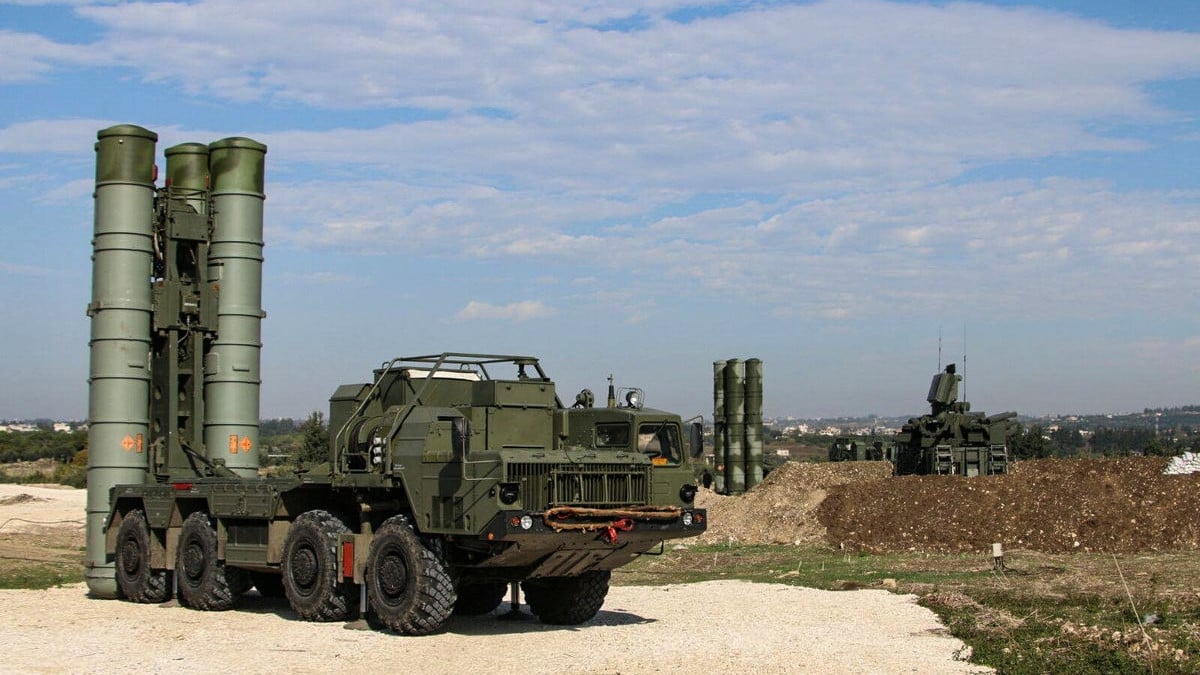
According to a 2025 report by the Iranian news outlet Birun.info, Russia’s S-400 Triumf air defense missile system was tested under real operational conditions for the first time in Iran. The test was reportedly conducted near the city of Isfahan, located approximately 440 km south of Tehran. This development marks a significant leap in Iran’s air defense capabilities and highlights the country’s determination to modernize its strategic deterrence in the face of increasing aerial threats and regional instability.
The field test reportedly involved a fully equipped S-400 battery, including the system’s primary components: the 91N6E “Big Bird” early warning radar, the 92N6E “Grave Stone” engagement radar, a command and control unit, and several 5P85TE2 missile launchers. The battery was outfitted with long-range 48N6E3 and possibly 40N6 surface-to-air missiles. Observers in the Isfahan region noted increased radar emissions and transporter movements in recent weeks, suggesting the test was part of a planned military exercise. Although Iran’s Ministry of Defense has not released any official footage or statements, regional military analysts are interpreting the event as a “strategic first use.”
Initial reports of the S-400’s delivery to Iran surfaced in mid-2024. On August 2, 2024, trusted defense sources including Defence Security Asia and BulgarianMilitary.com reported that a Russian Il-76 military transport aircraft had landed in Tehran, allegedly carrying key components of the system. This supported earlier claims that Iran had requested the S-400 to better protect its nuclear infrastructure and critical military installations. Although the Islamic Revolutionary Guard Corps publicly downplayed the need for the S-400, citing confidence in domestic systems such as the Bavar-373 and Khordad 15, the timing of the delivery and the recent field test strongly suggest that a limited deployment has indeed taken place.
Defense cooperation between Iran and Russia has deepened significantly since 2022, evolving into a strategic partnership based on mutual military support and a shared stance against Western influence. Russia has supplied Iran with advanced radar systems, training aircraft, and air defense assets, while Iran has provided Russia with loitering munitions and drone technologies used in Ukraine. This growing collaboration has been reinforced by joint exercises, technical delegations, and confidential defense agreements. The delivery and apparent activation of the S-400 in Iran is considered a tangible outcome of this strategic military alignment.
The S-400 Triumf, developed by Russia’s Almaz-Antey, is one of the world’s most advanced long-range air defense systems available for export. It can detect and engage a wide variety of aerial threats—including fighter jets, cruise missiles, UAVs, and ballistic missiles—at distances up to 400 km and altitudes of up to 30 km. Equipped with multifunctional phased array radars, the system can track up to 80 targets simultaneously and engage 36 of them. While the 48N6E3 missile is optimized for high-speed threats, the 40N6 is designed for long-range intercepts, all while offering strong resistance to electronic countermeasures.
The activation of the S-400 in Iran signals a major shift in the country’s air defense doctrine. If brought to full operational capability, it would make Iran one of the few nations operating Russia’s most advanced export-capable air defense platform. This capability significantly bolsters Iran’s defense against high-altitude, long-range aerial threats and complicates strike planning for potential adversaries. For regional powers such as Israel and Gulf states, this development is likely to trigger a reevaluation of air operation strategies. The location of the test near Isfahan also underscores Tehran’s priority to protect its most sensitive strategic assets.
