

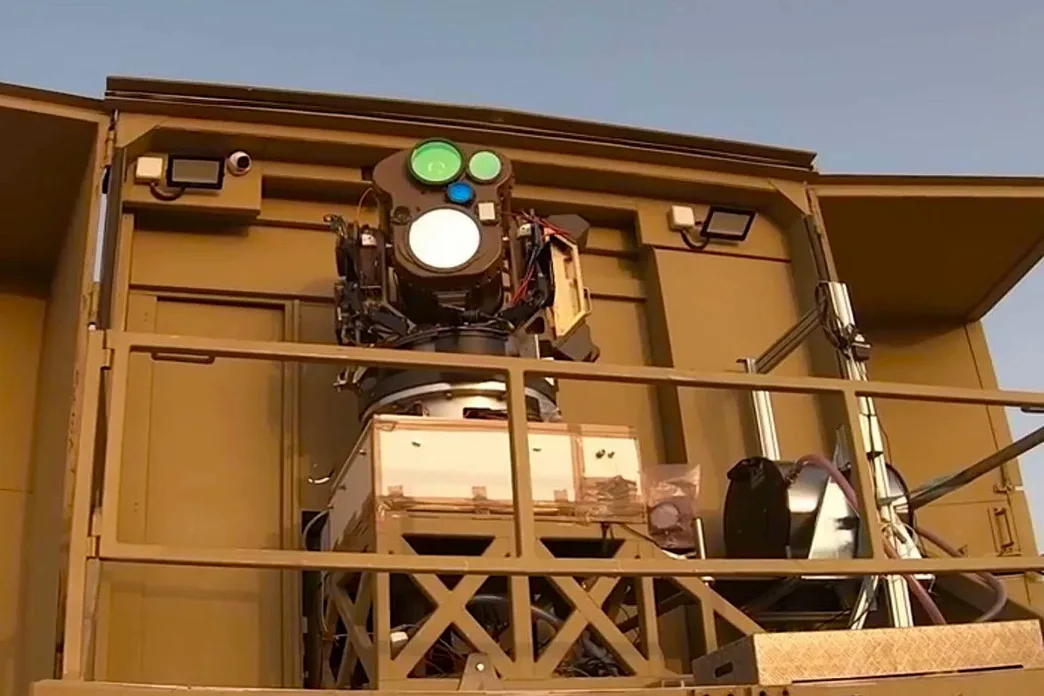
On August 13, 2025, Elbit Systems confirmed major progress in adapting the Iron Beam high-energy laser into an airborne variant. According to CEO Bezhalel Machlis during the company’s earnings call, the program aims to extend Israel’s laser defense capabilities from ground platforms into the air domain. With growing global demand for low-cost, precise defenses against drones and missiles, the development has attracted international attention, highlighting Israel’s leadership in next-generation defense technologies.
The airborne Iron Beam builds on Rafael’s ground-based system, with Elbit providing the high-power laser source. Designed to engage drones, rockets, and potentially cruise missiles, the system offers nearly unlimited shots at a fraction of the cost of traditional interceptors. Initial units are already under integration, with operational deployment expected by year’s end—potentially making Israel one of the first nations to field a laser weapon aboard combat aircraft.
Unlike earlier airborne laser attempts such as the U.S. YAL-1, which struggled with weight and power challenges, Elbit’s advances in miniaturization and efficiency suggest a workable solution. Deployed on Israeli Air Force fighters like the F-15I or future F-35I, the Iron Beam could provide both point defense and escort protection, reducing reliance on costly Tamir interceptors while enhancing endurance in high-intensity operations.
Strategically, the airborne Iron Beam would strengthen Israel’s defense against mass rocket and drone attacks from adversaries like Hezbollah and Iran. Beyond Israel, the system could reshape export prospects, offering allied nations a cost-effective shield against emerging aerial threats.
This transition from ground to air marks a turning point in air defense doctrine. By operationalizing directed energy on combat aircraft, Israel is positioning itself at the forefront of global efforts to bring laser weapons into mainstream military use, combining cost efficiency with strategic relevance in an era of increasingly complex aerial threats.
