

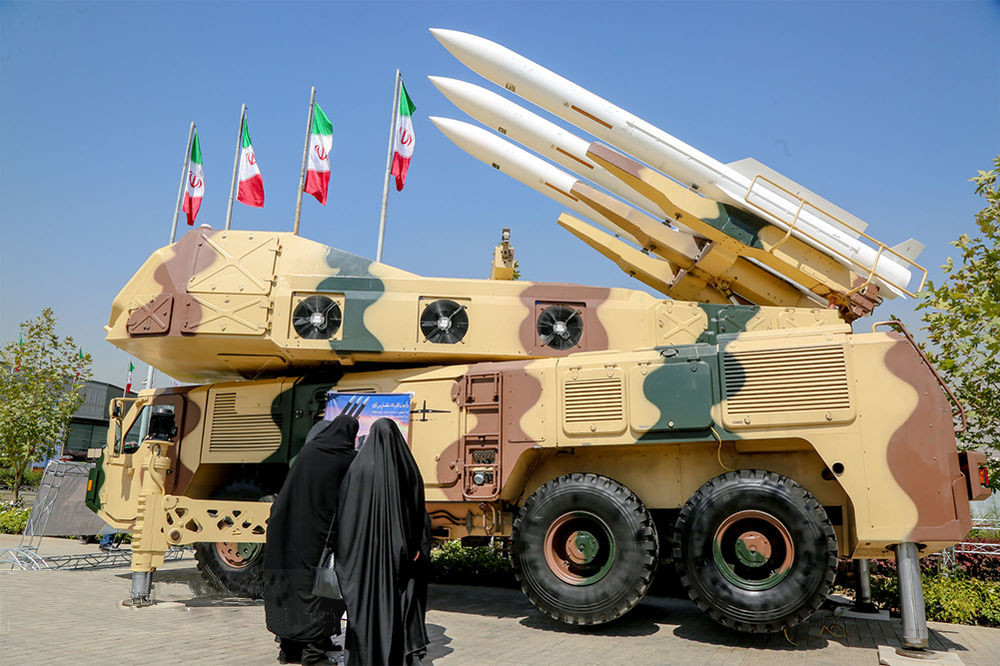
The Khordad-3, known locally as “Sevom Khordad,” is a domestically engineered Iranian medium-range surface-to-air missile (SAM) platform that entered operational service around 2016 after its public debut in 2014. Named in reference to the Liberation of Khorramshahr during the Iran–Iraq War, the system is a key asset in Iran’s layered and mobile air defense strategy.
Missile Systems and Engagement Capabilities
The primary interceptor for Khordad-3 is the Taer-2B missile, offering engagement ranges from 50 to 105 km and altitude coverage of 25–30 km. The system is also compatible with Sayyad-2 missiles for additional flexibility. More recently, Iran has reportedly integrated the Taer-3 missile variant, extending its reach to approximately 200 km. This evolution significantly broadens the platform’s strategic envelope against modern aerial threats.
Radar and Fire Control
Each TELAR (Transporter Erector Launcher and Radar) unit incorporates an X-band active electronically scanned array (AESA) radar, capable of detecting up to 100 airborne targets, simultaneously engaging four, and guiding two missiles per target. In a standard battalion configuration, the Khordad-3 operates with one TELAR, two supporting TELs, a Bashir 3D S-band long-range surveillance radar with a detection range of about 350 km, and a centralized command-and-control unit for integration into Iran’s nationwide defense grid.
Mobility and Tactical Use
Khordad-3 is a fully mobile system, designed for rapid deployment and swift relocation after firing to evade counterstrikes. It has been tested extensively in Iranian military exercises such as Defenders of Velayat Skies, where it successfully engaged and destroyed medium-altitude targets. Its mobility gives Iranian forces the flexibility to adapt to dynamic battlefield conditions and maintain operational survivability.
Operational Record
The system drew global attention in June 2019 when it successfully shot down a U.S. RQ-4 Global Hawk (MQ-4C Triton) high-altitude surveillance drone over the Strait of Hormuz. This marked the first confirmed destruction of such an aircraft by an Iranian-made SAM, solidifying the Khordad-3’s reputation as a credible counter to advanced Western aerial assets.
| Feature | Specification |
|---|---|
| Full Name | Khordad-3 (Sevom Khordad) Medium-Range SAM |
| First Revealed | 2014 |
| Operational Since | ~2016 |
| Primary Missile | Taer-2B (50–105 km range, 25–30 km altitude) |
| Extended-Range Missile | Taer-3 (~200 km range) |
| Radar | AESA X-band (100 targets detected, 4 engaged, 2 missiles per target) |
| Battalion Setup | 1 TELAR + 2 TELs + Bashir S-band radar (350 km) + C2 module |
| Notable Engagement | Destruction of U.S. RQ-4 Global Hawk, June 2019 |
| Strategic Role | Mobile medium-range air defense, integrated in layered network |
