

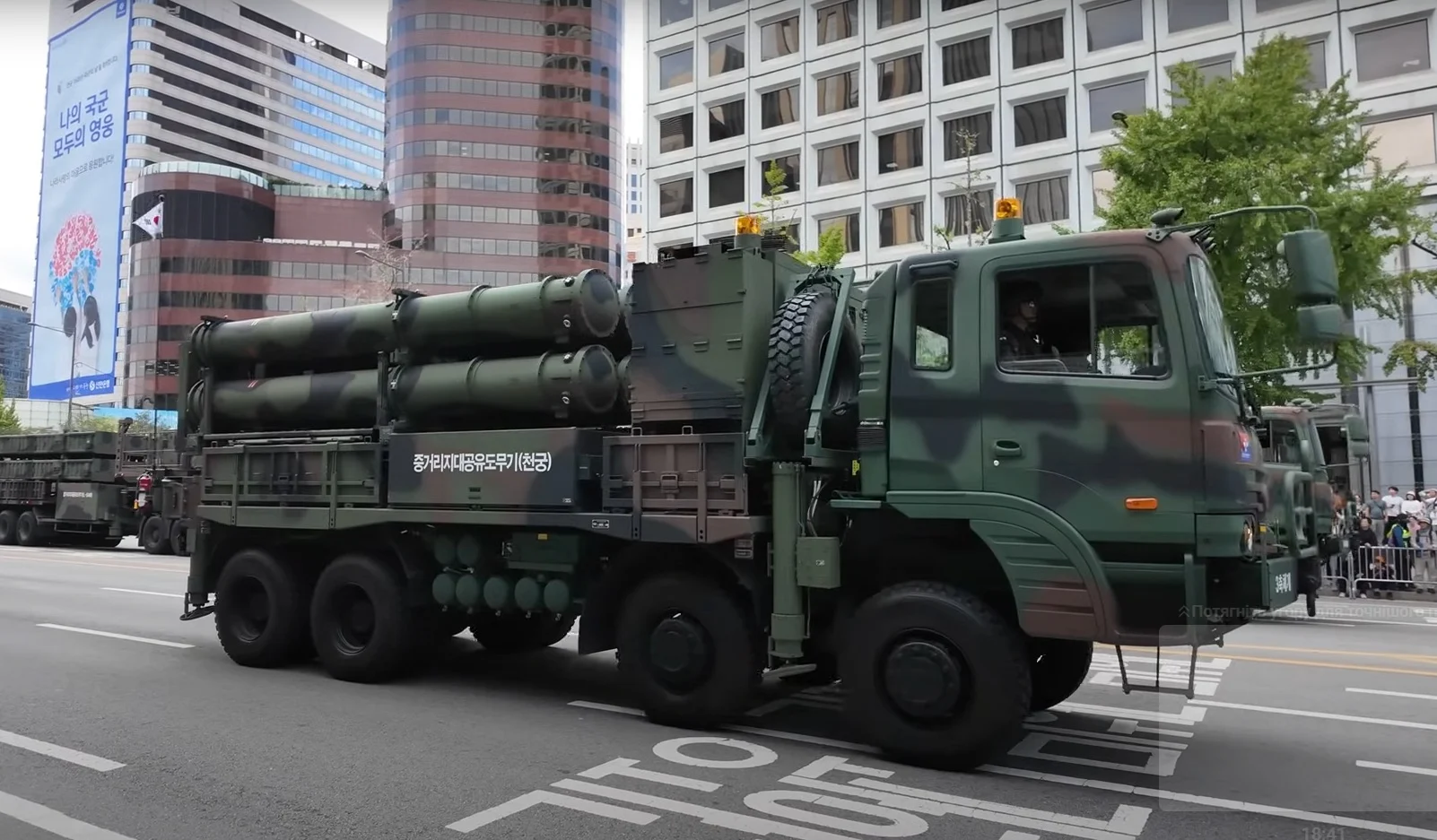
In a major boost to its defense portfolio, LIG Nex1 has emerged as the lead developer of South Korea’s next-generation Cheongung-3 surface-to-air missile system—defeating long-time rival Hanwha in one of the nation’s most strategic and closely watched defense competitions.
On July 28, South Korea’s Defense Acquisition Program Administration (DAPA) officially designated LIG Nex1 as the primary contractor responsible for eight of the nineteen core technologies under the Cheongung-3 program, including full system integration, interceptor missile development, and engagement control systems.
Valued at approximately 2.83 trillion won ($2 billion), the Cheongung-3 project is scheduled to deliver a fully operational system by 2034. It represents a significant leap from its predecessor, Cheongung-2, boasting a fivefold increase in engagement range and quadrupled defense coverage. Often dubbed the “Korean Iron Dome,” the new system is central to South Korea’s vision of a robust, multi-layered missile defense network to counter evolving aerial threats—particularly from North Korea.
LIG Nex1 narrowly clinched the missile segment of the bid, edging out Hanwha Aerospace by just 0.1 points. The company also bested Hanwha Systems in the engagement control domain, further consolidating its role as the program’s top integrator.
Unlike the Cheongung-2, which primarily targeted short- and medium-range threats, Cheongung-3 is designed for broader, more complex engagements. It is expected to neutralize highly maneuverable targets and sophisticated aerial threats that require rapid response and precision interception.
Despite LIG Nex1’s sweeping victory, Hanwha remains an integral player. Hanwha Aerospace retained responsibility for key areas like the launcher platform, propulsion systems, and multi-function radar—critical systems it had developed under the Cheongung-2 initiative. In the launcher competition, Hanwha narrowly beat LIG Nex1 with a margin of 0.7 points.
Additional components of the system were awarded to various mid-sized South Korean firms, reflecting a broad industry mobilization. Doowon Heavy Industries will provide airframe structures, Vitzrocell will deliver thermal batteries, and Danam Systems will handle flight data recorders—ensuring diversified industrial participation.
The Cheongung-3 decision comes amid growing rivalry between LIG Nex1 and Hanwha across multiple defense programs. On the same day, DAPA awarded a separate $380 million contract to upgrade South Korea’s Jangbogo-II (Type 214) submarines to a team led by HD Hyundai and LIG Nex1, once again defeating Hanwha Ocean and Hanwha Systems. LIG Nex1’s advanced domestic sonar suite reportedly tipped the scales in its favor.
The competition between the two defense titans is far from over. DAPA is preparing to launch a 1.77 trillion won ($1.3 billion) project to develop next-generation electronic warfare aircraft by 2034. LIG Nex1 is teaming up with Korean Air for the bid, while Hanwha Systems is partnering with Korea Aerospace Industries (KAI).
Looking even further ahead, both sides are preparing for the upcoming L-SAM-II project—South Korea’s answer to the American THAAD system. Designed to intercept threats at altitudes ranging from 40 to 150 kilometers, the L-SAM-II will be another critical pillar in the country’s future air defense framework, with both industrial coalitions actively maneuvering for roles.
Since the 1985 launch of South Korea’s national defense specialization program, LIG Nex1 has remained a cornerstone of the country’s indigenous missile development efforts. Meanwhile, Hanwha, historically dominant in ballistic missile systems, has increasingly pushed into air defense technologies following its expansion and acquisitions in the 2010s.
As South Korea accelerates its defense modernization, the Cheongung-3 program symbolizes not only a technological leap but also the intensifying battle for dominance between the nation’s two biggest defense firms.
