

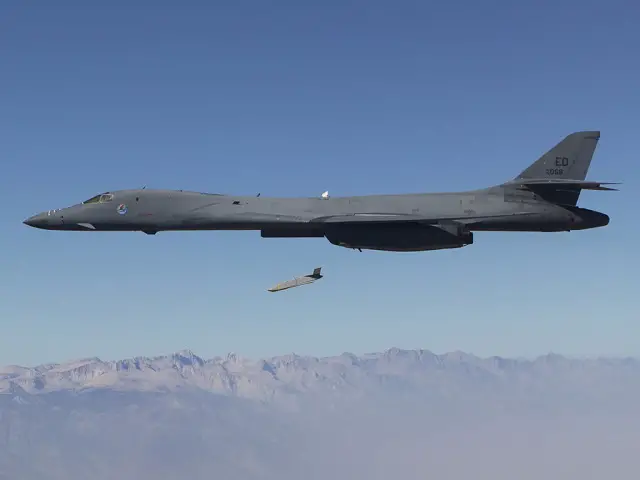
The LRASM (Long Range Anti-Ship Missile), also known as OASuW Increment 1, is a next-generation subsonic cruise missile designed to provide the U.S. military with precision, long-range anti-surface warfare capability in contested environments. Developed by Lockheed Martin in collaboration with DARPA, LRASM addresses the challenges of modern naval combat, including GPS-denied areas, electronic warfare, and dense maritime threat environments.
Program Overview
Initiated in 2009, the LRASM program builds on the AGM-158 Joint Air-to-Surface Standoff Missile Extended Range (JASSM-ER) airframe, integrating advanced sensors, autonomous guidance systems, and electronic counter-countermeasures to ensure high survivability and precision lethality. The program emphasizes reducing dependence on traditional ISR platforms, network links, and GPS navigation, allowing the missile to autonomously locate, track, and engage targets with minimal external input.
Features and Capabilities
- Autonomous Guidance: Multi-modal sensors and advanced algorithms allow LRASM to engage specific targets even with minimal target cueing data.
- Electronic Warfare Resilience: Operates effectively in GPS-denied or heavily jammed environments.
- All-Weather Operation: Capable of day/night operations with robust survivability in contested domains.
- Stealth and Survivability: Low radar cross-section and subsonic cruise profile reduce detection and interception probability.
- Warhead: 1,000-pound blast-fragmentation for maximum effectiveness against high-value maritime targets.
Launch Platforms
Air-Launched:
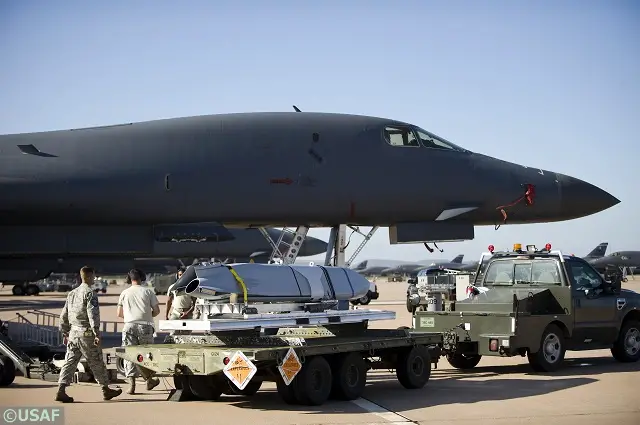
- U.S. Air Force: B-1B Lancer
- U.S. Navy: F/A-18E/F Super Hornet
Surface-Launched:
- Compatible with MK 41 Vertical Launch System (VLS) using a Mk-114 rocket motor booster for vertical deployment.
Sensors and Targeting
Developed by BAE Systems, LRASM’s advanced long-range sensor suite employs:
- Passive RF sensors to detect and track ships in complex signal environments.
- Multi-modal guidance systems for precise targeting within ship formations.
- Autonomous algorithms that allow target discrimination and attack in denied areas.
Propulsion and Performance
- Engine: Williams International F107-WR-105 turbofan
- Speed: Subsonic (~0.85–0.9 Mach)
- Range: >200 nautical miles (~370 km)
- Attack Profile: Sea-skimming, designed to evade radar and air defenses
Specifications
| Parameter | LRASM (AGM-158C) |
|---|---|
| Type | Anti-ship Cruise Missile |
| Warhead | 1,000 lbs blast-fragmentation |
| Length | 4.27 m (without booster) |
| Wingspan | 2.4 m |
| Weight | ~1 ton |
| Guidance | Multi-modal (INS, GPS, RF, autonomous targeting) |
| Launch Platforms | B-1B, F/A-18E/F, MK 41 VLS |
| Operator | United States (Navy & Air Force) |
Strategic Impact
The LRASM provides the U.S. military with a lethal, survivable, and precise anti-ship capability designed for modern naval warfare. Its autonomous targeting and resistance to electronic warfare make it a game-changing system in contested maritime environments. By enabling long-range, high-precision strikes against enemy vessels, LRASM strengthens the U.S. Navy’s sea control and power projection capabilities.
