

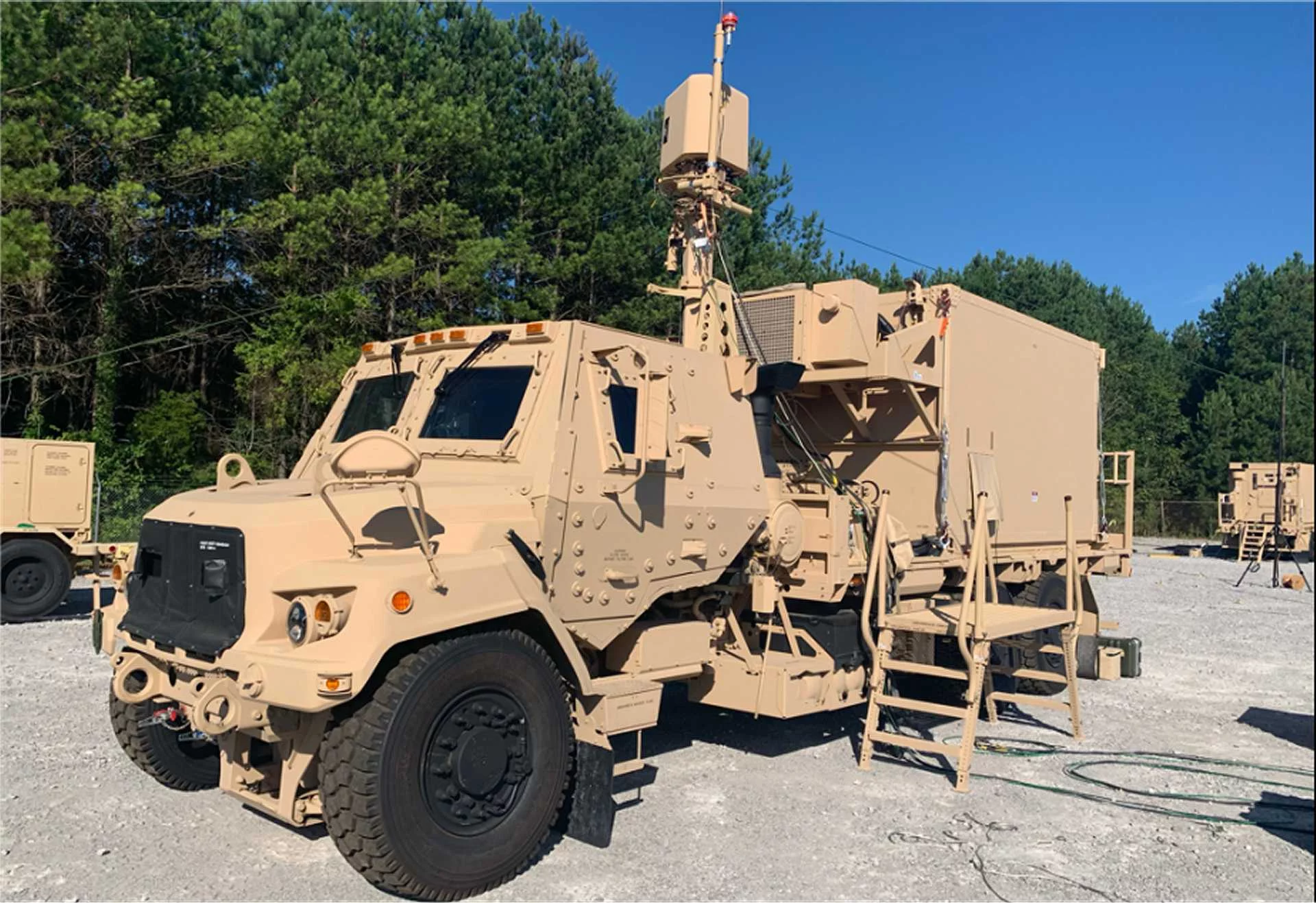
Northrop Grumman and the U.S. Army have successfully completed the first live-fire test of the Integrated Battle Command System (IBCS) using operational production hardware — a major milestone confirming the system’s readiness for global deployment in Europe and the Indo-Pacific.
The live test, conducted in August 2025 at White Sands Missile Range, New Mexico, demonstrated IBCS’s ability to integrate real-time data from multiple sensors, including the Lower Tier Air and Missile Defense Sensor (LTAMDS), to detect, track, and neutralize an airborne target. A Patriot PAC-3 MSE interceptor, controlled entirely through IBCS, destroyed the simulated threat — marking the first field test using fully deployable IBCS hardware instead of laboratory prototypes.
Developed by Northrop Grumman under Pentagon contracts, IBCS connects radars, launchers, and command centers within a networked command-and-control architecture. Core components include Engagement Operations Centers (EOCs), which manage threat detection, classification, and fire execution, linked through the Integrated Fire Control Network (IFCN) — a resilient data layer connecting sensors and shooters across domains.
Kenn Todorov, Northrop Grumman’s Vice President for Command and Control Systems, said the demonstration “proves IBCS is not just ready, but indispensable for modern multi-domain air and missile defense operations.”
IBCS’s design principle, “any sensor, best shooter,” enables flexible engagement coordination: for instance, a Sentinel radar can detect a threat which is then intercepted by a distant Patriot battery without human relays, drastically improving reaction time and accuracy.
The system is already fielded by Poland, the first U.S. ally to adopt IBCS as part of its WISŁA medium-range air defense program. Poland’s Ministry of Defense confirmed successful operational exercises under NATO conditions earlier this year, highlighting growing trust in the system’s multinational interoperability.
As IBCS deployments expand to the U.S. European and Indo-Pacific Commands, the networked system is poised to become a strategic backbone for integrated deterrence, enhancing real-time coordination and resilience against advanced missile and drone threats.
With the live-fire milestone achieved, the U.S. Army’s move from prototype to operational capability marks a pivotal shift toward a digitally integrated battlespace — where speed, situational awareness, and interoperability define combat superiority. The future of air and missile defense, once conceptual, is now operational.
