

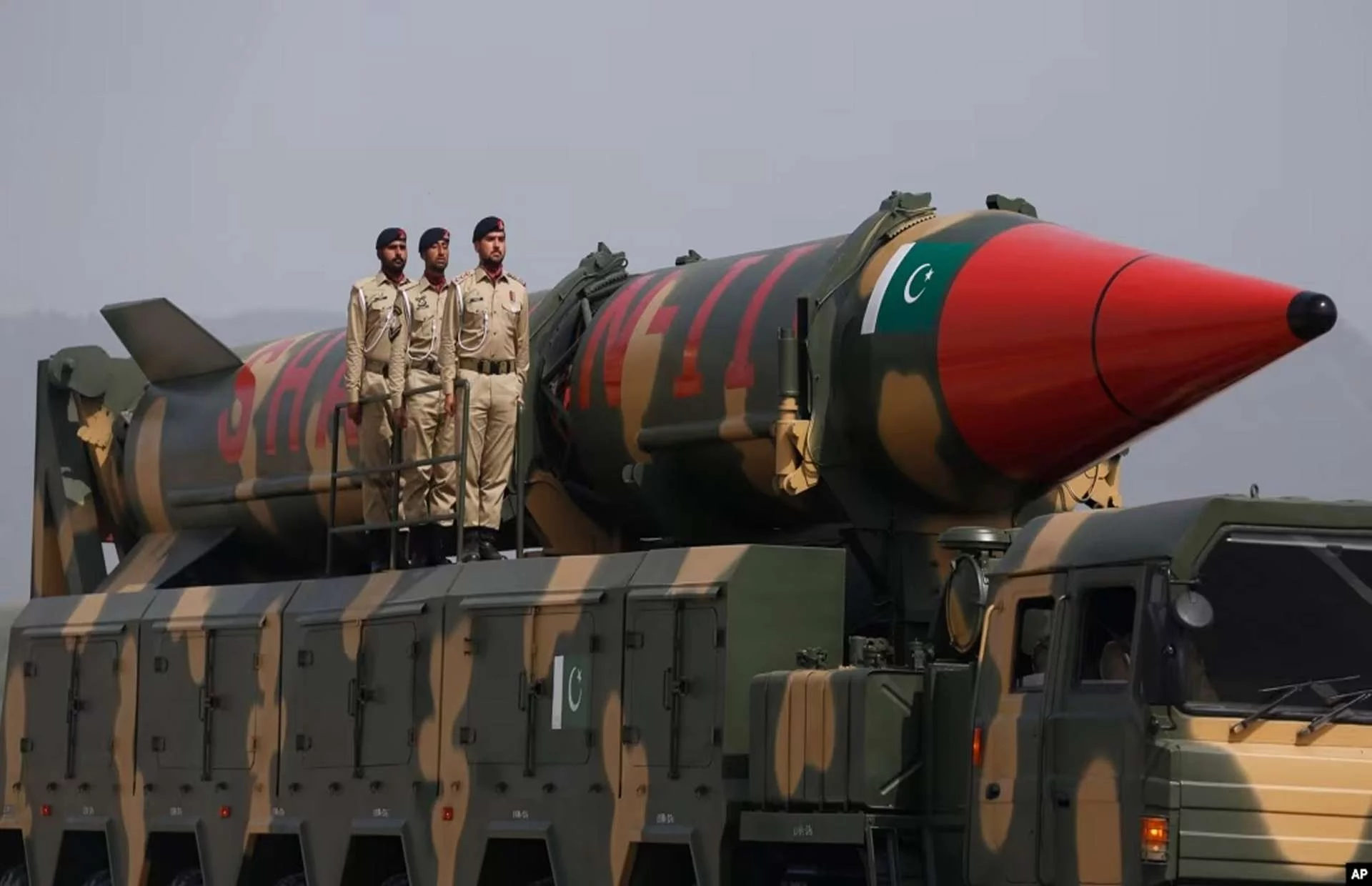
According to Reuters on August 14, 2025, Pakistan has officially announced the creation of a new missile-focused military command, the Army Rocket Force, aimed at bolstering the country’s conventional strike capabilities. Prime Minister Shehbaz Sharif made the announcement during a ceremony in Islamabad marking Pakistan’s 78th Independence Day and in the aftermath of the May 2025 conflict with India. He described the move as a milestone in enhancing the Pakistan Army’s combat readiness, with the force set to be equipped with advanced technologies.
The new command represents a doctrinal shift, separating missile operations from Pakistan’s nuclear command structure for the first time. Previously, missile forces operated under the Army Strategic Forces Command (ASFC) and the Strategic Plans Division Force (SPDF), both integrated into the National Command Authority overseeing nuclear assets.
The Army Rocket Force will focus on conventional deterrence and rapid battlefield response, operating short- and medium-range systems such as the NASR (Hatf-9) tactical ballistic missile with a 70 km range, Babur cruise missiles exceeding 700 km, and future variants of the Shaheen series with ranges up to 2,750 km. Core priorities include rapid launch readiness, precision targeting, and integrated operations during high-intensity conflicts.
The move parallels India’s efforts to operationalize an Integrated Rocket Force, which incorporates systems like the Pinaka Mk-II (90 km), Prahaar (150 km), Pralay (up to 500 km), and the Agni series (700–5,000+ km). Both nations are shifting from purely nuclear posturing toward high-tempo, precision-strike capabilities for conventional warfare.
This development follows the May 2025 clashes, which saw extensive use of drones, cruise missiles, and combat aircraft by both sides—the most intense conventional missile engagements in South Asia since the 1999 Kargil War. China, Pakistan’s strategic partner, is expected to assist with technology transfer, ISR integration, and satellite-based targeting, while U.S. analysts monitor potential shifts in regional stability.
With a proposed 20% increase in Pakistan’s defense budget to around USD 9 billion, the establishment of the Army Rocket Force signals Islamabad’s intent to prepare for future high-intensity conflicts, prioritizing speed, flexibility, and conventional missile dominance.
