

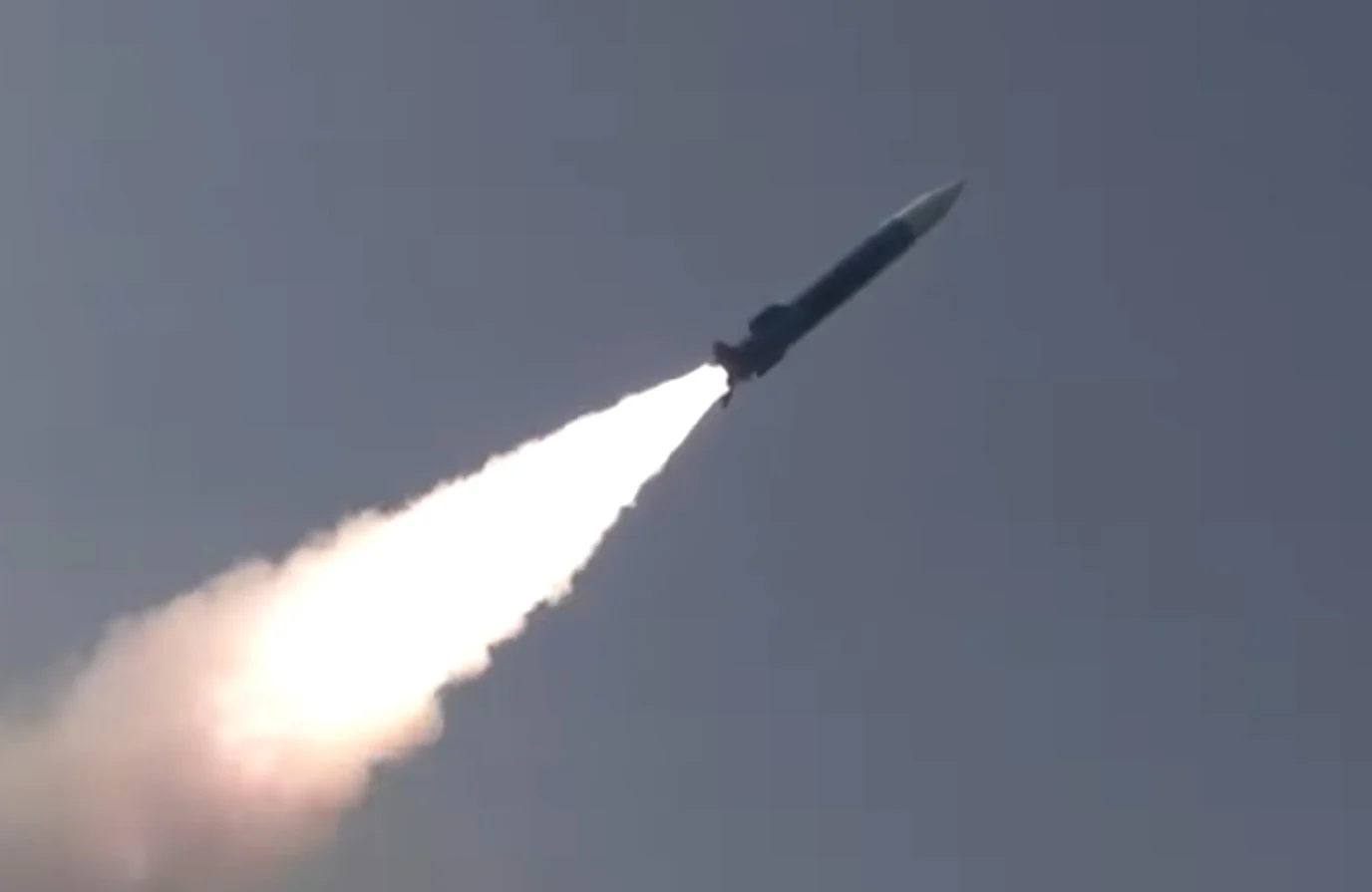
Pakistan has successfully conducted the first naval test of its newly developed SMASH hypersonic-class anti-ship ballistic missile, marking a major milestone for the country’s indigenous strike capabilities. The missile, reportedly capable of reaching speeds around Mach 8, employs terminal manoeuvres designed to reduce a ship’s defensive reaction time to mere seconds.
According to Pakistani defence officials, this event represents the first operational launch of SMASH from a naval platform, a step that Islamabad describes as a “historic achievement for the Pakistan Navy.”
In a statement released by Inter-Services Public Relations, the military emphasized: “The successful maiden firing of Pakistan’s indigenously developed SMASH Mach-8 Anti-Ship Ballistic Missile marks a new chapter in South Asian naval warfare.”
Unlike cruise missiles that maintain prolonged low-altitude flight, SMASH adopts a quasi-ballistic trajectory. It boosts rapidly to altitude before descending on its target at hypersonic closing speeds, performing manoeuvres similar to manoeuvrable re-entry vehicles. This profile compresses sensor tracking and interception windows for shipboard defenders.
With an estimated range of approximately 350 kilometers, the missile is expected to be integrated initially on Pakistan Navy Zulfiquar-class F-22P frigates. Such range enables Pakistani vessels to strike from beyond the engagement envelope of many shipborne air-defense systems.
While detailed specifications have not been disclosed, the missile reportedly uses a solid-fuel ballistic propulsion system paired with inertial navigation and satellite correction. Terminal guidance is believed to utilize either radar or imaging-based technologies. The warhead is optimized to penetrate ship hulls and critical internal compartments.
Pakistani defence analysts frame SMASH as part of a broader sea-denial posture aimed at complicating adversary fleet operations. The missile aligns with Pakistan’s “shoot-and-sprint” doctrine, in which naval units fire and swiftly reposition before an enemy counterstrike can be organized.
As officials note, “SMASH is not only a weapon—it is a strategic signal. It reflects Pakistan’s intent to keep opposing fleets at extended distance and maintain control over its maritime approaches.”
