

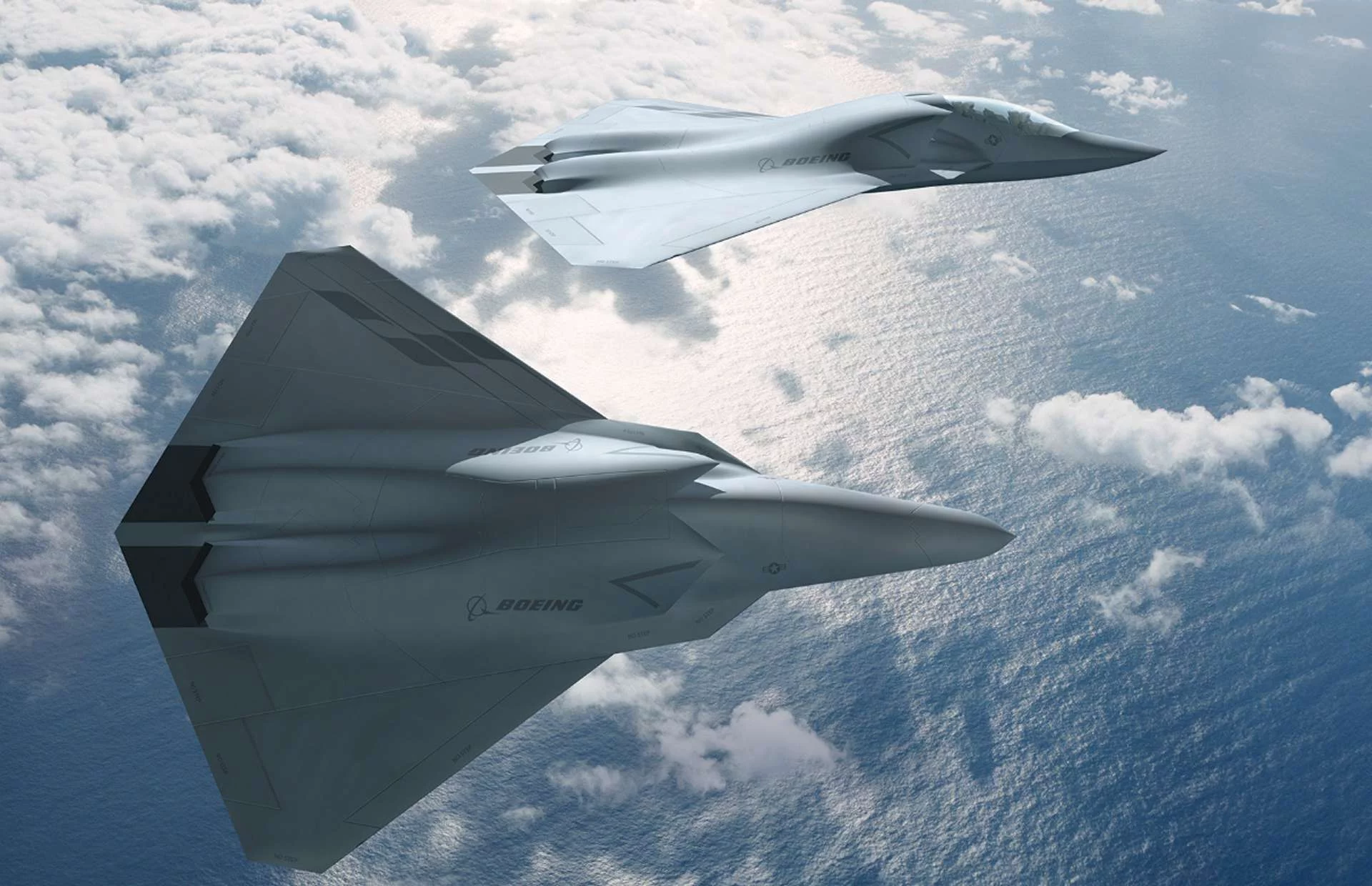
U.S. Defense Secretary Pete Hegseth has officially granted the Navy permission to choose a contractor for its next-generation F/A-XX stealth carrier fighter, marking a decisive move after months of budget uncertainty. The decision represents a major step toward modernizing America’s carrier-based air power to meet emerging Pacific challenges.
According to Reuters, Boeing and Northrop Grumman are the final contenders to build the F/A-XX, which is set to replace the F/A-18E/F Super Hornet in the 2030s. After extensive delays on Capitol Hill, a public announcement of the winner is expected this week.
While the F/A-XX program advances, the Navy will continue procuring over 270 F-35C Lightning II fighters, sustaining a dual-aircraft carrier wing structure to balance stealth, range, and operational flexibility for high-end conflicts in the Indo-Pacific.
The new fighter is expected to feature an extended range, highly advanced stealth shaping, internal weapons bays, and AI-enabled command and control systems capable of directing unmanned aircraft in complex missions.
Program documentation suggests that F/A-XX will deliver roughly 25% greater range than today’s Super Hornet, integrating next-generation sensors, resilient data links, and open mission systems to enable real-time collaboration with multiple Collaborative Combat Aircraft (CCA) and the MQ-25 refueling drone.
Designed for survivability in highly contested airspace, the F/A-XX will likely carry AIM-260-class long-range missiles and precision strike weapons internally, maintaining low observability while retaining external carriage options for less demanding missions.
This effort marks a clear transition from the Super Hornet’s balanced multirole design toward a platform optimized for penetrating air superiority and extended sea control.
After months of debate between the Pentagon and Congress over funding priorities, the Navy now sees F/A-XX as a vital element of its future air wing — alongside the F-35C, MQ-25, and emerging CCAs — to deter China’s rapidly expanding air and naval power. Without a sixth-generation stealth carrier fighter, officials warn, the U.S. risks losing operational initiative across the vast expanse of the Indo-Pacific.
