

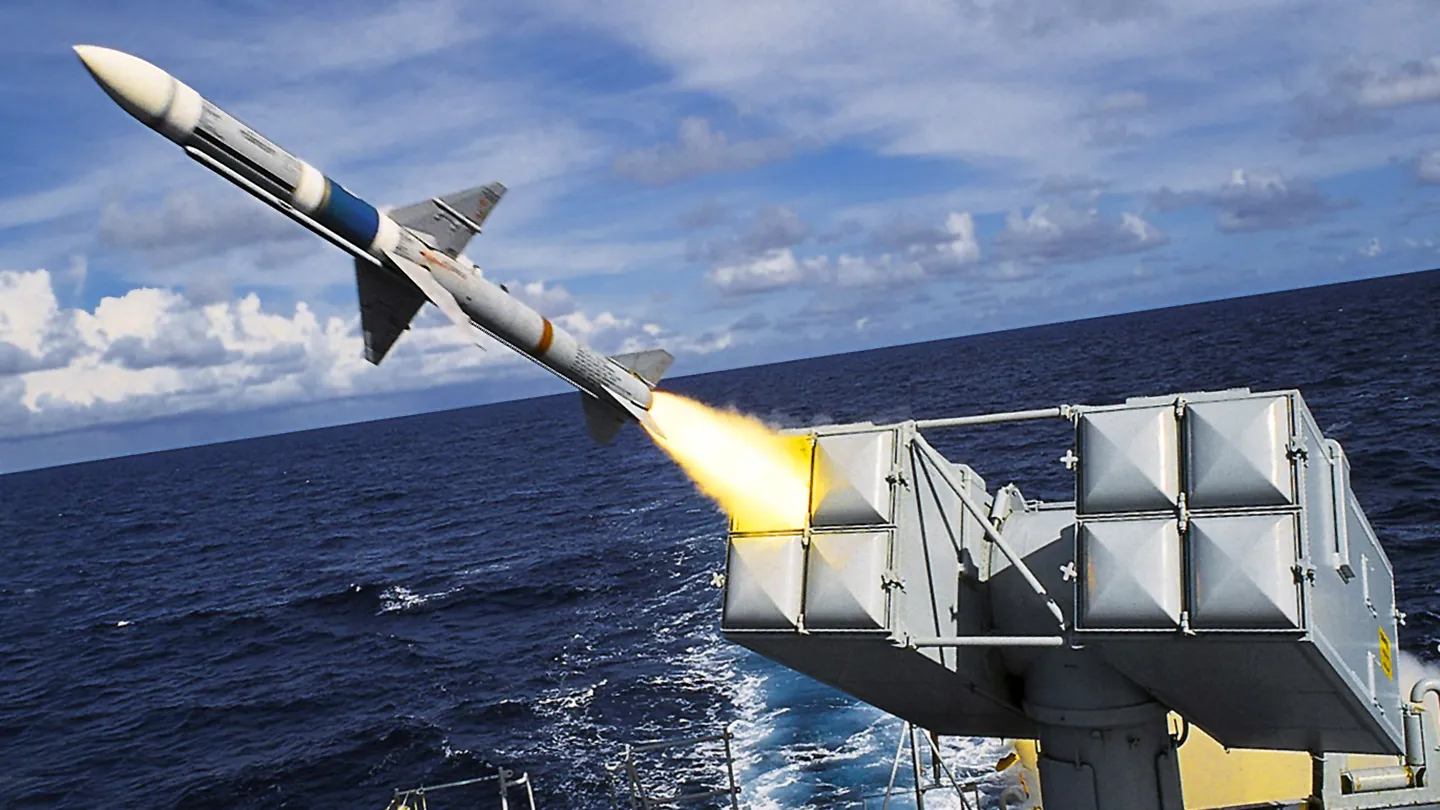
The RIM-7 Sea Sparrow is a radar-guided, medium-range surface-to-air missile (SAM) developed primarily for naval air defense. Originally derived from the AIM-7 Sparrow air-to-air missile, the RIM-7 was adapted to counter aerial threats to naval vessels, including anti-ship missiles, fast aircraft, and unmanned aerial vehicles (UAVs). Introduced in the 1970s, the Sea Sparrow has become a key defensive component on a wide variety of warships, from destroyers and frigates to aircraft carriers, and remains one of the most versatile and widely deployed naval SAMs worldwide.
Development and History
The Sea Sparrow was first deployed by the U.S. Navy in 1976, equipping ships with a robust solution for fleet air defense. Over the decades, it has undergone multiple upgrades to meet evolving threats, including supersonic cruise missiles and advanced aerial attack systems. Early modifications focused on guidance, propulsion, and warhead improvements, ensuring that the missile could reliably intercept targets at various altitudes and speeds. Today, the system integrates seamlessly with modern Vertical Launch Systems (VLS) and advanced shipboard fire control systems.
Variants of the Sea Sparrow
The RIM-7 Sea Sparrow has evolved through several variants, each enhancing its performance and adaptability:
- RIM-7A: The original version, introduced in 1976, featuring semi-active radar homing for targeting aircraft and anti-ship missiles.
- RIM-7B: Mid-1980s upgrade with improved guidance and countermeasure resistance for supersonic targets.
- RIM-7C: Late 1980s variant with enhanced propulsion and better integration with advanced ship fire control systems.
- RIM-7E: Early 1990s version, adding VLS compatibility and improved radar seeker for low-flying missile engagement.
- RIM-7P: Late 1990s upgrade with multimode radar seeker and VLS integration for rapid naval deployment.
- RIM-162 ESSM (Evolved Sea Sparrow Missile): Early 2000s joint NATO/U.S. program, introducing active radar seeker, superior maneuverability, and extended range. Fully optimized for modern Aegis-equipped vessels.
- RIM-7X: Early 2010s interim upgrade, improving radar capabilities and resistance to countermeasures while remaining cost-effective for older platforms.
Operational Capabilities
The Sea Sparrow missile system is designed to protect high-value naval assets by intercepting threats at both low and high altitudes. Its medium-range coverage makes it ideal for layered naval defense, capable of engaging multiple supersonic anti-ship missiles simultaneously. Sea Sparrow missiles are deployable from both deck-mounted launchers and VLS, allowing flexible installation across a wide range of ship classes.
Strategic Importance
The RIM-7 Sea Sparrow remains critical to modern naval strategy, particularly for fleets operating in contested maritime environments. Its adaptability and proven track record make it an indispensable asset for fleet air defense, anti-missile protection, and multi-layered threat engagement. The ESSM variant, in particular, enhances NATO and allied fleets’ ability to counter emerging high-speed missile threats efficiently.
From its inception in the 1970s to the latest RIM-162 ESSM, the Sea Sparrow missile system has continuously evolved to meet the demands of modern naval warfare. Combining precision guidance, rapid launch capability, and versatile deployment options, the RIM-7 ensures reliable defense against airborne threats, solidifying its role as a cornerstone of naval air defense worldwide.
