

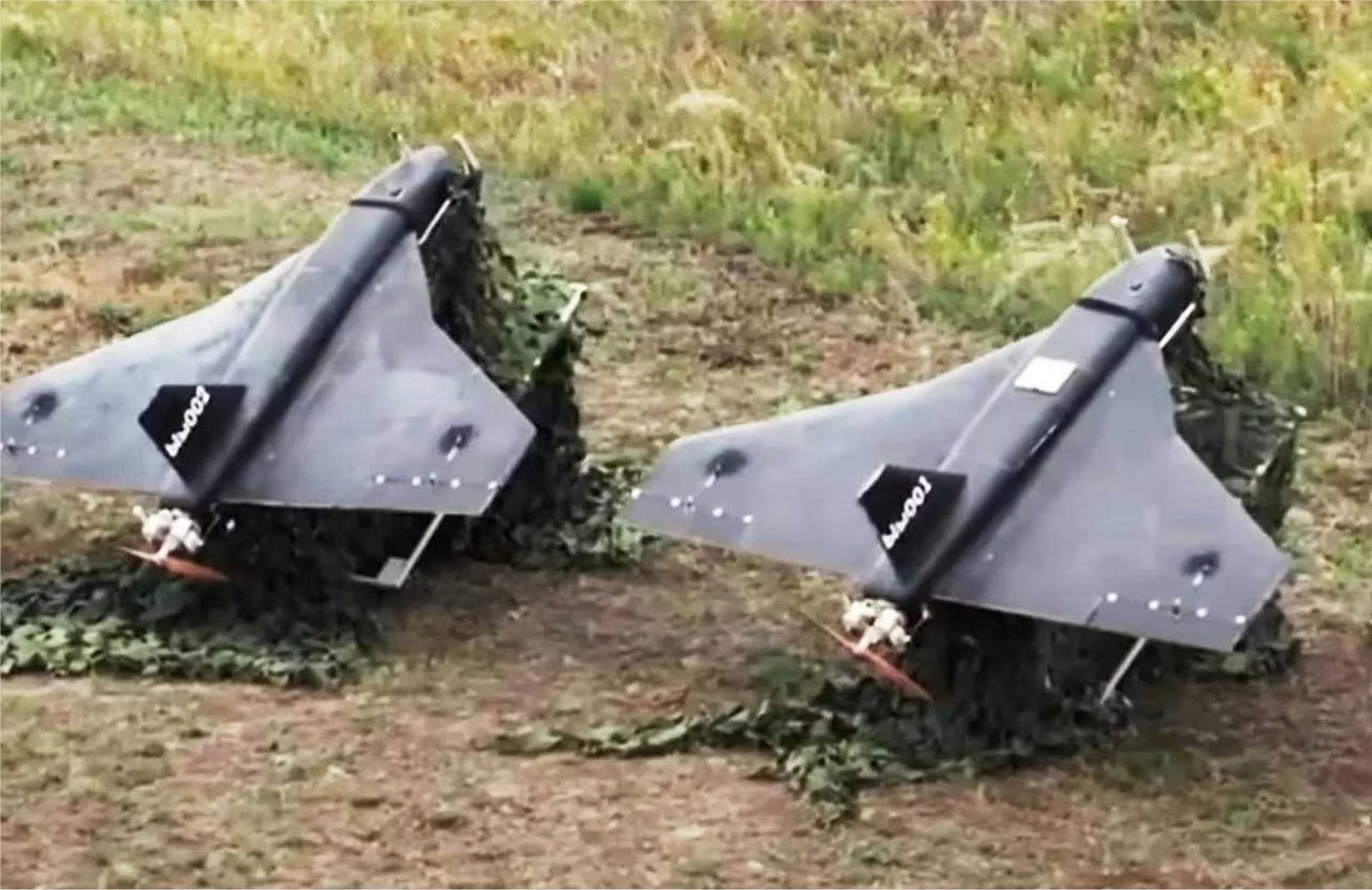
According to Ukrainian military intelligence, Russia has deployed a new generation of Gerbera kamikaze drones designed to saturate air defenses and drain Ukraine’s high-value interceptor stocks. First seen in mid-2024, Gerbera has quickly become a central component of Russia’s strike doctrine, emphasizing attrition and economic pressure over direct infrastructure destruction.
Resembling the Iranian Shahed-136 but optimized for mass production, Gerbera is a simple, expendable, fixed-wing drone made from foam, plywood, and plastic composites. Weighing 25–35 kg, it cruises at 120–150 km/h and can fly 300–600 km on GNSS autopilot with no real-time control links, making jamming difficult.
Some variants act as radar decoys, while others carry 3–5 kg warheads effective against soft targets like radar dishes, fuel storage, and unarmored vehicles. When launched in swarms, they overload Ukrainian radar networks and allow follow-on strikes by more lethal Shahed drones.
Gerbera’s primary weapon is its price. Ukrainian estimates place its unit cost between $500 and $2,000 — far cheaper than the tens of thousands needed for an IRIS-T or NASAMS interceptor. In one September attack, Ukraine intercepted 33 out of 40 drones, but the defense cost millions.
Production is highly decentralized, with 400–600 drones reportedly built monthly in both Russian factories and occupied Ukrainian regions. Components recovered from downed drones revealed Chinese cameras and Western electronics, highlighting continued sanctions evasion through global supply chains.
On September 10, several Gerbera drones crossed into Polish airspace, triggering NATO Article 4 consultations. Analysts warn the incident may have been either a navigational mishap or a deliberate probe of NATO response readiness.
Poland, Romania, and Baltic states are now exploring cheaper countermeasures such as directed energy weapons, radar-guided cannons, and AI-enabled command networks. Meanwhile, Ukraine is fielding homegrown interceptor drones and AI-powered radar filters, claiming over 150 Gerbera kills in 48 hours earlier this month.
Experts emphasize that Gerbera’s impact is psychological and economic: forcing Ukraine to expend costly missiles and keeping defenses on constant alert. NATO planners see it as a preview of the future — mass, cheap, semi-autonomous warfare challenging traditional missile-based air defense systems.
