

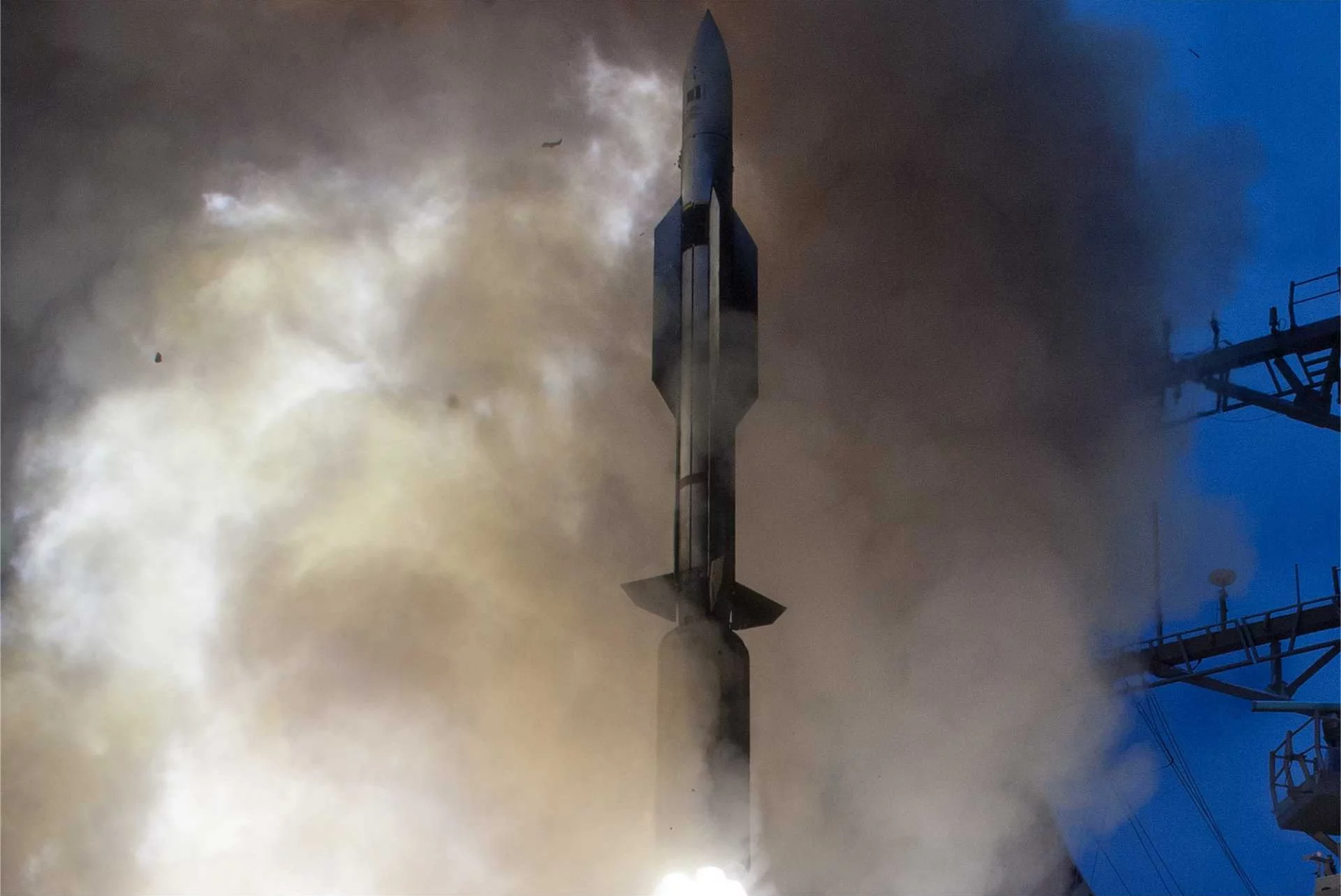
The Standard Missile 6 (SM-6) is an advanced shipborne missile developed by Raytheon Missiles & Defense for the U.S. Navy, capable of engaging air, missile, and surface threats. It merges technologies from previous Standard Missile variants (SM-2, SM-3) and the AMRAAM air-to-air missile, creating a versatile platform for fleet defense and offensive strikes. The SM-6 is compatible with the Mark 41 Vertical Launch System (VLS) aboard Aegis-equipped warships and integrates with the Cooperative Engagement Capability (CEC) network for beyond-line-of-sight targeting.
Description and Development
- Purpose: Multi-role missile for fleet air defense, anti-missile, and anti-surface missions
- Development: Began in early 2000s as enhancement to SM-2
- First Operational Variant: SM-6 Block I (2013), focused on anti-ship cruise missiles and aircraft threats
- Current/Upcoming Variants:
- SM-6 Dual I (2015): Added terminal-phase ballistic missile interception
- SM-6 Block 1A (2020): Enhanced guidance and anti-surface strike capability
- SM-6 Block 1B (Expected 2027): Extended range via upgraded second-stage rocket, improved surface strike
Design
- Length: 5.8 m
- Diameter: 0.34 m
- Wingspan: 1.4 m
- Launch Weight: ~1,000 kg (2,200 lbs)
- Construction: Airframe from SM-2, nosecone/active seeker from AMRAAM
- Propulsion: Dual-pulse solid rocket motor (high-thrust boost + sustained flight)
- Speed: > Mach 3 (3,500+ km/h)
- Launcher Compatibility: Mark 41 VLS, compatible with Arleigh Burke-class destroyers, Ticonderoga-class cruisers
Warhead
- Type: Blast-fragmentation, optimized for anti-air missions
- Weight: 64 kg (141 lbs)
- Capabilities: Primarily disables critical systems on ships (“mission kill”), effective in both air-defense and anti-surface roles
Guidance Systems
- Midcourse: Inertial Navigation System (INS), updated via Link 16 data link
- Terminal Phase: Active radar seeker (X-band, derived from AMRAAM)
- Modes:
- Active radar homing
- Semi-active radar homing (like SM-2)
- CEC integration for over-the-horizon targeting
Combat Use
- Roles: Fleet air defense, anti-ship, ballistic missile terminal interception
- Deployment: Aegis-equipped surface ships
- Recent Events: Successfully tested for Mid-Range Capability (MRC) by U.S. Army’s 3rd Multi-Domain Task Force (2025)
- Effectiveness: High speed, maneuverability, and multi-mode guidance allow engagement of distant, high-value targets in complex environments
Variants
| Variant | Year | Capability |
|---|---|---|
| SM-6 Block I | 2013 | Fleet air defense against aircraft & anti-ship missiles |
| SM-6 Dual I | 2015 | Terminal-phase ballistic missile interception |
| SM-6 Block 1A | 2020 | Improved guidance, anti-surface capability |
| SM-6 Block 1B | 2027 | Extended range, enhanced anti-surface strikes |
Specifications
| Parameter | SM-6 |
|---|---|
| Type | Surface-to-air & surface-to-surface missile |
| Users | U.S., Australia, Japan, South Korea |
| Designer | United States (Raytheon) |
| Warhead | Blast-fragmentation, 64 kg |
| Engine | Dual-pulse solid rocket motor |
| Speed | > Mach 3 (3,500+ km/h) |
| Range | ~278 km (150 nautical miles) |
| Guidance | INS, active radar, semi-active radar, Link 16, CEC |
| Launch Weight | ~1,000 kg |
| Launchers | VLS (Mark 41), compatible naval ships |
| Dimensions | L: 5.8 m; D: 0.34 m; Wingspan: 1.4 m |
The SM-6 is a highly flexible, long-range naval missile, capable of defending fleets from airborne threats, intercepting ballistic missiles, and engaging surface targets, making it a cornerstone of modern U.S. naval defense and strike operations.
