

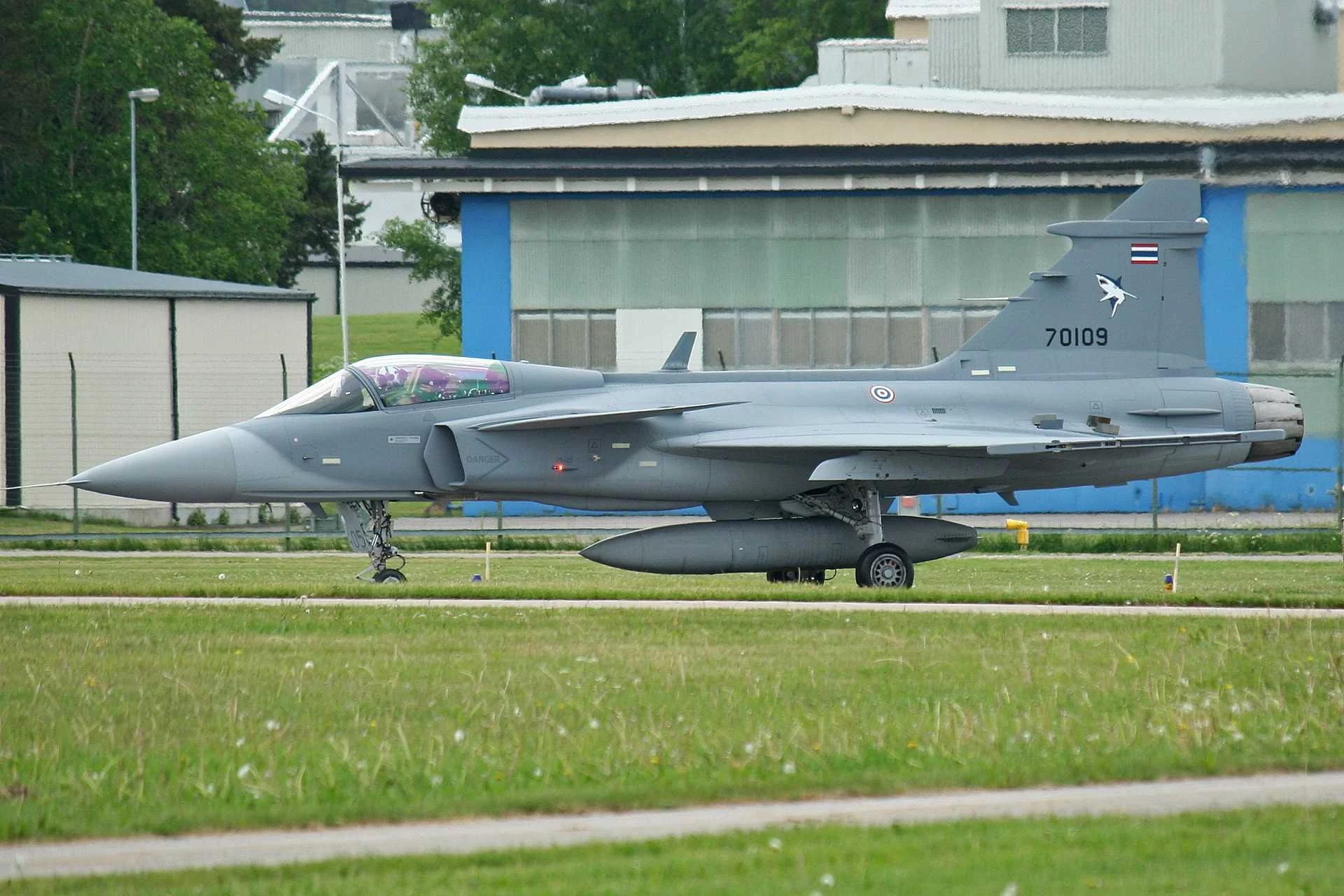
On July 26, 2025, the Royal Thai Air Force (RTAF) deployed its SAAB JAS 39 Gripen fighter jets in a real combat mission for the first time, conducting precision airstrikes against Cambodian artillery positions near the Phu Ma Kua ridge and Ta Muen Thom temple. This operation marked a historic milestone for the Gripen platform, which had not previously been used in active combat since its maiden flight in 1988.
The air operation was part of escalating clashes along the Thai-Cambodian border that began on July 24, 2025. Tensions had been rising since May 28, 2025, when a Cambodian soldier was fatally shot in a disputed patrol area. Skirmishes continued through June, escalating into intense Cambodian rocket and mortar attacks on Thailand’s Surin Province. In response, Thailand mobilized its air and ground forces and began retaliatory operations in late July, involving both F-16s and Gripens.
The Gripen jets conducted precise airstrikes specifically targeting Cambodian mobile rocket batteries and artillery systems, aiming to protect Thai military bases and civilian settlements.
Thailand had first ordered Swedish-made SAAB JAS 39 Gripen jets in 2007, beginning with six C/D variants, followed by a second order in 2008. The first aircraft were delivered in 2011 and assigned to Wing 7 at Surat Thani Air Base. As of 2025, Thailand operates a total of 11 Gripen aircraft—seven Gripen C (single-seat) and four Gripen D (two-seat) variants. In addition, the RTAF’s inventory includes 28 F-16s (F-16A, ADF, B, MLU variants), 13 F-5TH Tiger IIs, and 12 AU-23A Peacemaker ground-attack aircraft.
The Gripens are configured for combat with PS-05/A pulse-doppler radar, digital fly-by-wire flight systems, and a range of advanced weaponry including AIM-120 AMRAAM, IRIS-T missiles, and precision-guided munitions. They operate in coordination with Saab 340 AEW&C early warning and control aircraft, enhancing Thailand’s network-centric warfare capabilities. In the July 26 strike, the Gripens flew synchronized missions using real-time data feeds and targeting support, delivering surgical strikes that minimized the risk of civilian casualties.
In stark contrast, the Royal Cambodian Air Force does not operate any combat aircraft. Its fleet consists primarily of transport, training, and VIP aircraft, including two Xian MA60 transports, five Tecnam P-92 Echo trainer/recon aircraft, two Harbin Y-12 (II) utility aircraft, and one Airbus A320 configured for VIP transport. Additionally, two Antonov An-24RV and one BN-2 Islander aircraft remain in storage. Apart from five L-39C Albatros jet trainers, Cambodia possesses no operational fighters or air-to-air combat platforms.
The air power disparity between Thailand and Cambodia is stark, giving Thailand clear strategic superiority. The Gripen’s first-ever combat deployment highlights Thailand’s transition to modern, precision airstrike capabilities. It is also expected to boost the international export appeal of the Swedish Saab Gripen.
As fighting continues along the border, the Royal Thai Air Force’s ability to deliver rapid and accurate airstrikes will remain a critical factor in shaping the military balance in the conflict.
