

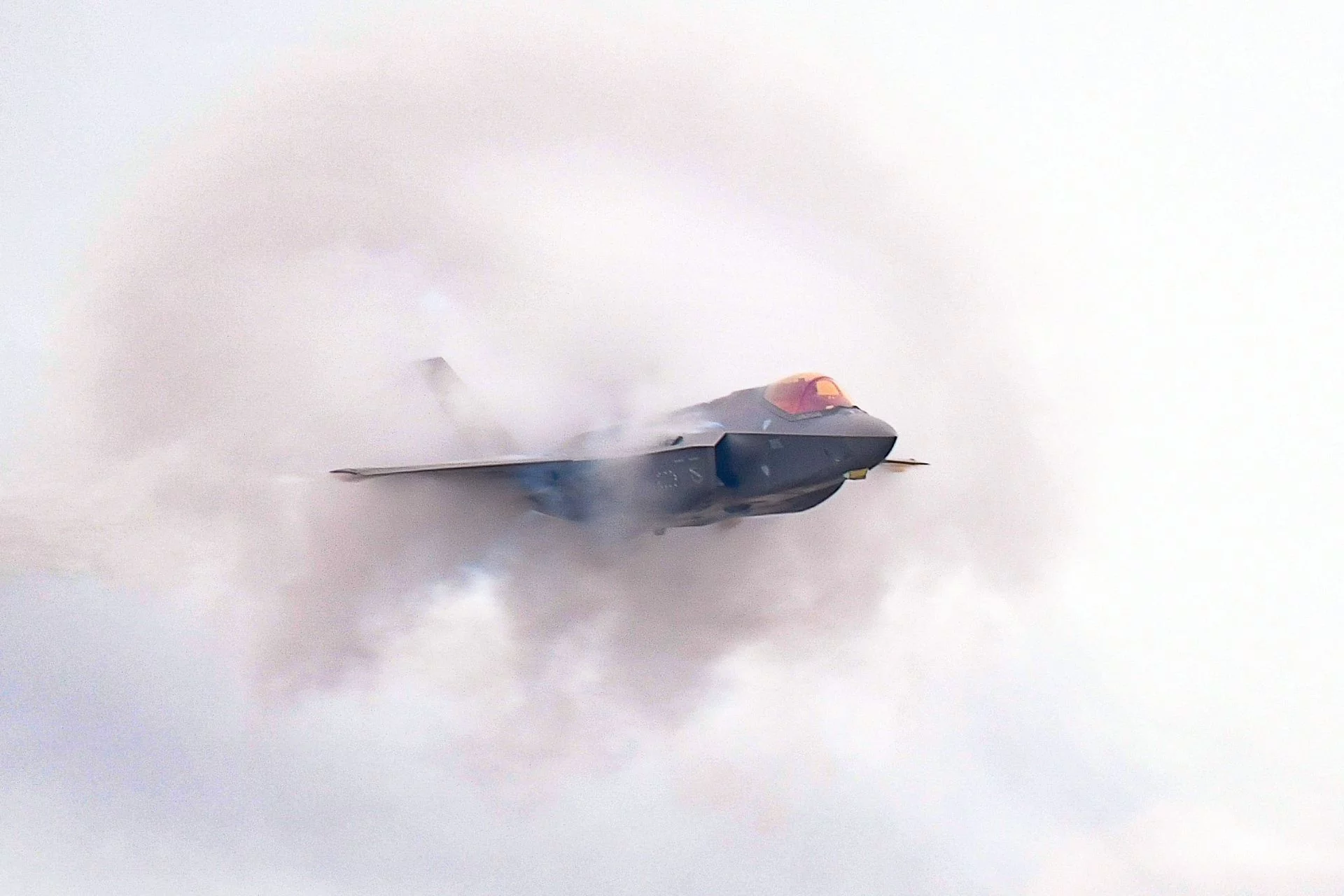
Armasuisse confirmed on September 6, 2025, that Switzerland’s first F-35A Lightning II jets will be delivered starting mid-2027, with initial aircraft coming from Lockheed Martin’s Fort Worth plant and follow-on deliveries from Cameri, Italy, in 2028. With the F/A-18 Hornet fleet nearing retirement, the government now considers the program too far along to cancel.
The September 2022 contract covers 36 F-35As for 6.035 billion Swiss francs. However, under the U.S. Foreign Military Sales framework, costs are not fixed per production lot, meaning the total price could rise by CHF 650 million to 1.3 billion. This potential overrun is contentious, as Swiss voters approved a 6-billion-franc ceiling in a 2020 referendum.
Public debate is intensifying. Former astronaut Claude Nicollier has suggested expanding the fleet to 50 aircraft, while others propose outsourcing air policing to a European neighbor. Defense Minister Martin Pfister maintains the F-35 as the chosen solution but leaves open the option of reducing the order to around 30–32 aircraft to stay within budget limits.
Switzerland has selected the Block 4 configuration, which promises enhanced weapons integration, improved data fusion, and more computing power. Yet, a recent U.S. GAO report warns of delays in the F135 engine and PTMU cooling system upgrades, meaning some capabilities will arrive later than planned.
The F-35A offers stealth, advanced sensors, and multi-role capability, with internal weapons bays for AIM-120 AMRAAM, AIM-9X, JDAM, SDB, and AGM-88 HARM, maintaining a low radar signature. It can reach Mach 1.6, has a combat radius of 2,200 km, and integrates helmet-mounted displays to project data directly into the pilot’s view.
Industry participation is also significant. The RUAG-led RIGI project will assemble four aircraft in Switzerland, generating an estimated CHF 500 million in economic return and securing roughly 60% offsets for the national aerospace sector.
With deliveries confirmed for 2027, Switzerland is set to join the growing group of European nations making the F-35 the backbone of their air forces. This deepens NATO interoperability but may narrow Switzerland’s future options to participate in programs such as GCAP or FCAS.
